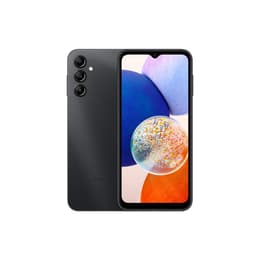



Galaxy A14 Vs Google Pixel 7 Pro

Galaxy A14
Galaxy A14
Starting at

Refurbished price:97.00

Versus €269.00 new

See options
Google Pixel 7 Pro
Google Pixel 7 Pro
Starting at

Refurbished price:201.00

Versus €640.98 new

See options

Ratings

The Samsung Galaxy A14 (released January/February 2023) and the Google Pixel 7 Pro (released October 2022) represent distinct approaches to smartphone design and functionality. While the Galaxy A14 focuses on delivering essential smartphone features in an accessible package, the Pixel 7 Pro offers a more advanced experience with a strong emphasis on camera capabilities and premium software integration.

Both devices operate on the Android platform, but they cater to different user expectations regarding performance, display quality, and photographic prowess.

Scores

Durability

The longevity of a smartphone is influenced by its initial build, software support, and component quality. These two devices offer different timelines for software updates and expected practical lifespans.

  • Software Support: The Google Pixel 7 Pro was released with a commitment to five years of OS and security updates, extending its software relevance further into the future. The Samsung Galaxy A14, launched with Android 13, was promised two major Android OS updates (up to Android 15) and four years of security updates, with security patches continuing until 2027.
  • Build and Materials: The Pixel 7 Pro features a more premium construction, often incorporating glass and metal, which can contribute to a perception of greater durability. The Galaxy A14 typically uses a plastic back and frame, which can be more resistant to minor impacts but may not feel as robust.
  • Practical Lifespan: Users prioritizing the latest software features and long-term performance may find the Pixel 7 Pro's extended update policy more appealing. For users with more basic needs, the Galaxy A14's support timeline is still substantial for its category.

Year of Release

2023

2022

Compatible with latest Update

No

Yes

OS

Android

Android

Foldable

No

No

Performance

Performance differences between these two smartphones are noticeable across various tasks, from everyday navigation to more demanding applications.

  • Overall Responsiveness: The Google Pixel 7 Pro offers a highly responsive and fluid user experience, handling demanding applications and multitasking smoothly. Users report that the Pixel 7 Pro feels snappy, with quick app loading and seamless transitions. The Galaxy A14 provides adequate performance for daily tasks like browsing and social media, but some users have noted occasional lags and stutters, particularly with animations or when multiple apps are open.
  • Multitasking and Storage: The Pixel 7 Pro typically comes with more RAM (12GB) and faster internal storage options (128GB, 256GB), contributing to its ability to manage numerous applications simultaneously without slowdowns. The Galaxy A14 offers configurations with 4GB, 6GB, or 8GB of RAM and 64GB or 128GB of storage, which is sufficient for general use but can be a limiting factor for heavy multitasking. The A14 also supports expandable storage via microSDXC, a feature not present on the Pixel 7 Pro.
  • Demanding Applications: For tasks such as intensive gaming or video editing, the Pixel 7 Pro delivers a more consistent and capable experience due to its advanced processing capabilities. While the Galaxy A14 can handle some non-strenuous mobile games, it may struggle with graphically intensive titles.

Memory (GB)

4 GB

12 GB

Screen quality

The visual experience is a key differentiator, with both devices offering distinct display technologies and characteristics.

  • Display Technology and Resolution: The Google Pixel 7 Pro features a 6.7-inch OLED display with a high resolution of 3120x1440 pixels, providing sharp visuals, deep blacks, and vibrant colors. The Samsung Galaxy A14 has a 6.6-inch PLS LCD display with a resolution of 2400x1080 pixels (FHD+), offering clear visuals and good color reproduction indoors.
  • Brightness and Refresh Rate: The Pixel 7 Pro's display offers higher peak brightness, making it more comfortable to view in bright outdoor conditions. It also boasts a 120Hz refresh rate, resulting in smoother scrolling and a more fluid user interface. The Galaxy A14's display has a 90Hz refresh rate, which provides a smoother experience than standard 60Hz screens, but its brightness peaks at around 500 nits, which can make it challenging to see in direct sunlight.
  • Viewing Experience: The Pixel 7 Pro's OLED panel and higher resolution contribute to a more immersive and detailed viewing experience, particularly for multimedia content. The Galaxy A14's display is perfectly fine for everyday use and multimedia consumption, though it may not offer the same level of contrast or outdoor visibility as the Pixel 7 Pro.

Resolution

1080 x 2408

1440 x 3120

Screen type

PLS LCD

LTPO AMOLED

Audiovisual

The camera systems on these two phones cater to different photographic needs, with the Pixel 7 Pro offering a more comprehensive and advanced setup.

  • Rear Camera System: The Google Pixel 7 Pro features a versatile triple-camera system, including a 50MP main sensor, a 12MP ultrawide lens, and a 48MP telephoto lens with 5x optical zoom and up to 30x digital zoom. This setup excels in capturing detailed photos across various lighting conditions, with strong low-light performance and impressive zoom capabilities. The Samsung Galaxy A14 comes with a triple rear camera setup, typically featuring a 50MP main sensor, a 5MP ultrawide lens (on some variants), and two 2MP sensors for macro and depth. The main 50MP camera performs well in good lighting, capturing decent details and colors.
  • Low-Light and Video Performance: The Pixel 7 Pro is known for its advanced computational photography, delivering excellent low-light images and capable video recording up to 4K at 60fps with various features like portrait blurring. The Galaxy A14's low-light performance is acceptable for its category, with a night mode that can improve results, but it generally struggles in very dark environments. Video recording on the A14 is limited to 1080p at 30fps for both front and rear cameras.
  • Front Camera and Audio: The Pixel 7 Pro includes an 10.8MP front camera that captures good images and supports face unlock. The Galaxy A14 has a 13MP front-facing camera that performs well in good lighting for selfies and video calls. For audio, the Pixel 7 Pro offers a more balanced and fuller sound experience, while the Galaxy A14 typically features a single downward-firing speaker, which can be adequate for casual listening but may lack depth.

Main camera

50 megapixels

50 megapixels

Front camera

13 megapixels

10.8 megapixels

Miscellaneous

Beyond core performance and display, several practical elements contribute to the overall user experience of these devices.

  • Connectivity and Ports: Both devices support 5G connectivity, ensuring access to faster mobile networks. The Pixel 7 Pro features a USB-C port for charging and data transfer. The Galaxy A14 also uses a USB-C port and notably retains a 3.5mm headphone jack, which is absent on the Pixel 7 Pro.
  • Biometric Security: The Google Pixel 7 Pro offers both an in-display fingerprint sensor and face unlock for convenient and secure access. The Samsung Galaxy A14 typically includes a side-mounted fingerprint sensor integrated into the power button, which users generally find reliable.
  • Design and Handling: The Pixel 7 Pro has a more refined design with a glass back and a distinctive camera bar, giving it a premium feel. It weighs around 212 grams. The Galaxy A14 has a more utilitarian design with a plastic build and weighs approximately 201-204 grams, making it a fairly large device to handle.

Weight

201 g

212 g

Screen size (in)

6.6

6.7

Network

4G

5G

SIM card

Dual Physical SIM

Physical SIM + eSIM

Carrier compatibility

Unlocked

Unlocked

User feedback for the Google Pixel 7 Pro often highlights its exceptional camera system as a major strength, with many praising its ability to capture detailed and vibrant photos across various conditions. Users also appreciate its smooth performance and the clean Android experience. However, some common criticisms include battery life that, while acceptable for many, can drain quickly with heavy camera use or on 5G networks. Some users have also noted that the device can get warm during intensive tasks.

For the Samsung Galaxy A14, users frequently praise its long battery life, often lasting a full day or more with moderate use. The main camera is generally considered good for its category, especially in daylight. Criticisms often revolve around its performance, with some users reporting sluggishness and occasional stutters, particularly when multitasking or using demanding apps. The display's outdoor visibility is also a point of concern for some.

Users prioritizing a top-tier camera experience, fluid performance, and a premium design will find the Google Pixel 7 Pro well-suited to their needs. It is ideal for those who value advanced computational photography and a pure Android software experience. Conversely, users seeking a device with excellent battery endurance, a reliable main camera for everyday shots, and expandable storage will likely prefer the Samsung Galaxy A14. It serves as a practical choice for those who need essential smartphone functions without requiring flagship-level performance.

Both models are available as quality-assured refurbished options, providing an eco-friendly alternative for consumers looking to make a sustainable choice.


See all articles

Our recent comparisons