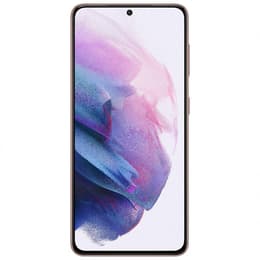
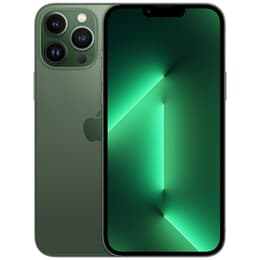


Galaxy S21 5G Vs iPhone 13 Pro

Galaxy S21 5G
Galaxy S21 5G
Starting at

Refurbished price:174.00

Versus €1,026.00 new

See options
iPhone 13 Pro
iPhone 13 Pro
Starting at

Refurbished price:313.00

Versus €1,149.00 new

See options

Ratings

The Samsung Galaxy S21 5G, released in January 2021, and the iPhone 13 Pro, launched in September 2021, are both high-end smartphones from their respective manufacturers. While the Galaxy S21 5G operates on the Android platform, the iPhone 13 Pro runs on Apple's iOS, offering distinct user experiences. Key differences between these two devices lie in their camera capabilities, display technologies, and long-term software support.

Scores

Durability

Evaluating the practical lifespan of these devices involves considering their release timelines, software support, and repairability.

  • Release Timeline: The Samsung Galaxy S21 5G was released in January 2021, making it several months older than the iPhone 13 Pro, which launched in September 2021. This difference in release date impacts the remaining period of official software support for each device.
  • OS Support Duration: The Galaxy S21 series received its final major Android OS update (Android 15/One UI 7) in the first half of 2025, with security updates concluding around February 2026. The iPhone 13 Pro, being an Apple device, typically receives iOS updates for approximately 5-6 years from its release, suggesting a longer period of major software updates compared to the Galaxy S21 5G.
  • Repairability: The Samsung Galaxy S21 5G generally exhibits a higher repairability score, with some assessments giving it around 7.5 to 8.2 out of 10, noting its ease of disassembly and replaceable parts. In contrast, the iPhone 13 Pro received a repairability score of 5 out of 10 from iFixit, indicating that while display and battery replacements are prioritized, other repairs can be more challenging due to software limitations and specific screw types.

Year of Release

2021

2021

Compatible with latest Update

Yes

Yes

OS

Android

iOS

Foldable

No

No

Performance

Both smartphones offer robust performance for daily tasks, but their underlying architectures lead to different real-world experiences.

  • Storage Options: The Galaxy S21 5G is available with 128GB or 256GB of internal storage, paired with 8GB of RAM. The iPhone 13 Pro offers a wider range of storage capacities, including 128GB, 256GB, 512GB, and a 1TB option, and comes with 6GB of RAM.
  • Battery Behavior: The iPhone 13 Pro is often noted for its strong battery performance, with users frequently reporting that it can last through a full day of typical usage. The Galaxy S21 5G, equipped with a 4000 mAh battery, also provides reliable power for a full day, though heavy users might find themselves charging more frequently.
  • Overall System Responsiveness: Both devices handle demanding applications and multitasking smoothly. The iPhone 13 Pro's processor, combined with iOS optimizations, delivers a consistently fluid experience, particularly noticeable in app loading and graphic-intensive tasks. The Galaxy S21 5G's processor also ensures quick app launches and efficient multitasking within the Android ecosystem.

Memory (GB)

8 GB

6 GB

Screen quality

The visual experience on both devices is vibrant, though they employ slightly different display characteristics.

  • Display Technology: Both the Galaxy S21 5G and the iPhone 13 Pro feature OLED displays, known for their deep blacks and high contrast. The Galaxy S21 5G uses a Dynamic AMOLED 2X panel, while the iPhone 13 Pro features a Super Retina XDR display with ProMotion.
  • Resolution and Clarity: The Galaxy S21 5G has a 6.2-inch display with a 2400 x 1080 pixel resolution, resulting in 421 pixels per inch (PPI). The iPhone 13 Pro offers a 6.1-inch display with a higher resolution of 2532 x 1170 pixels, yielding 460 PPI, providing slightly sharper visuals.
  • Brightness and Refresh Rate: The iPhone 13 Pro's display can reach a typical maximum brightness of 1000 nits and a peak of 1200 nits for HDR content, making it highly visible outdoors. The Galaxy S21 5G also offers good brightness for outdoor use. Both phones feature a 120Hz refresh rate, but the iPhone 13 Pro's ProMotion technology allows for an adaptive refresh rate that scales from 10Hz to 120Hz, optimizing for smoothness and power efficiency.

Resolution

1080 x 2400

1170 x 2532

Screen type

Dynamic AMOLED 2X

Super Retina XDR OLED

Audiovisual

Both smartphones provide advanced camera systems capable of capturing high-quality photos and videos, with some distinct strengths.

  • Camera System Capabilities: The Galaxy S21 5G features a triple-lens rear camera setup, including a 12MP main, 12MP ultra-wide, and a 64MP telephoto lens with 3x hybrid optical zoom and up to 30x digital zoom. The iPhone 13 Pro also has a triple 12MP camera system, consisting of a wide, ultra-wide, and a 3x optical telephoto lens.
  • Photography Performance: The iPhone 13 Pro is praised for its excellent overall picture quality, vibrant colors, and strong low-light performance, especially with its Night mode. It also introduced a macro mode for close-up shots. The Galaxy S21 5G delivers excellent photos with good detail and color balance, and its telephoto lens performs well at 10x zoom and below.
  • Video Recording Quality: The Galaxy S21 5G supports up to 8K video recording and offers features like Director's View, allowing users to switch between cameras while filming. The iPhone 13 Pro records 4K video at various frame rates and introduced Cinematic Mode, which provides a shallow depth of field and automatic focus transitions.
  • Audio Experience: Both devices offer good speaker output for media consumption. The Galaxy S21 5G has an improved speaker assembly for better sound performance.

Main camera

12 megapixels

12 megapixels

Front camera

10 megapixels

12 megapixels

Miscellaneous

Beyond core features, several practical elements differentiate these two devices in daily use.

  • Connectivity Options: Both the Galaxy S21 5G and the iPhone 13 Pro support 5G connectivity, along with modern Wi-Fi standards and Bluetooth for wireless connections.
  • Port Types: The Galaxy S21 5G utilizes a USB-C port for charging and data transfer. The iPhone 13 Pro continues to use Apple's proprietary Lightning port.
  • Useful Sensors: The Galaxy S21 5G features an ultrasonic in-screen fingerprint sensor for biometric authentication. The iPhone 13 Pro relies on Face ID for secure facial recognition.
  • Weight and Dimensions: The Galaxy S21 5G measures 151.7 x 71.2 x 7.9 mm and weighs 169 grams. The iPhone 13 Pro is slightly heavier and thicker at 146.7 x 71.5 x 7.65 mm and 204 grams.
  • Build Materials: The Galaxy S21 5G features a Gorilla Glass Victus front and a plastic back with an aluminum frame. The iPhone 13 Pro has a Ceramic Shield front cover, a textured matte glass back, and a stainless steel frame. Both offer IP68 water and dust resistance.

Weight

171 g

203 g

Screen size (in)

6.2

6.1

Network

5G

5G

SIM card

Physical SIM + eSIM

Physical SIM + eSIM

Carrier compatibility

Unlocked

Unlocked

Connector

USB-C

Lightning

User feedback for the Samsung Galaxy S21 5G often praises its vibrant display, capable camera system, and comfortable size. Some common criticisms have included its plastic back material compared to more premium alternatives in its series, and the end of major software updates in early 2025. For the iPhone 13 Pro, users frequently highlight its exceptional camera performance, strong battery life, and the smooth, adaptive 120Hz ProMotion display. Criticisms have sometimes pointed to the continued use of the Lightning port and some initial software glitches related to the adaptive refresh rate or macro mode.

Users prioritizing a longer period of major software updates and a consistently fluid operating system experience may find the iPhone 13 Pro well-suited to their needs. Its advanced camera features, particularly for video and low-light photography, also appeal to those who value imaging capabilities. Conversely, individuals who prefer the Android ecosystem, a slightly lighter device, and potentially easier repairability might lean towards the Galaxy S21 5G. Its versatile camera system and vibrant display still offer a compelling smartphone experience. Both devices remain solid choices, and considering a quality-assured refurbished option for either can be a sustainable choice for consumers.


See all articles

Our recent comparisons







