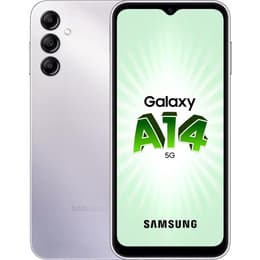



Galaxy A14 5G Vs Google Pixel 7 Pro

Galaxy A14 5G
Galaxy A14 5G
Starting at

Refurbished price:102.00

Versus €289.00 new

See options
Google Pixel 7 Pro
Google Pixel 7 Pro
Starting at

Refurbished price:201.00

Versus €640.98 new

See options

Ratings

The Samsung Galaxy A14 5G, released in January 2023, and the Google Pixel 7 Pro, launched in October 2022, represent distinct segments within the Android smartphone market. While both devices operate on the Android platform, the Pixel 7 Pro is positioned as a premium offering with advanced features, whereas the Galaxy A14 5G focuses on delivering essential smartphone capabilities. Key differentiators lie in their display technology, camera systems, and overall processing power.

Scores

Durability

The expected lifespan and software support differ significantly between these two Android smartphones.

  • Release Timeline and OS Support: The Samsung Galaxy A14 5G was released in January 2023, typically receiving around two years of major Android OS updates and four years of security updates from its launch, starting with Android 13. In contrast, the Google Pixel 7 Pro, released in October 2022, shipped with Android 13 and was initially promised three years of OS upgrades and five years of security updates. This commitment was later extended to five years of OS upgrades, with support projected until 2027.
  • Software Longevity: Users prioritizing extended software support and access to the latest Android features for a longer period will find the Pixel 7 Pro's update policy more advantageous. The Galaxy A14 5G offers a shorter, but still reasonable, update cycle for its segment.
  • Repairability: The Google Pixel 7 Pro has been assessed with a repairability score of 5.5 to 7 out of 10, indicating that while some components like the screen are relatively accessible, others, such as the battery and charging port, can be challenging to replace due to strong adhesives and soldered connections. Information on the specific repairability score for the Galaxy A14 5G is less detailed, but devices in its category often feature a less complex internal design, which can sometimes translate to easier repairs for common issues.

Year of Release

2023

2022

Compatible with latest Update

Yes

Yes

OS

Android

Android

Foldable

No

No

Performance

Performance capabilities are a primary distinction between the Galaxy A14 5G and the Pixel 7 Pro, influencing how each device handles daily tasks and demanding applications.

  • Processing Power: The Google Pixel 7 Pro is equipped with a high-performance processor designed for demanding tasks, ensuring smooth operation for complex applications, intensive multitasking, and graphic-heavy gaming. The Samsung Galaxy A14 5G features a mid-range processor, which provides efficient performance for everyday use, including browsing, social media, and light gaming. However, some users have noted occasional lags and stutters when opening and closing apps or during more intensive use.
  • Storage and Multitasking: The Pixel 7 Pro offers higher internal storage options, up to 512GB, paired with a substantial amount of RAM, which contributes to its ability to manage numerous applications simultaneously without slowdowns. The Galaxy A14 5G comes with 64GB or 128GB of internal storage, which can be expanded up to 1TB via a microSD card, offering flexibility for users who need more space for media and files. Its RAM configurations are suitable for typical multitasking, though heavy users might notice limitations compared to the Pixel 7 Pro.
  • Battery Behavior: Both devices house a 5000 mAh battery. The Galaxy A14 5G is noted for its long battery life, often lasting up to two days with moderate use and a full day with heavy usage, partly due to its less power-intensive display and processor. The Pixel 7 Pro, despite its large battery, can experience faster drain with its high-resolution, high-refresh-rate display and powerful processor, especially during heavy camera use or prolonged 5G connectivity. The Pixel 7 Pro supports faster wired charging at 30W and also offers wireless charging, features not present on the Galaxy A14 5G, which charges at 15W.

Memory (GB)

4 GB

12 GB

Screen quality

The visual experience offered by these two smartphones is a significant point of differentiation, primarily due to their display technologies.

  • Display Technology and Resolution: The Google Pixel 7 Pro features a 6.7-inch LTPO OLED curved-edge display with a sharp QHD+ resolution of 3120 x 1440 pixels, resulting in a high pixel density. This technology delivers deep blacks, vibrant colors, and excellent contrast. The Samsung Galaxy A14 5G has a 6.6-inch PLS LCD display with a Full HD+ resolution of 1080 x 2408 pixels. While providing clear visuals for everyday content, it does not match the color depth or contrast of an OLED panel.
  • Refresh Rate and Brightness: The Pixel 7 Pro boasts a 120Hz variable refresh rate, which dynamically adjusts to content, offering exceptionally smooth scrolling and responsiveness while conserving power. It also achieves high brightness levels, improving visibility in bright outdoor conditions. The Galaxy A14 5G offers a 90Hz refresh rate, providing a smoother experience than standard 60Hz displays. However, its peak brightness of around 520 nits can lead to poor visibility in direct sunlight.
  • Viewing Experience: Users who prioritize a premium visual experience for media consumption, gaming, and detailed work will find the Pixel 7 Pro's display superior due to its higher resolution, OLED technology, and adaptive refresh rate. The Galaxy A14 5G provides a competent and enjoyable viewing experience for general use, suitable for browsing and casual video watching.

Resolution

1080 x 2408

1440 x 3120

Screen type

PLS LCD

LTPO AMOLED

Audiovisual

The camera systems of the Galaxy A14 5G and the Pixel 7 Pro cater to different user expectations and offer varying levels of photographic versatility.

  • Rear Camera System: The Google Pixel 7 Pro features a sophisticated triple-camera setup, including a 50MP main sensor with optical and electronic image stabilization, a 12MP ultrawide lens with autofocus and a wide field of view, and a 48MP telephoto lens capable of 5x optical zoom and up to 30x Super Res Zoom. This system excels in various lighting conditions, offering advanced computational photography features like Photo Unblur, Magic Eraser, and Macro Focus. The Samsung Galaxy A14 5G is equipped with a triple rear camera system comprising a 50MP main camera, a 2MP macro lens, and a 2MP depth sensor. It performs well in good lighting conditions but shows limitations in low-light environments and with fast-moving subjects, and lacks optical image stabilization.
  • Front Camera and Video Recording: For selfies, the Pixel 7 Pro includes a 10.8MP ultrawide front camera. It supports 4K video recording at 30 or 60 frames per second, with features like 10-bit HDR video and Cinematic Blur. The Galaxy A14 5G has a 13MP front camera and records video at 1080p at 30 frames per second.
  • Audio Quality: The Pixel 7 Pro generally offers a more refined audio experience for media consumption and calls, benefiting from its flagship-tier components. While specific details on microphone and speaker quality for the Galaxy A14 5G are less prominent, it provides functional audio for everyday communication and media playback.

Main camera

50 megapixels

50 megapixels

Front camera

13 megapixels

10.8 megapixels

Miscellaneous

Beyond core performance and display, several practical elements contribute to the overall user experience of these devices.

  • Connectivity and Ports: Both smartphones support 5G connectivity, enabling faster mobile data speeds. The Google Pixel 7 Pro features Wi-Fi 6e for advanced wireless networking and Bluetooth 5.2, and it uses a USB-C port for charging and data transfer, but it does not include a 3.5mm headphone jack. The Samsung Galaxy A14 5G supports Wi-Fi 5 and Bluetooth 5.2, and notably retains a 3.5mm headphone jack alongside its USB-C port, which can be a convenience for users with wired audio accessories.
  • Biometric Security and Sensors: The Pixel 7 Pro offers both an in-display fingerprint sensor and face recognition for secure unlocking. It also includes a comprehensive suite of sensors, such as an accelerometer, gyroscope, proximity sensor, compass, and barometer. The Galaxy A14 5G features a side-mounted fingerprint scanner for authentication, along with an accelerometer, proximity sensor, and compass, with a gyroscope present in the 5G model.
  • Design and Build Materials: The Pixel 7 Pro has a more premium construction, featuring glass on both the front and back, an aluminum frame, and an IP68 rating for dust and water resistance. This provides enhanced durability against environmental elements. The Galaxy A14 5G typically uses a plastic build, which contributes to its lighter feel and can be more resilient to minor drops, though it lacks an official IP rating for water and dust resistance. The Pixel 7 Pro measures 162.9 x 76.6 x 8.9 mm and weighs 212g, while the Galaxy A14 5G is slightly larger at 167.7 x 78 x 9.1 mm and weighs 202g.

Weight

201 g

212 g

Screen size (in)

6.6

6.7

Network

5G

5G

SIM card

Dual Physical SIM

Physical SIM + eSIM

Carrier compatibility

Unlocked

Unlocked

User feedback for the Google Pixel 7 Pro often highlights its exceptional camera capabilities, particularly its computational photography features, and a clean, intuitive Android experience. Many users praise its overall performance for daily tasks and demanding applications. However, some common criticisms revolve around inconsistent battery life, especially with heavy usage or prolonged 5G connectivity, and its repairability, which has been noted as challenging due to internal design choices.

For the Samsung Galaxy A14 5G, users frequently commend its long battery life, often extending to a full day or more with moderate use, and its reliable performance for essential smartphone functions. The inclusion of a 3.5mm headphone jack and expandable storage are also often cited as practical advantages. Conversely, common criticisms point to its less powerful processor, which can lead to occasional slowdowns for power users, and its LCD display, which offers less vibrant colors and lower brightness compared to more premium devices.

Users prioritizing a top-tier camera system, a premium display, and extended software support will find the Google Pixel 7 Pro well-suited to their needs. Its powerful processor and advanced features cater to those who engage in demanding tasks, mobile gaming, or extensive media creation. Conversely, users who prioritize long battery life, expandable storage, and a traditional headphone jack for everyday communication and casual use may lean toward the Samsung Galaxy A14 5G. It serves as a practical and dependable option for those seeking core smartphone functionalities without the need for flagship-level performance or advanced photographic capabilities. Both devices offer distinct advantages, and choosing between them depends on individual priorities and usage patterns. For those considering a more sustainable choice, quality-assured refurbished options for both models are available, providing an eco-friendly alternative.


See all articles

Our recent comparisons