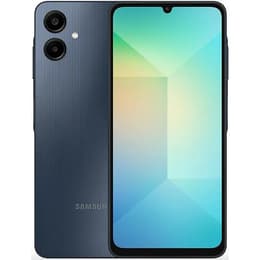
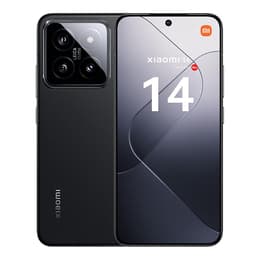


Galaxy A06 Vs Xiaomi 14

Galaxy A06
Galaxy A06
Starting at

Refurbished price:108.00

Versus €186.96 new

See options
Xiaomi 14
Xiaomi 14
Starting at

Refurbished price:384.00

Versus €1,099.00 new

See options

Ratings

The Samsung Galaxy A06, released in August 2024, and the Xiaomi 14, launched globally in February 2024, represent distinct segments of the smartphone market. While the Galaxy A06 is positioned as an accessible device for everyday use, the Xiaomi 14 offers a premium experience with advanced features. Both devices run on the Android operating system, with Samsung's One UI and Xiaomi's HyperOS providing different user interfaces and software experiences.

Scores

Durability

The longevity of a smartphone is influenced by its build, software support, and ease of repair. These two devices offer different expectations in these areas.

  • Release Timeline and Software Support: The Samsung Galaxy A06 (4G version) was released in August 2024 and is expected to receive two major Android OS upgrades and four years of security updates. The Xiaomi 14, launched globally in February 2024, is a flagship device and typically receives longer support, with expectations of four major Android updates and five years of security updates. This means the Xiaomi 14 offers a longer period of up-to-date software and security.
  • Durability and Repairability: The Xiaomi 14 features an aluminum alloy frame and Gorilla Glass Victus 2 for enhanced durability, along with an IP68 rating for dust and water resistance. Its repairability score is rated at 8.0 out of 10, indicating moderate ease of repair, with pull tabs for battery removal and easily accessible screen cables. The Samsung Galaxy A06 has a plastic back and frame with a glass front, and a repairability score of 7.0 out of 10, suggesting that while the back plate and battery are relatively easy to replace, screen repairs might be more challenging.
  • Expected Practical Lifespan: Users prioritizing extended software longevity and robust physical protection may find the Xiaomi 14 more aligned with their needs. The Galaxy A06, while offering decent support for its category, will reach its final Android OS upgrade sooner, potentially making it a suitable choice for users who upgrade their devices more frequently or have less demanding software needs.

Year of Release

2024

2023

OS

Android

Android

Foldable

No

No

Performance

The performance capabilities of these two smartphones cater to different user demands, from basic daily tasks to intensive applications.

  • Processor Capabilities: The Xiaomi 14 is equipped with a current-generation processor, enabling it to handle demanding applications, complex multitasking, and graphic-intensive games with fluidity. Users report a smooth experience, though some note potential performance throttling during prolonged heavy use. The Samsung Galaxy A06 features an octa-core processor that capably manages everyday tasks such as messaging, web browsing, and social media. However, users might experience some delays or stuttering when running multiple demanding apps simultaneously or engaging in heavy gaming.
  • Memory and Storage: The Xiaomi 14 offers generous RAM configurations, contributing to its strong multitasking performance and responsiveness. It also provides ample and fast internal storage options, ensuring quick app loading and data access. The Galaxy A06 comes with various RAM and storage configurations, which are expandable via a microSD card, offering flexibility for users who need additional space for photos and videos.
  • Battery Behavior: Both devices feature large battery capacities. The Xiaomi 14, with its 4610mAh battery, is reported to offer good battery life, often lasting a full day for typical users, and supports very fast wired and wireless charging, significantly reducing downtime. The Samsung Galaxy A06, with its 5000mAh battery, is known for its long endurance, often lasting over a day with moderate use, and supports 25W fast charging.

Memory (GB)

4 GB

16 GB

Screen quality

The visual experience on a smartphone is largely defined by its display, and these two models offer distinct screen technologies and characteristics.

  • Display Technology and Resolution: The Xiaomi 14 features a 6.36-inch LTPO OLED display with a 1.5K resolution (2670x1200 pixels), resulting in a high pixel density for sharp and detailed visuals. This OLED technology provides deep blacks and vibrant colors. In contrast, the Samsung Galaxy A06 comes with a larger 6.7-inch PLS LCD display with an HD+ resolution (720x1600 pixels), offering a clear viewing experience for general content.
  • Brightness and Refresh Rate: The Xiaomi 14 boasts an impressive peak brightness of 3000 nits, ensuring excellent visibility even in bright outdoor conditions, and features an adaptive refresh rate ranging from 1Hz to 120Hz for smooth scrolling and responsive interactions. The Galaxy A06 has a 60Hz refresh rate, which is standard for its category, and offers a brightness level suitable for indoor use, with some users noting it is average for outdoors.
  • Viewing Experience: Users prioritizing a highly fluid, color-accurate, and bright display for media consumption, gaming, and detailed content will find the Xiaomi 14's screen capabilities more advanced. The Galaxy A06 provides a functional and adequately sized screen for everyday tasks and casual media viewing.

Resolution

720 x 1600

1200 x 2670

Screen type

PLS LCD

LTPO OLED

Audiovisual

The camera systems on both devices are designed to capture different levels of detail and offer varying photographic experiences.

  • Rear Camera Capabilities: The Xiaomi 14 features a versatile triple 50-megapixel camera system co-engineered with Leica, including a main lens with a wide aperture, an ultrawide lens, and a telephoto lens with 3.2x optical zoom. This setup is praised for its ability to capture detailed images with good color reproduction and dynamic range in various lighting conditions, including low light. The Samsung Galaxy A06 is equipped with a dual-camera setup on the rear, featuring a 50-megapixel primary camera and a 2-megapixel depth sensor. It performs well for everyday snapshots in good lighting, though some users note a lack of detail and dynamic range in challenging conditions.
  • Front Camera and Video Recording: For selfies, the Xiaomi 14 has a 32-megapixel front camera, capable of recording video up to 4K resolution. Its rear camera system supports video recording up to 8K at 24 frames per second and 4K at 60 frames per second, with good stabilization. The Galaxy A06 includes an 8-megapixel front camera. Video recording on the Galaxy A06 maxes out at 1080p at 30 frames per second, and it lacks stabilization, which can affect footage quality.
  • Audio Quality: The Xiaomi 14 incorporates a 4-microphone array for clear audio capture during calls and video recording, and features stereo speakers for an enhanced media consumption experience. The Galaxy A06 has a single loudspeaker, which provides adequate audio for calls and casual listening.

Miscellaneous

Beyond core specifications, several practical elements contribute to the overall user experience and daily functionality of these devices.

  • Connectivity and Ports: The Xiaomi 14 offers advanced connectivity, including 5G support, Wi-Fi 6E/7, and Bluetooth 5.4, ensuring fast and reliable wireless connections. It features a USB Type-C 3.2 Gen 1 port for quick data transfers and charging. The Samsung Galaxy A06 supports 4G LTE, Wi-Fi, and Bluetooth 5.3, providing standard connectivity for most users. It also uses a USB Type-C port for charging and data.
  • Sensors and Biometrics: The Xiaomi 14 includes an in-screen optical fingerprint sensor for secure and convenient unlocking, along with a comprehensive suite of sensors like an accelerometer, gyroscope, compass, proximity sensor, and an IR blaster. The Galaxy A06 features a side-mounted fingerprint sensor for security.
  • Design and Handling: The Xiaomi 14 has a compact form factor with a 6.36-inch display, an aluminum alloy frame, and a glass back, contributing to a premium feel. It weighs around 188-193 grams. The Samsung Galaxy A06 is a larger device with a 6.7-inch display, featuring a plastic build that makes it lightweight at 189 grams.

Weight

189 g

188 g

Screen size (in)

6.7

6.36

Network

4G

5G

SIM card

Dual Physical SIM

Dual Physical SIM

Carrier compatibility

Unlocked

Unlocked

The Samsung Galaxy A06 and Xiaomi 14 cater to different user needs and expectations, reflecting their respective market positions. User feedback for the Xiaomi 14 frequently praises its exceptional camera system, particularly the Leica collaboration, which delivers high-quality photos and videos. Its powerful performance, vibrant display, and rapid charging capabilities are also commonly highlighted as strong points. Some users note that while HyperOS offers extensive features, it can sometimes feel overwhelming, and minor software quirks have been mentioned.

For the Samsung Galaxy A06, common praise centers on its reliable battery life, which often lasts a full day or more, and its suitability for essential daily tasks. Users appreciate its accessible nature for communication and basic media consumption. Criticisms often point to its 60Hz display and occasional performance lags when multitasking heavily or running demanding applications. The camera, while adequate for casual snapshots in good lighting, receives feedback for lacking detail and dynamic range in more challenging scenarios.

Users prioritizing a premium smartphone experience with advanced camera features, a high-refresh-rate OLED display, and robust performance for gaming and demanding applications will find the Xiaomi 14 well-suited to their needs. Its compact flagship design and fast charging also appeal to those seeking a high-end device in a manageable size. Conversely, users who primarily need a dependable device for communication, social media, and light usage, with a focus on long battery life and a larger screen for casual viewing, may prefer the Samsung Galaxy A06. Both devices, whether new or as quality-assured refurbished options, offer distinct advantages for different user profiles, enabling informed and sustainable choices.

See all articles

Our recent comparisons






