

Dell Latitude 7300 13" Vs Microsoft Surface Go 2 10"

Dell Latitude 7300 13"
Starting at

Refurbished price:310.00

Versus €692.16 new

See options
Microsoft Surface Go 2 10"
Starting at

Refurbished price:249.00

Versus €590.00 new

See options

Ratings

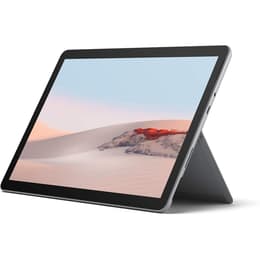
The Dell Latitude 7300 13, released in 2019, is a business-oriented laptop, while the Microsoft Surface Go 2 10, launched in 2020, functions as a versatile 2-in-1 tablet. These devices cater to different user needs, with the Latitude focusing on traditional laptop productivity and the Surface Go 2 emphasizing portability and touch-first interaction. Both run on the Windows operating system, offering a familiar software environment, but their form factors and underlying hardware lead to distinct user experiences.

Scores

Durability

The Dell Latitude 7300 13 and the Microsoft Surface Go 2 10, released in 2019 and 2020 respectively, offer different trajectories for software support and practical lifespan.

  • Software Longevity: The Latitude 7300, being an older device, will likely receive Windows updates for a slightly shorter period than the Surface Go 2. However, both devices are expected to continue receiving security updates and feature enhancements for several years from their release dates, ensuring continued functionality and protection. The Surface Go 2 shipped with Windows 10 Home in S mode, which can be switched to the full version of Windows 10 Home for free. [9, 17, 22]
  • Repairability: Dell's Latitude series is generally designed with business users in mind, often allowing for easier access to internal components for upgrades or repairs, which can extend its practical life. [2] The Surface Go 2, while compact, typically presents more challenges for user-level repairs due to its tablet-centric design.
  • Build Quality: Both devices feature robust construction suitable for daily use. The Latitude 7300's chassis options include aluminum or carbon-fiber, both passing MIL-STD 810G durability tests. [2, 4, 5] The Surface Go 2's magnesium alloy body offers durability in a lighter package. [23, 30]

Year of Release

2019

2019

OS

Windows 11

Windows 11

Performance

The performance capabilities of the Dell Latitude 7300 13 and the Microsoft Surface Go 2 10 are tailored for different usage scenarios, reflecting their distinct hardware configurations.

  • Processing Power: The Latitude 7300, equipped with more capable processors (Intel 8th or 9th Gen Core i5/i7) and typically more RAM (8GB to 32GB DDR4), handles demanding applications, extensive multitasking, and complex computations with greater efficiency. [2, 3, 5, 11, 12] The Surface Go 2, with its more power-efficient processors (Intel Pentium Gold 4425Y or Intel Core m3-8100Y) and less RAM (4GB or 8GB LPDDR3), is designed for lighter tasks such as web browsing, document editing, and streaming media. [9, 23, 24]
  • Multitasking: Users requiring numerous applications open simultaneously or working with large datasets will find the Latitude 7300 more responsive. [4] The Surface Go 2 is better suited for focused tasks or light multitasking, where its compact form factor is an advantage, though some users report lag with many tabs open. [17]
  • Storage Options: The Latitude 7300 generally offers faster M.2 PCIe NVMe SSD storage with larger capacities, ranging from 128GB up to 1TB, contributing to quicker boot times and application loading. [2, 3, 5, 12] The Surface Go 2 typically comes with smaller 64GB eMMC or 128GB/256GB SSD options, which are sufficient for its intended use but may feel less snappy for intensive operations. [9, 23, 29]

Memory (GB)

16 GB

8 GB

Processor

Core i7 - Gen 8 (U)

Pentium Gold 4425Y

Graphic card

Integrated Graphics

Integrated Graphics

Screen quality

The visual experience on the Dell Latitude 7300 13 and the Microsoft Surface Go 2 10 differs primarily in size, aspect ratio, and display technology, impacting how content is viewed.

  • Display Size and Resolution: The Latitude 7300 features a larger 13.3-inch Full HD (1920x1080) display, providing more screen real estate for productivity tasks. [3, 18, 19] The Surface Go 2 has a smaller 10.5-inch PixelSense display with a higher resolution (1920x1280) and a 3:2 aspect ratio, which is often preferred for document viewing and web browsing due to its vertical space. [7, 23, 30]
  • Brightness and Clarity: Both devices offer clear displays suitable for indoor use. The Latitude 7300's display typically provides good brightness, with options up to 300 nits, for various lighting conditions. [2, 19, 21] The Surface Go 2's PixelSense display is known for its vibrant colors and good contrast, with brightness reaching around 408 nits, enhancing the visual experience for media consumption and touch interaction. [7, 22]
  • Touch Functionality: The Surface Go 2's display is inherently a touch screen, designed for pen input and direct interaction, making it highly versatile as a tablet. [15, 24] While some configurations of the Latitude 7300 offer touchscreens, it is primarily designed for traditional keyboard and trackpad input. [2, 19]

Resolution

1920 x 1080

1920 x 1280

Screen type

IPS

IPS

Audiovisual

The camera systems on the Dell Latitude 7300 13 and the Microsoft Surface Go 2 10 are optimized for their primary use cases, with the Surface Go 2 offering more versatility for video calls and casual photography.

  • Webcam Quality: Both devices include front-facing cameras suitable for video conferencing. The Surface Go 2 typically features a 5MP front camera, providing clearer images for video calls, and also includes an 8MP rear-facing camera for casual photography or scanning documents. [6, 7, 9, 23, 30, 31] The Latitude 7300 usually has a standard 720p HD webcam, sufficient for business meetings. [11, 14]
  • Microphone and Speakers: The Surface Go 2 often incorporates dual far-field studio microphones, designed to capture clear audio during calls even in noisy environments, alongside 2W stereo speakers with Dolby Audio. [6, 7] The Latitude 7300 also includes integrated microphones and 2W stereo speakers, optimized for conference calls and general audio playback in a laptop setting. [3]
  • Video Recording: For video recording, the Surface Go 2's rear camera can capture 1080p video, offering more flexibility for quick captures. [6, 30, 31] The Latitude 7300's webcam is primarily for communication and less for general video recording.

Miscellaneous

The Dell Latitude 7300 13 and the Microsoft Surface Go 2 10 present different practical considerations regarding connectivity, physical design, and user interaction.

  • Connectivity: The Latitude 7300 offers a comprehensive array of ports, including multiple USB-A, USB-C with Thunderbolt 3 support, HDMI, and often an Ethernet port (optional or via dock), providing extensive options for peripherals and external displays. [2, 4, 5, 21, 27] The Surface Go 2 features a more streamlined selection with a single USB-C port, Surface Connect port, a 3.5mm headphone jack, and a microSDXC card reader, relying more on wireless connectivity and adapters for expansion. [9, 23, 24, 29]
  • Portability and Form Factor: The Surface Go 2 is significantly lighter, starting at 544g (1.2 lbs) without the Type Cover, and more compact, designed for ultimate portability as a tablet that can transform into a laptop with an optional Type Cover. [9, 22, 23, 24, 29] The Latitude 7300 is a traditional clamshell laptop, starting at 1.24 kg (2.75 lbs), offering a more stable typing experience and a larger footprint, suitable for desk-based work or frequent travel. [2, 3, 4, 26]
  • Security Features: Both devices offer modern security options. The Latitude 7300 often includes enterprise-grade security features like a fingerprint reader (optional) and robust management tools. [4, 21] The Surface Go 2 supports Windows Hello for facial recognition login, providing convenient and secure access. [6, 7, 9, 23, 29, 30]

Weight

3000 g

800 g

Screen size

13

10

User feedback for the Dell Latitude 7300 13 often highlights its robust build quality, reliable performance for business tasks, and comprehensive port selection as key strengths. [4, 21] Users appreciate its comfortable keyboard and trackpad for extended typing sessions. [5, 21] Some common observations include its relatively conservative design and, for some configurations, a display that is functional rather than exceptional in brightness or color vibrancy compared to some competitors. [4, 20] The Microsoft Surface Go 2 10 receives praise for its exceptional portability, versatile 2-in-1 design, and bright, high-resolution touch display, making it a favorite for on-the-go productivity and media consumption. [7, 17, 29, 30] Criticisms sometimes point to its more modest processing power for demanding applications and the necessity of purchasing the Type Cover separately for a full laptop experience. [7, 23, 29, 30]

Users prioritizing a traditional laptop experience with strong performance for productivity, extensive connectivity, and a comfortable typing experience for prolonged work sessions may find the Dell Latitude 7300 13 better suited to their needs. Its larger screen and robust build make it a solid choice for professionals. Conversely, individuals who value extreme portability, a touch-first interface, and the flexibility of a tablet that can also function as a light laptop will likely lean towards the Microsoft Surface Go 2 10. It excels as a companion device for web browsing, streaming, and light document work. Both devices represent quality-assured refurbished options, offering an eco-friendly alternative for consumers seeking reliable technology. The choice ultimately depends on whether a user prioritizes raw processing power and traditional laptop functionality or ultimate portability and touch-screen versatility.

See all articles

Our recent comparisons