

Dell Latitude 5410 14" Vs Dell Latitude 7300 13"

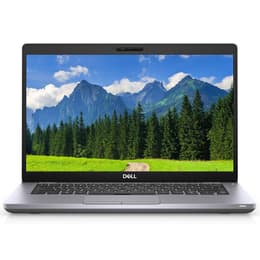
Dell Latitude 5410 14"
Starting at

Refurbished price:312.12

Versus €1,167.40 new

See options
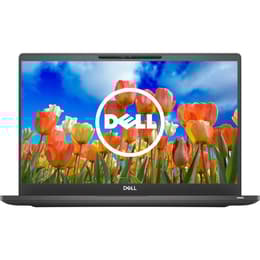
Dell Latitude 7300 13"
Starting at

Refurbished price:310.00

Versus €692.16 new

See options

Ratings

The Dell Latitude 5410 14 and the Dell Latitude 7300 13 are business-oriented laptops designed for productivity and reliability. Released in 2020 and 2019, respectively, these devices offer distinct form factors and feature sets tailored for professional use. The primary differentiators lie in their screen sizes, with the 5410 offering a 14-inch display and the 7300 a more compact 13.3-inch screen, alongside differences in their internal components and port selections.

Scores

Durability

Both the Dell Latitude 5410 and 7300 are built as business-grade machines, implying a focus on durability and long-term support. The 5410, released in 2020, is a slightly newer model compared to the 7300, which debuted in 2019. This difference in release year can influence the duration of official software support and driver updates from Dell, with the 5410 potentially receiving updates for a slightly longer period.

  • Software Longevity: Both laptops run on Windows 10 Pro and are capable of upgrading to Windows 11, ensuring a consistent software experience. Dell typically provides several years of support for its Latitude series, meaning both devices offer a practical lifespan suitable for sustained professional use.
  • Repairability: Latitude models are generally known for their user-friendly repairability. Both the 5410 and 7300 feature accessible internal components, allowing for upgrades to RAM and storage, which can extend their useful life.
  • Expected Lifespan: Given their robust construction and upgradable nature, both laptops are designed for a practical lifespan of several years. The 5410's newer generation components might offer a marginal advantage in maintaining performance for future software demands.

Year of Release

2020

2019

OS

Windows 11

Windows 11

Performance

Performance in both the Latitude 5410 and 7300 is geared towards business productivity, handling everyday tasks and multitasking efficiently. The primary distinction comes from their respective processor generations.

  • Processor Capabilities: The Latitude 5410 typically features 10th Generation Intel Core processors, providing a performance uplift for demanding applications and smoother multitasking compared to the Latitude 7300's 8th Generation Intel Core processors. Users of the 5410 may experience slightly faster application loading and more fluid transitions between tasks.
  • Memory and Storage: Both models offer flexible configurations with DDR4 RAM, supporting up to 32GB or even 64GB in the 5410, across two SODIMM slots. This allows for robust multitasking capabilities. For storage, both utilize fast M.2 NVMe Solid State Drives (SSDs), ensuring quick boot times and rapid data access. The 5410 also has configurations that can accommodate a 2.5-inch drive alongside an M.2 SSD, depending on the battery size.
  • Battery Behavior: The Latitude 5410, particularly with its larger 68Wh battery option, can deliver impressive battery life, with some reports indicating up to 19.5 hours of web browsing or 17 hours of video playback. Real-world mixed usage typically ranges from 4 to 7 hours. The Latitude 7300 also offers strong battery performance, with its 60Wh battery capable of providing around 10 hours of web surfing or 8-10 hours of general use. Some users of the 7300 with a 42Wh battery reported 5-6 hours of continuous use.

Memory (GB)

16 GB

16 GB

Processor

Core i5 - Gen 10 (U)

Core i7 - Gen 8 (U)

Graphic card

Integrated Graphics

Integrated Graphics

Screen quality

The visual experience on both laptops is designed for professional environments, focusing on clarity and practicality rather than vibrant multimedia consumption. Both typically feature anti-glare IPS LCD panels, which are beneficial for reducing reflections in varied lighting conditions.

  • Resolution and Clarity: Both the Latitude 5410 and 7300 commonly offer Full HD (1920x1080) resolution displays, providing sharp text and clear images for everyday tasks. The 7300, however, also had a lower-resolution 1366x768 option in some base configurations.
  • Brightness and Viewing: The Latitude 5410's standard display typically offers around 220 nits of brightness, with options for 300 nits in low-power or privacy screen variants. Some reviews note the standard 5410 display can be dim and exhibit limited color coverage. The Latitude 7300's FHD panels generally reach around 300 nits of brightness, which is adequate for indoor use and some outdoor visibility. Certain 7300 configurations also include "super low power" screens designed to enhance battery efficiency.
  • Screen Size: The Latitude 5410 features a 14-inch display, offering a slightly larger workspace compared to the 13.3-inch screen of the Latitude 7300. This difference can impact the amount of content visible on screen simultaneously and overall viewing comfort for extended periods.

Resolution

1920 x 1080

1920 x 1080

Screen type

LCD

IPS

Audiovisual

For communication and multimedia, both Dell Latitude laptops provide essential features suitable for business use, primarily focusing on video conferencing and clear audio.

  • Webcam Performance: Both the Latitude 5410 and 7300 are equipped with 720p webcams. These cameras are generally sufficient for standard video calls in well-lit environments. However, the 7300's webcam has been noted to produce visual noise in some conditions. Both models often include a physical privacy shutter for the webcam, offering an added layer of security and peace of mind.
  • Audio Quality: The Latitude 7300 is reported to have above-average audio output, contributing to a better experience for video calls and media consumption. The Latitude 5410 features dual 2W speakers. Both include integrated microphones for voice input during calls.
  • Security Features: Beyond the privacy shutter, some configurations of both laptops offer an infrared (IR) camera for facial recognition, enabling secure login through Windows Hello.

Miscellaneous

Beyond core performance and display, the practical utility of these laptops is significantly influenced by their connectivity, physical design, and security features.

  • Connectivity: The Latitude 5410 supports newer wireless standards, including Wi-Fi 6 (AX201) and Bluetooth 5.1, and offers optional LTE for mobile connectivity. The Latitude 7300 typically comes with Wi-Fi 5 (AC 9560) and Bluetooth 5.0, with optional Wi-Fi 6 and WWAN capabilities. The 5410 includes a built-in RJ-45 Ethernet port, while the 7300 requires an adapter or dock for wired Ethernet connectivity.
  • Ports and Physical Design: The Latitude 5410 provides a comprehensive selection of ports, including multiple USB-A 3.2 Gen 1 ports, a USB-C 3.2 Gen 2 port with DisplayPort and Power Delivery (with optional Thunderbolt 3), HDMI 1.4b, and a microSD card reader. The Latitude 7300 features a Thunderbolt 3 (USB-C) port, multiple USB-A 3.1 Gen 1 ports, HDMI 1.4, and a microSD card reader. In terms of dimensions, the 7300 is more compact and lighter, starting at 1.24 kg (2.75 lbs) with dimensions around 17.4-18.5 x 306.5 x 206.95 mm. The 5410 is slightly larger and heavier, starting at 1.47 kg (3.26 lbs) with dimensions of 20.7 x 323 x 216 mm.
  • Security and Build: Both laptops offer optional fingerprint readers and IR cameras for biometric authentication. The 7300 is available with either an aluminum or carbon-fiber chassis and is tested to MIL-STD 810G durability standards, indicating a robust build. The 5410's chassis is primarily plastic reinforced with carbon fiber and magnesium, also designed for business-grade durability.

Weight

1520 g

3000 g

Screen size

14

13

Both the Dell Latitude 5410 14 and the Dell Latitude 7300 13 are solid choices for professionals seeking reliable and durable business laptops, each with its own set of strengths and minor drawbacks as noted by users. The 5410 is frequently praised for its strong battery life, especially with larger capacity options, and its overall upgradeability, making it a flexible work tool. Users appreciate its solid performance for everyday business tasks. However, some common criticisms of the 5410 revolve around its display quality, which can be dim and exhibit limited color reproduction on standard panels, and its slightly thicker design compared to some modern ultrabooks.

The Latitude 7300 garners appreciation for its excellent battery life, robust and compact build, and strong performance for its size. Its portability is a significant advantage for users on the go. On the other hand, the 7300's webcam quality can be grainy, and its display, while clear, is not always the most vivid or brightest compared to some competitors. Some users have also reported that the fingerprint reader can be inconsistent, and the device may run warm under heavy loads. The absence of a built-in Ethernet port is another point of consideration for some.

Users prioritizing a slightly larger screen, a newer processor generation for a marginal performance edge, and a built-in Ethernet port may find the Dell Latitude 5410 14 better suited to their needs. Its upgradeability also offers long-term flexibility. Conversely, those who value maximum portability, a more compact design, and excellent battery life for extended periods away from power outlets, along with Thunderbolt 3 connectivity, might lean towards the Dell Latitude 7300 13. Both models represent quality-assured refurbished options, offering an eco-friendly alternative for acquiring capable business hardware. The decision ultimately depends on whether a slightly larger screen and integrated Ethernet are preferred over a more compact and lighter form factor with Thunderbolt 3.


See all articles

Our recent comparisons