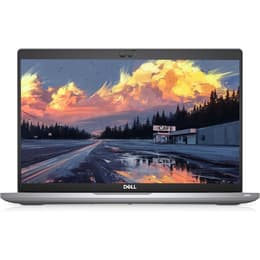
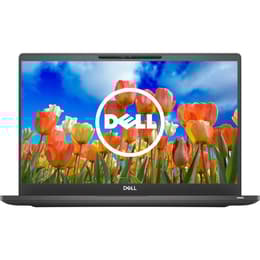


Dell Latitude 5420 14" Vs Dell Latitude 7300 13"

Dell Latitude 5420 14"
Starting at

Refurbished price:263.52

Versus €986.84 new

See options
Dell Latitude 7300 13"
Starting at

Refurbished price:310.00

Versus €692.16 new

See options

Ratings

The Dell Latitude 5420, released in early 2021, and the Dell Latitude 7300, launched in late 2019, are business-oriented laptops designed for productivity and reliability. While both models offer robust performance for professional use, they differ primarily in their release generation, screen size, and specific port configurations. Both devices operate on the Windows platform, providing a familiar experience for most users.

Scores

Durability

When considering the long-term usability of these laptops, their release timelines and design for business environments are key factors. Both models are built to withstand daily professional use, with Dell's Latitude series known for its durability.

  • Release Timeline: The Latitude 5420, being a 2021 model, benefits from a more recent release compared to the Latitude 7300 from 2019. This typically translates to an additional year or two of official software support and security updates from Dell and Microsoft, extending its practical lifespan for critical business applications.
  • Durability Standards: The Latitude 7300 has passed 17 military-grade MIL-STD 810G tests, indicating its resilience against various environmental stresses like high altitudes, extreme temperatures, and vibrations. The Latitude 5420 also features a chassis with carbon fiber and magnesium reinforcement, contributing to its robust feel.
  • Repairability: Both laptops are designed with ease of maintenance in mind. Users and IT professionals can access internal components like RAM and M.2 storage by removing Phillips head screws, allowing for straightforward upgrades and repairs.

Year of Release

2020

2019

OS

Windows 11

Windows 11

Performance

The performance of these Latitude laptops is tailored for business and productivity tasks, with differences stemming from their respective processor generations and internal architectures.

  • Processing Power: The Latitude 5420 features more recent processors, which generally offer improved efficiency and responsiveness for demanding applications and multitasking. This translates to smoother operation when handling complex spreadsheets, multiple browser tabs, and video conferencing simultaneously. The Latitude 7300, with its earlier generation processors, still provides solid performance for everyday office tasks and general productivity.
  • Memory and Storage: Both models support ample RAM configurations, with the Latitude 5420 capable of supporting up to 64GB of DDR4 memory, while the Latitude 7300 typically supports up to 32GB. Both utilize fast M.2 PCIe NVMe SSDs for quick boot times and rapid application loading.
  • Battery Behavior: The Latitude 5420, equipped with a 63Whr battery in many configurations, can offer extended usage, with some reports indicating it can last through a full workday or even longer under typical use. The Latitude 7300, often with a 60Whr battery, also delivers strong battery life, frequently exceeding 10 hours on a single charge, making it suitable for users on the go.

Memory (GB)

16 GB

16 GB

Processor

Core i5-1135G7

Core i7 - Gen 8 (U)

Graphic card

Integrated Graphics

Integrated Graphics

Screen quality

The visual experience on both laptops is designed for professional use, focusing on clarity and comfort during extended work sessions, though there are distinctions in display options and brightness levels.

  • Display Technology and Resolution: Both the Latitude 5420 and 7300 feature Full HD (1920x1080) IPS displays, providing clear visuals and wide viewing angles suitable for productivity tasks. The IPS technology ensures consistent color and brightness across different viewing positions.
  • Brightness and Glare: The Latitude 5420 offers various brightness options, with some configurations reaching up to 300-400 nits, which can be beneficial for working in brighter environments. The Latitude 7300 typically provides around 300-317 nits of brightness. Both models commonly feature anti-glare coatings to reduce reflections, enhancing usability in diverse lighting conditions.
  • Screen Size and Refresh Rate: The Latitude 5420 has a 14-inch display, offering slightly more screen real estate than the Latitude 7300's 13.3-inch screen. Both generally feature a standard 60Hz refresh rate, which is adequate for business applications and general media consumption.

Resolution

1920 x 1080

1920 x 1080

Screen type

IPS

IPS

Audiovisual

For communication and media consumption, both Latitude laptops include essential audio-visual components, with a focus on functionality for virtual meetings and everyday use.

  • Webcam and Microphone: Both models typically include a 720p webcam, suitable for video conferencing and online collaboration. The Latitude 5420 often includes a privacy shutter for the webcam and an IR camera for facial recognition, enhancing security and privacy. The Latitude 7300 also offers an optional IR camera for Windows Hello. Both are equipped with integrated microphones for clear voice capture during calls.
  • Speaker Output: Both laptops feature integrated speakers designed for clear audio during video calls and for general media playback. User feedback suggests that while functional, the speakers on business laptops like these are generally optimized for voice clarity rather than rich multimedia experiences.
  • Video Recording: The integrated webcams are primarily for live video communication, offering standard video recording capabilities suitable for basic needs rather than high-fidelity content creation.

Miscellaneous

Beyond core performance and display, several practical features contribute to the overall user experience and connectivity of these business laptops.

  • Connectivity Options: The Latitude 5420 is equipped with Wi-Fi 6 and Bluetooth 5.1/5.2, offering faster wireless speeds and improved efficiency. It also includes a built-in RJ-45 Ethernet port for reliable wired network connections. The Latitude 7300 features Wi-Fi 5 (802.11ac) and Bluetooth 5.0, and notably lacks a built-in Ethernet port, requiring an adapter or dock for wired connections.
  • Port Selection: The Latitude 5420 offers two Thunderbolt 4 ports, providing versatile connectivity for high-speed peripherals, external displays, and power delivery. It also has two USB-A 3.2 Gen 1 ports and an HDMI 2.0 port. The Latitude 7300 includes one Thunderbolt 3 port, two USB-A 3.1 Gen 1 ports, and an HDMI 1.4 port. Both have a universal audio jack and a microSD card reader.
  • Security and Design: Both laptops integrate security features like fingerprint readers (often in the power button) and optional IR cameras for facial recognition. The Latitude 5420 has been noted for its robust build, though some users have criticized its touchpad as being less responsive than desired. The Latitude 7300's keyboard is generally well-regarded for its comfortable typing experience.

Weight

1400 g

3000 g

Screen size

14

13

The Dell Latitude 5420 and 7300 both serve as reliable business laptops, each with distinct advantages that cater to different user priorities. User feedback for the Latitude 5420 often praises its strong battery life and comprehensive port selection, including Thunderbolt 4 and integrated Ethernet. However, some users have expressed concerns regarding the responsiveness of its touchpad. The Latitude 7300 is frequently lauded for its exceptional battery endurance and comfortable keyboard, making it a solid choice for mobile professionals. Some criticisms point to its lack of a built-in Ethernet port and its slightly older processor generation.

Users prioritizing the latest connectivity standards, including Thunderbolt 4 and integrated wired networking, along with a slightly larger screen, may find the Dell Latitude 5420 more aligned with their needs. Its more recent processor generation also offers a performance edge for future-proofing. Conversely, individuals who value a more compact form factor, a highly praised keyboard, and proven long battery life for extensive unplugged use might lean towards the Dell Latitude 7300. Both models represent durable and capable options for professionals. Opting for a quality-assured refurbished version of either laptop can be an eco-friendly alternative, providing access to these business-grade features while making a sustainable choice.


See all articles

Our recent comparisons






