

Dell Latitude 5490 14" Vs Microsoft Surface Go 2 10"

Dell Latitude 5490 14"
Starting at

Refurbished price:325.00

Versus €793.00 new

See options
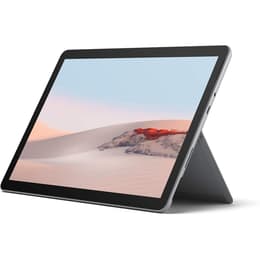
Microsoft Surface Go 2 10"
Starting at

Refurbished price:249.00

Versus €590.00 new

See options

Ratings

The Dell Latitude 5490, released in 2018, is a traditional 14-inch business laptop, while the Microsoft Surface Go 2, launched in 2020, is a more compact 10.5-inch 2-in-1 tablet designed for portability. Both devices operate on the Windows platform, offering a familiar software environment, but they cater to different user needs through their distinct form factors and hardware philosophies. The primary distinctions lie in their size, intended use cases, and the balance between raw computing power and ultra-portability.

Scores

Durability

When considering the practical lifespan of these devices, their release dates and software support play a significant role. The Dell Latitude 5490, being an older model, has a shorter remaining official support window for its original operating system compared to the newer Surface Go 2.

  • Release Timeline and Age: The Dell Latitude 5490 was released in 2018, making it several years older than the Microsoft Surface Go 2, which debuted in May 2020 [3, 9, 15, 39]. This age difference impacts the duration of future software updates and overall longevity.
  • OS Support Duration: Both devices initially shipped with Windows 10. Microsoft has announced that Windows 10 will reach its end of support on October 14, 2025, after which it will no longer receive security updates or feature updates [10, 13, 17, 18]. While the Dell Latitude 5490 can run Windows 11, its older hardware might not meet all the stringent requirements for optimal performance or guaranteed future updates [32]. The Surface Go 2, being newer, is more likely to be compatible with Windows 11 and receive updates for a longer period [11, 35].
  • Repairability: The Dell Latitude 5490 is noted for being highly repairable, with components like the battery being relatively straightforward to replace [32]. In contrast, the Microsoft Surface Go 2 has a lower repairability score, with many components glued in place, making user repairs or upgrades challenging [28, 29].

Year of Release

2017

2019

Last Os Compatibility

Yes

Yes

OS

Windows 11

Windows 11

Performance

The performance capabilities of these two devices are tailored for different workloads, reflecting their design philosophies and target users.

  • Processor Capabilities: The Dell Latitude 5490 typically features an 8th generation Intel Core i5 or i7 processor, providing robust performance for demanding applications and multitasking [1, 4, 6, 20, 21, 23, 27, 36, 38, 39]. The Microsoft Surface Go 2, on the other hand, is equipped with either an Intel Pentium Gold or an 8th generation Intel Core m3 processor, which is suitable for everyday tasks and light productivity but may experience slowdowns with more intensive applications or extensive multitasking [3, 5, 9, 12, 22, 24, 25, 26].
  • RAM and Storage: The Latitude 5490 offers more flexible RAM configurations, often starting at 8GB and expandable up to 32GB, alongside various SSD storage options up to 1TB, ensuring smooth operation and ample space for files [1, 4, 6, 20, 21, 23, 27, 36, 38, 39]. The Surface Go 2 typically comes with 4GB or 8GB of RAM and storage options ranging from 64GB eMMC to 128GB or 256GB SSDs, which can be limiting for users with many applications or large files [3, 5, 9, 12, 15, 24, 26].
  • Battery Behavior: The Dell Latitude 5490 generally offers strong battery life, with some configurations providing over 15 hours of usage, making it suitable for extended work sessions away from a power outlet [6, 21, 27, 36]. The Surface Go 2 also delivers good battery endurance for its class, typically lasting up to 10-13 hours on a single charge during mixed usage, which is beneficial for on-the-go use [3, 5, 9, 22, 24, 28].

Memory (GB)

8 GB

8 GB

Processor

Core i5 - Gen 8 (U)

Pentium Gold 4425Y

Graphic card

Integrated Graphics

Integrated Graphics

Screen quality

The display characteristics of the Dell Latitude 5490 and Microsoft Surface Go 2 highlight their different design priorities, with one focusing on a larger workspace and the other on portability and touch interaction.

  • Display Technology and Size: The Dell Latitude 5490 features a 14-inch Full HD (1920x1080) display, often an IPS panel, providing a larger viewing area suitable for productivity tasks [4, 6, 14, 20, 27, 31, 36, 38, 39]. The Microsoft Surface Go 2 has a smaller 10.5-inch PixelSense display with a resolution of 1920x1280, offering a 3:2 aspect ratio that provides more vertical screen real estate, which can be beneficial for document viewing and web browsing [2, 3, 5, 7, 8, 9, 15, 19, 22, 24, 25, 29, 30].
  • Resolution and Clarity: Both devices offer Full HD or similar resolutions, resulting in clear text and images. The Surface Go 2's higher pixel density (220 ppi) on its smaller screen contributes to a sharp visual experience [2, 3, 5, 7, 9, 15, 22, 24, 25, 30].
  • Brightness and Outdoor Use: The Latitude 5490's display typically offers brightness levels around 200-220 nits, which is adequate for indoor use but may struggle in bright outdoor conditions [4, 6, 14]. The Surface Go 2's display is brighter, reaching 390-408 nits, making it more comfortable for use in varied lighting environments, including outdoors [2, 5].

Resolution

1920 x 1080

1920 x 1280

Screen type

IPS

IPS

Camera

Audiovisual

The audio-visual capabilities of these devices reflect their primary functions, with the Surface Go 2 emphasizing video conferencing and media consumption due to its tablet form factor.

  • Camera System: The Dell Latitude 5490 includes a 720p webcam, which is standard for basic video conferencing [4, 14, 23, 36]. The Microsoft Surface Go 2 features a 5MP front-facing camera capable of 1080p video, which is notably sharper for video calls, and an 8MP rear-facing camera with autofocus for capturing images and video [3, 5, 8, 9, 15, 25, 26, 28]. The front camera also supports Windows Hello facial recognition [9, 25, 28].
  • Low-light and Everyday Photography: The Surface Go 2's improved camera specifications suggest better performance in various lighting conditions for both video calls and casual photography compared to the Latitude 5490's more basic webcam.
  • Audio Quality: The Latitude 5490's audio output has been described as lackluster, suggesting it is primarily functional for system sounds and basic communication [6]. The Surface Go 2, however, features 2W stereo speakers with Dolby Audio and dual far-field studio microphones, providing a more immersive audio experience for media consumption and clearer voice pickup during calls [9, 25, 28, 30].

Miscellaneous

Beyond core performance and display, several practical elements differentiate these two devices, impacting their usability and versatility in various scenarios.

  • Connectivity Options: The Dell Latitude 5490 offers a comprehensive array of ports, including multiple USB 3.1 Gen 1 (Type-A) ports, USB-C with DisplayPort, HDMI, VGA, Ethernet, and an SD card reader, providing extensive options for connecting peripherals and external displays [4, 14, 23, 27, 33, 36, 39]. The Microsoft Surface Go 2 has a more limited selection, featuring a single USB-C port, a Surface Connect port, a microSD card slot, and a 3.5mm headphone jack, which may necessitate adapters for some accessories [3, 9, 15, 23, 25, 26]. Both support modern Wi-Fi standards (Wi-Fi 5 for Latitude, Wi-Fi 6 for Surface Go 2) and Bluetooth [9, 14, 25, 26, 36, 38]. The Surface Go 2 also offers optional LTE connectivity for mobile internet access [3, 9, 15, 25].
  • Weight and Dimensions: The Latitude 5490, as a 14-inch laptop, weighs approximately 1.6 to 1.7 kg, offering a balance between screen size and portability [4, 14, 21, 23, 39]. The Surface Go 2 is significantly lighter and more compact, weighing around 544g (1.2 lbs) for the tablet itself, making it highly portable and easy to carry [5, 9, 29].
  • Build Materials and Durability: The Dell Latitude 5490 features a carbon fiber and polymer chassis, designed to meet MIL-STD-810G ruggedness standards, indicating a focus on durability for business environments [6, 21, 27, 39]. The Surface Go 2 utilizes a magnesium casing, providing a solid and premium feel, and includes a built-in kickstand for versatile positioning [2, 8, 9, 29].

Weight

1600 g

800 g

Screen size

14

10

The Dell Latitude 5490 and Microsoft Surface Go 2 cater to distinct user profiles, each excelling in different areas based on their design and capabilities. User sentiment for the Latitude 5490 often highlights its robust performance for business tasks and its durable, repairable build, making it a reliable workhorse [32]. Some users, however, note its somewhat dated design and screen brightness as areas for improvement [6, 14]. The Surface Go 2 is frequently praised for its exceptional portability, vibrant display, and versatility as a 2-in-1 device, particularly for note-taking and light productivity [19, 22, 29, 30]. Criticisms often revolve around the base model's performance limitations and the necessity of purchasing accessories like the Type Cover separately [26, 29].

Users prioritizing a traditional laptop experience with strong performance for demanding applications, extensive connectivity, and a larger screen for multitasking may prefer the Dell Latitude 5490. Its robust build and repairability also make it a suitable choice for those seeking a long-lasting device for a fixed workspace. Conversely, individuals who value extreme portability, a touch-enabled tablet experience, and enhanced video conferencing capabilities will find the Microsoft Surface Go 2 well-suited to their needs. It is an excellent option for students, travelers, or those requiring a secondary, highly mobile device for light productivity and media consumption.

For those considering either of these devices, exploring quality-assured refurbished options can provide an eco-friendly alternative, extending the life cycle of these electronics and offering a sustainable choice.

See all articles

Our recent comparisons