

iPhone 11 Vs iPhone 8

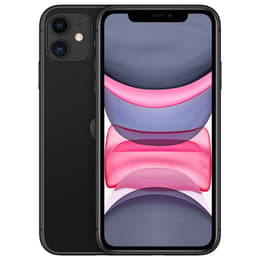
iPhone 11
iPhone 11
Starting at

Refurbished price:156.00

Versus €589.00 new

See options
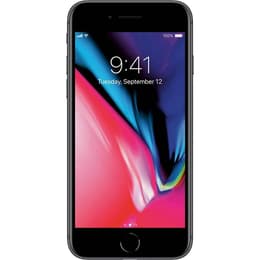
iPhone 8
iPhone 8
Starting at

Refurbished price:93.00

Versus €299.00 new

See options

Ratings

The iPhone 11, released in September 2019, and the iPhone 8, launched in September 2017, represent different generations of Apple's smartphone lineup. While both devices offer a familiar iOS experience, the iPhone 11 introduces a more modern design, an enhanced camera system, and a more capable processor compared to its predecessor.

Scores

Durability

When considering the longevity of these devices, several factors come into play, primarily their release timelines and ongoing software support.

  • Software Support: The iPhone 11, released in 2019, launched with iOS 13 and is compatible with iOS 17 and iOS 18, with expected compatibility for iOS 26 in September 2025. In contrast, the iPhone 8, released in 2017, launched with iOS 11 and received major updates up to iOS 16, but does not support iOS 17 or later. This means the iPhone 11 offers a significantly longer period of access to the latest iOS features and security updates.
  • Repairability: Both the iPhone 11 and iPhone 8 received a repairability score of 6 out of 10 from iFixit. For both models, display and battery replacements are considered relatively straightforward. However, the glass back on both devices is noted as being difficult to replace due to strong adhesive, potentially making repairs for a cracked back more challenging.
  • Expected Lifespan: Given its newer release and extended software support, the iPhone 11 is likely to offer a longer practical lifespan for users who prioritize access to the latest applications and operating system features. The iPhone 8, while still receiving security updates, has reached the end of its major iOS update cycle.

Year of Release

2019

2017

Compatible with latest Update

Yes

No

OS

iOS

iOS

Foldable

No

No

Performance

The performance of a smartphone is largely determined by its internal processing capabilities, which impact everything from app responsiveness to multitasking efficiency and battery behavior.

  • Processing Power: The iPhone 11 is equipped with a more advanced processor, featuring a 6-core CPU, 4-core GPU, and an 8-core Neural Engine. This allows it to handle demanding applications, complex games, and intensive multitasking with greater fluidity and speed compared to the iPhone 8, which uses an earlier generation processor.
  • Multitasking and Responsiveness: The iPhone 11 includes 4GB of RAM, providing more capacity for running multiple applications simultaneously without slowdowns. The iPhone 8 has 2GB of RAM, which can lead to more frequent app reloads when switching between tasks.
  • Battery Behavior: The iPhone 11 features a larger battery capacity of 3110 mAh, which translates to extended usage times. Users commonly report the iPhone 11 lasting a full day of use, with some achieving around 9 hours of screen-on time. In comparison, the iPhone 8 has an 1821 mAh battery, offering reliable but generally shorter battery life, requiring more frequent charging for heavy users.

Memory

4 GB

2 GB

Screen quality

The display is a primary interface for any smartphone, and the iPhone 11 and iPhone 8 offer distinct viewing experiences due to differences in their screen technology and design.

  • Display Technology and Size: The iPhone 11 features a 6.1-inch Liquid Retina HD display, which is an IPS LCD panel. This provides a larger viewing area compared to the iPhone 8's 4.7-inch Retina HD display, also an IPS LCD. The iPhone 11's larger screen offers a more immersive experience for media consumption and browsing.
  • Resolution and Clarity: Both devices have a pixel density of 326 pixels per inch (ppi), meaning they offer similar sharpness for text and images. The iPhone 11 has a resolution of 1792x828 pixels, while the iPhone 8 has 1334x750 pixels.
  • Brightness and Features: Both displays offer a typical maximum brightness of 625 nits, ensuring good visibility in various lighting conditions. They also both include True Tone technology, which adjusts the display's white balance to match ambient light, and Wide Color (P3) for accurate color reproduction. The iPhone 8 also includes 3D Touch, a pressure-sensing technology, which is not present on the iPhone 11.

Resolution

828 x 1792

750 x 1334

Screen type

Liquid Retina IPS LCD

Retina IPS LCD

Audiovisual

Camera capabilities are a significant differentiator between these two iPhone models, with the iPhone 11 offering a more versatile and advanced system.

  • Rear Camera System: The iPhone 11 features a dual-camera setup with a 12MP Wide lens (f/1.8) and a 12MP Ultra Wide lens (f/2.4) with a 120-degree field of view. This allows for capturing broader scenes and offers 2x optical zoom out. The iPhone 8 has a single 12MP Wide camera (f/1.8). Both have optical image stabilization on their main wide lenses.
  • Photography Features: The iPhone 11 introduces Night mode, significantly improving photo quality in low-light environments, and Deep Fusion for enhanced detail and texture in medium-light conditions. It also offers an improved Portrait mode with Depth Control and six Portrait Lighting effects. The iPhone 8 offers standard photography features, with Portrait mode and Portrait Lighting available on the larger iPhone 8 Plus model.
  • Video Recording and Front Camera: Both phones can record 4K video at up to 60 frames per second and slow-motion video at up to 240 frames per second. The iPhone 11 upgrades the front-facing camera to a 12MP TrueDepth sensor, capable of 4K video recording and slo-mo selfies, while the iPhone 8 has a 7MP FaceTime HD camera that records 1080p HD video.

Main camera

12 megapixels

12 megapixels

Front camera

12 megapixels

7 megapixels

Miscellaneous

Beyond core performance and camera, several practical elements contribute to the overall user experience, including connectivity, physical design, and additional features.

  • Connectivity and Ports: The iPhone 11 supports Gigabit-class LTE and Wi-Fi 6 (802.11ax), offering faster wireless data speeds compared to the iPhone 8's LTE and Wi-Fi 5 (802.11ac). Both devices feature Bluetooth 5.0 for efficient wireless accessory connections and utilize a Lightning connector for charging and data transfer.
  • Physical Design and Durability: Both models feature a glass front and back with an aluminum frame. The iPhone 11 has an IP68 rating for water and dust resistance, allowing submersion up to 2 meters for 30 minutes. The iPhone 8 has an IP67 rating, protecting against submersion up to 1 meter for 30 minutes. The iPhone 11 is slightly larger and heavier than the iPhone 8.
  • Security and Other Features: The iPhone 11 relies on Face ID for secure authentication and unlocking. The iPhone 8 uses Touch ID, integrated into its home button. Both devices support wireless charging.

Weight

194 g

148 g

Width

7,57 cm

6,73 cm

Height

15,09 cm

13,84 cm

Depth

0,83 cm

0,73 cm

Screen size (in)

6.1

4.7

Network

4G

4G

SIM card

Physical SIM + eSIM

Physical SIM

Carrier compatibility

Unlocked

Unlocked

Connector

Lightning

Lightning

The iPhone 11 and iPhone 8 cater to different user needs and expectations, largely due to their generational differences in technology and features. User sentiment often highlights the iPhone 11's improved camera capabilities, particularly its Night mode and Ultra Wide lens, as a significant upgrade for photography enthusiasts. Many users also appreciate the iPhone 11's extended battery life, which generally provides more consistent all-day usage.

Conversely, the iPhone 8 is frequently praised for its compact size and the continued presence of Touch ID, which some users prefer over Face ID. However, a common criticism of the iPhone 8 is its shorter software support lifespan, meaning it no longer receives the latest iOS updates, which can impact access to new features and app compatibility over time.

Users prioritizing advanced photography features, longer battery life, and a more modern, larger display will find the iPhone 11 better suited to their needs. Its extended software support also makes it a more future-proof option for those who keep their devices for several years. For individuals who prefer a smaller form factor, the familiarity of a home button with Touch ID, and do not require the latest software features or advanced camera capabilities, the iPhone 8 remains a functional choice. Both models are available as quality-assured refurbished options, providing an eco-friendly alternative for consumers.


See all articles

Our recent comparisons