
Compare models
Galaxy Z Fold7 Vs iPhone 15 Plus
- 1-year minimum warranty
- Free delivery on all orders
- Free 30-day returns
Differences at a glance
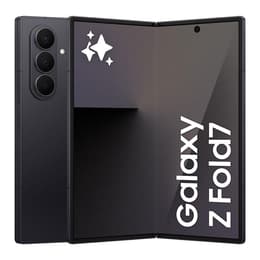
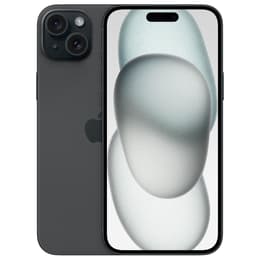
The Samsung Galaxy Z Fold7 (2025) and the Apple iPhone 15 Plus (2023) represent two entirely different approaches to large-screen smartphone design. While the iPhone 15 Plus relies on a traditional candy-bar form factor with a static 6.7-inch display, the Galaxy Z Fold7 introduces a book-style foldable design that transforms from a standard outer screen into an expansive tablet-sized inner screen. Operating on Android and iOS respectively, these devices cater to distinct user preferences regarding hardware versatility and everyday utility.
Available Models
Colour
Storage (GB)
Scores
Durability
Both models are built to receive long-term software support, though their hardware lifespans involve different maintenance considerations due to their respective physical designs.
- Software Support: The Galaxy Z Fold7 benefits from an extended multi-year update commitment covering both OS upgrades and security patches, while the iPhone 15 Plus follows a standard long-term iOS lifecycle.
- Hardware Durability: The iPhone 15 Plus utilizes a rigid aluminum and glass structure with standard water resistance, whereas the Galaxy Z Fold7 features a complex mechanical hinge and a flexible inner display that requires careful handling over years of use.
- Repairability: Traditional smartphone slabs like the iPhone 15 Plus generally present simpler pathways for general component repairs, while foldable devices require specialized servicing for their dual-screen layouts.
Year of Release
2025
2023
Compatible with latest Update
Yes
Yes
OS
Android
iOS
Foldable
Yes
No
Performance
Handling daily tasks, heavy multitasking, and demanding applications differs across these two platforms, shaped by varying processor architectures and memory configurations.
- Multitasking and Memory: The Galaxy Z Fold7 is equipped with generous RAM configurations starting at high capacities to support split-screen app usage, whereas the iPhone 15 Plus manages background processes efficiently through optimized software integration.
- App Responsiveness: Both devices load demanding applications and handle intensive gaming smoothly, utilizing current-generation internal processing components to prevent stutter during extended use.
- Battery Behavior: The iPhone 15 Plus delivers consistent battery longevity through efficient power management on a single screen, while the Galaxy Z Fold7 distributes power across two separate displays, meaning frequent users of the large inner screen may need a midday recharge.
Screen quality
Display capabilities form a major differentiator between these models, impacting everything from media viewing to outdoor readability.
- Display Technology: The iPhone 15 Plus features a bright, single OLED panel with fixed dimensions, whereas the Galaxy Z Fold7 offers two screens—a 6.5-inch cover display and an 8.0-inch foldable main display that provides a tablet-like workspace.
- Brightness and Clarity: Both models achieve high peak brightness levels for clear outdoor visibility under direct sunlight, paired with high refresh rates that ensure smooth scrolling and responsive touch interaction.
- Viewing Experience: Users watching videos or reading documents will find the foldable inner screen of the Galaxy Z Fold7 provides significantly more surface area, while the iPhone 15 Plus offers a traditional cinematic aspect ratio without any screen creases.
Resolution
1968x2184
1290 x 2796
Audiovisual
Photography and media capture hardware vary significantly in lens arrangement and software processing strategies between the two devices.
- Camera Systems: The Galaxy Z Fold7 features a versatile triple-lens rear array including a high-resolution main sensor and optical zoom capabilities, compared to the dual-lens setup on the iPhone 15 Plus that relies on high-resolution sensor cropping for zoom.
- Video and Audio: Both options capture detailed, stable video footage in various lighting conditions, supported by clear microphone arrays that handle calls and voice recordings effectively.
- Media Consumption: Stereo speakers on both models deliver clear audio output for music and video playback, though the larger unfolded footprint of the foldable device creates a more immersive environment for media viewing.
Miscellaneous
Physical dimensions, weight distribution, and connectivity standards shape the everyday ergonomics of carrying and using each device.
- Build and Portability: The iPhone 15 Plus maintains a fixed profile weighing around 201 grams, while the Galaxy Z Fold7 achieves a slim profile when folded at 215 grams, distributing its weight differently across a dual-screen chassis.
- Connectivity: Both models support modern 5G cellular networks, Wi-Fi standards, and Bluetooth connectivity for accessory pairing.
- Ports and Biometrics: The iPhone 15 Plus utilizes a universal USB-C port alongside facial recognition, matching the USB-C standard and biometric security setup found on the Galaxy Z Fold7.
Weight
215 g
201 g
Screen size (in)
8.0
6.7
Network
5G
5G
SIM card
Dual Physical SIM + eSIM
Physical SIM + eSIM
Carrier compatibility
Unlocked
Unlocked
Connector
USB-C (USB 3)
USB-C
What the community thinks
User discussions highlight distinct community perspectives for both devices. Owners of the iPhone 15 Plus frequently praise its dependable battery life, reliable day-to-day stability, and straightforward operating system. On the other hand, users of the Galaxy Z Fold7 often emphasize the productivity advantages of the expansive inner screen and the convenience of a compact outer display when folded, though some discussions note the careful handling required for foldable hardware over time.
Users prioritizing a traditional, lightweight smartphone experience with straightforward durability will find the iPhone 15 Plus well-suited to their daily routine. Conversely, users valuing multitasking workspace, tablet-sized flexibility, and advanced screen versatility may lean toward the Galaxy Z Fold7. For those exploring a quality-assured refurbished option as an eco-friendly alternative, both models are frequently available through sustainable channels that extend device lifecycles.