

iPhone 13 Pro Vs iPhone SE (2022)

iPhone 13 Pro
iPhone 13 Pro
Starting at

Refurbished price:313.00

Versus €1,149.00 new

See options
iPhone SE (2022)
iPhone SE (2022)
Starting at

Refurbished price:127.00

Versus €549.00 new

See options

Ratings

The iPhone 13 Pro, released in September 2021, and the iPhone SE (2022), launched in March 2022, represent distinct approaches within Apple's smartphone lineup. While both devices operate on the same iOS ecosystem and share a powerful internal processor, they cater to different user preferences through their design, display technology, and camera capabilities. The iPhone 13 Pro offers a more advanced feature set and a modern design, whereas the iPhone SE (2022) maintains a classic form factor with updated internal components.

Scores

Durability

The longevity of a smartphone is influenced by its release timeline, software support, and repairability. These two models offer different expectations in these areas.

  • Software Support: The iPhone 13 Pro, released in late 2021, is expected to receive major iOS updates until at least 2027, with security updates potentially extending to 2031. The iPhone SE (2022), launched in early 2022, is anticipated to receive major iOS updates until at least 2028, and potentially until 2029 or 2030 for security updates, offering a slightly longer software lifespan due to its newer release.
  • Repairability: The iPhone 13 Pro received an iFixit repairability score of 5 out of 10, indicating that while display and battery replacements are prioritized, other repairs can be complex due to multiple screw types and software limitations that can affect features like Face ID with non-genuine parts. In contrast, the iPhone SE (2022) generally has a higher repairability score, around 6 out of 10, with battery and screen replacements being relatively straightforward, partly due to its design sharing components with older, more repair-friendly models.
  • Practical Lifespan: Both devices are built to last, but the iPhone 13 Pro's more robust build materials and advanced features may contribute to a perceived longer practical lifespan for users who prioritize cutting-edge technology. The iPhone SE (2022) offers a reliable experience for those who prefer a compact device with a familiar design.

Year of Release

2021

2022

Compatible with latest Update

Yes

Yes

OS

iOS

iOS

Foldable

No

No

Performance

Both smartphones are equipped with capable processors, but their overall performance experience can differ based on their design and other internal components.

  • Processing Power: Both the iPhone 13 Pro and the iPhone SE (2022) feature the same generation of Apple's internal processor. This means both devices handle demanding applications, multitasking, and graphics-intensive games with smooth responsiveness. The iPhone 13 Pro benefits from a processor configuration with an additional graphics core, which can provide a slight advantage in graphically intensive tasks.
  • Multitasking and Storage: The iPhone 13 Pro comes with 6GB of RAM, allowing for more applications to remain active in the background without needing to reload. The iPhone SE (2022) has 4GB of RAM, which is sufficient for most daily tasks but may require apps to refresh more frequently when switching between many open applications. Storage options for the iPhone 13 Pro range up to 1TB, while the iPhone SE (2022) offers up to 256GB.
  • Battery Behavior: The iPhone 13 Pro generally offers extended battery life, often lasting a full day or more for many users, even with heavy usage. The iPhone SE (2022), with its smaller physical size, has a more compact battery, which typically translates to average battery life, often requiring a charge before the end of a day for heavy users.

Memory (GB)

6 GB

4 GB

Screen quality

The visual experience is a significant differentiator between these two iPhone models, primarily due to their display technologies and designs.

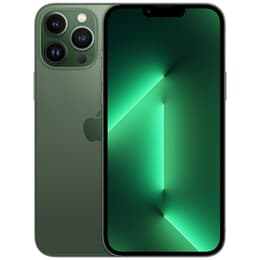
  • Display Technology and Clarity: The iPhone 13 Pro features a 6.1-inch Super Retina XDR OLED display, which delivers deep blacks, high contrast, and vibrant colors. The iPhone SE (2022) uses a 4.7-inch Retina HD LCD display, offering good color accuracy and brightness, but with less contrast and true black representation compared to OLED.
  • Refresh Rate and Brightness: A key feature of the iPhone 13 Pro is its ProMotion technology, providing an adaptive refresh rate up to 120Hz. This results in smoother scrolling and more fluid animations. The iPhone SE (2022) has a standard 60Hz refresh rate. The iPhone 13 Pro also achieves higher peak brightness levels, especially for HDR content and outdoor visibility.
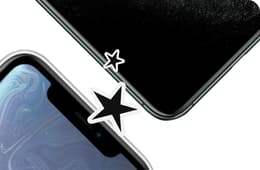
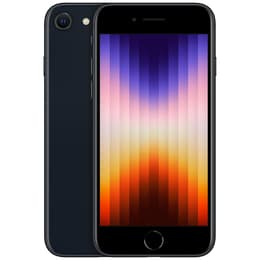
  • Screen Size and Design: The iPhone 13 Pro offers a larger, edge-to-edge display with a notch for the front camera and sensors. The iPhone SE (2022) retains the classic iPhone design with a smaller screen, prominent bezels at the top and bottom, and a physical home button.

Resolution

1170 x 2532

750 x 1334

Screen type

Super Retina XDR OLED

Retina IPS LCD

Audiovisual

The camera systems on these two iPhones cater to different photography needs and offer varying levels of versatility.

  • Rear Camera System: The iPhone 13 Pro boasts a versatile triple-camera system, including a 12MP Wide, 12MP Ultra Wide, and 12MP Telephoto lens with 3x optical zoom. It also features a LiDAR scanner for improved depth sensing and low-light autofocus. This setup enables advanced features like macro photography and improved low-light performance. The iPhone SE (2022) features a single 12MP wide-angle rear camera. While capable of producing good images in well-lit conditions, it lacks the versatility of ultra-wide shots, optical zoom, and a dedicated Night mode.
  • Photography and Video Features: Both phones support 4K video recording up to 60 frames per second. The iPhone 13 Pro includes additional video capabilities such as Cinematic mode and ProRes video recording. For still photography, the iPhone 13 Pro's advanced computational photography benefits from the more sophisticated hardware, leading to better detail and dynamic range in challenging conditions. The iPhone SE (2022) offers Portrait mode for people, but its single lens limits its depth detection compared to the multi-lens system of the 13 Pro.
  • Front Camera: The iPhone 13 Pro has a 12MP front camera, while the iPhone SE (2022) features a 7MP front camera.

Main camera

12 megapixels

12 megapixels

Front camera

12 megapixels

7 megapixels

Miscellaneous

Beyond the core features, several practical elements contribute to the overall user experience of these devices.

  • Connectivity and Ports: Both the iPhone 13 Pro and iPhone SE (2022) support 5G cellular connectivity, Wi-Fi 6, and Bluetooth. Both devices utilize the Lightning port for charging and data transfer. The Lightning port on the iPhone 13 Pro operates at USB 2.0 speeds, which can be slow for transferring large video files. Neither device includes a traditional headphone jack.
  • Biometric Authentication: The iPhone 13 Pro relies on Face ID for secure facial recognition and unlocking. The iPhone SE (2022) features Touch ID, an integrated fingerprint sensor within its physical home button.
  • Build Materials and Durability: The iPhone 13 Pro features a Ceramic Shield front cover, a textured matte glass back, and a stainless steel frame, contributing to its robust feel and IP68 water and dust resistance. The iPhone SE (2022) also has a durable glass front and back (the same type of glass used on the back of the iPhone 13), with an aluminum frame, and an IP67 rating for water and dust resistance.
  • Dimensions and Handling: The iPhone 13 Pro is a larger and heavier device at 204 grams, offering a more expansive screen experience. The iPhone SE (2022) is significantly more compact and lighter at 144 grams, making it easier for one-handed use and pocketability.

Weight

203 g

144 g

Width

7,15 cm

6 cm

Height

14,67 cm

13 cm

Depth

0,76 cm

0,73 cm

Screen size (in)

6.1

4.7

Network

5G

5G

SIM card

Physical SIM + eSIM

Physical SIM + eSIM

Carrier compatibility

Unlocked

Unlocked

Connector

Lightning

Lightning

The iPhone 13 Pro and iPhone SE (2022) offer distinct propositions within the Apple ecosystem, each with its own set of strengths and user appeal. User feedback for the iPhone 13 Pro often praises its advanced camera system, vibrant ProMotion display, and extended battery life. Some common criticisms have included initial software glitches affecting ProMotion in third-party apps, potential touchscreen unresponsiveness, and the continued use of the slower Lightning port for data transfer.

The iPhone SE (2022) is frequently lauded for its powerful internal processor within a compact and familiar design, its continued software support, and the convenience of Touch ID. However, users often point to its dated design with large bezels, the average battery life for heavy users, and the limitations of its single-lens camera system as areas for improvement.

Users prioritizing a modern, expansive display with fluid visuals, a highly versatile camera system for diverse photography and videography, and robust build quality will find the iPhone 13 Pro well-suited to their needs. This device is ideal for those who engage in creative tasks, mobile gaming, or simply desire a premium smartphone experience.

Conversely, users who value a compact form factor, the familiarity of a physical home button with Touch ID, and a powerful processor for everyday tasks without needing the most advanced camera features or a high refresh rate display, may prefer the iPhone SE (2022). It serves as a reliable and efficient device for communication, browsing, and general app usage. Both models are available as quality-assured refurbished options, providing an eco-friendly alternative for consumers.


See all articles

Our recent comparisons