

Compare models
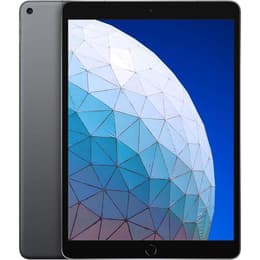
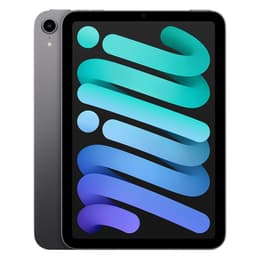
iPad Air 3 (2019, A12 series) Vs iPad mini 6 (2021, A15 series)
- 1-year minimum warranty
- Free delivery on all orders
- Free 30-day returns
Differences at a glance
The iPad Air (3rd generation), released in March 2019, and the iPad Mini (6th generation), launched in September 2021, represent distinct approaches to Apple's tablet lineup. While both devices offer the intuitive iPadOS experience, they differ significantly in size, internal components, and modern features. The iPad Air 2019 provides a larger display and traditional design, while the iPad Mini 2021 offers a more compact form factor with updated technology.
Available Models
Colour
Storage (GB)
Scores
Durability
When considering the long-term usability of a tablet, factors like release date and software support are important. The iPad Air 2019 and iPad Mini 2021 offer different timelines for expected software longevity and physical design.
- Release Timeline: The iPad Air (3rd generation) was released in March 2019, making it an older device compared to the iPad Mini (6th generation), which launched in September 2021. This two-and-a-half-year difference in release dates directly impacts their remaining software support window.
- Software Longevity: Apple typically provides major iPadOS updates for about 5 to 7 years after an iPad's release, with security updates potentially extending beyond that. The iPad Air 2019, with its A12 Bionic chip, is expected to receive fewer future major iPadOS updates compared to the iPad Mini 2021, which features the newer A15 Bionic chip.
- Physical Design & Repairability: The iPad Air 2019 retains the traditional home button and Lightning port, while the iPad Mini 2021 adopts a more modern design with Touch ID integrated into the power button and a USB-C port. The USB-C port on the Mini offers broader compatibility with accessories and charging standards.
Year of Release
2019
2021
Compatible with latest Update
Yes
Yes
OS
iPadOS
iPadOS
Maximum Operating System supported
iPadOS 18
iPadOS 18
Performance
The performance of these two iPads is largely influenced by their respective processors and RAM, affecting how smoothly they handle various tasks from everyday browsing to more demanding applications.
- Processing Power: The iPad Air 2019 is equipped with a capable A12 Bionic chip, which handles general tasks, web browsing, and many applications smoothly. The iPad Mini 2021, however, features the more advanced A15 Bionic chip, providing a noticeable boost in speed and efficiency, particularly for intensive gaming and complex app usage.
- Multitasking and Responsiveness: The iPad Air 2019 comes with 3GB of RAM, sufficient for typical multitasking. The iPad Mini 2021 includes 4GB of RAM, which contributes to a more fluid experience when switching between multiple applications or running several demanding processes simultaneously.
- Battery Behavior: Both models are rated for approximately 10 hours of web surfing over Wi-Fi. The iPad Air 2019 has a larger 30.2 Wh battery, while the iPad Mini 2021 has a 19.3 Wh battery. Despite the difference in battery capacity, the Mini's more efficient A15 chip and smaller display help it achieve similar real-world battery life for general use.
Processor
Apple A12 Bionic
Apple A15 Bionic
Screen quality
The visual experience on a tablet is primarily defined by its display, and while both iPads offer high-quality screens, their sizes and specific characteristics cater to different preferences.
- Display Technology and Clarity: Both the iPad Air 2019 and iPad Mini 2021 feature Liquid Retina IPS LCD displays with True Tone technology, which adjusts the screen's white balance to match ambient light. The iPad Air 2019 has a 10.5-inch display with a resolution of 2224 x 1668 pixels (264 ppi), offering a spacious viewing area. The iPad Mini 2021 has a more compact 8.3-inch display with a higher resolution of 2266 x 1488 pixels (326 ppi), resulting in a sharper image due to its greater pixel density.
- Brightness and Outdoor Use: Both tablets offer a peak brightness of 500 nits, ensuring good visibility in various lighting conditions, including outdoor environments. The anti-reflective coating on both displays further aids in reducing glare.
- Screen Size and Viewing Experience: The 10.5-inch screen of the iPad Air 2019 provides an expansive canvas suitable for productivity tasks, media consumption, and digital art. The 8.3-inch screen of the iPad Mini 2021, while smaller, is designed for portability and comfortable one-handed use, making it well-suited for reading and on-the-go entertainment.
Resolution
2224 x 1668
2266 x 1488
True Tone
Yes
Yes
Pro-Motion
No
No
Screen type
Retina display
Liquid Retina display
Pixel density
264ppp
326ppp
Brightness
500 nits brightness
500 nits brightness
Sound quality
Speakers
Stereo speakers
Stereo speakers (landscape)
Audiovisual
While tablets are not typically primary photography devices, their cameras are useful for video calls, document scanning, and casual photo capture. The iPad Mini 2021 offers more advanced camera capabilities compared to the iPad Air 2019.
- Rear Camera System: The iPad Air 2019 features an 8MP rear camera with an f/2.4 aperture, capable of recording 1080p HD video. The iPad Mini 2021 upgrades to a 12MP wide camera with an f/1.8 aperture, supporting 4K video recording at up to 60 frames per second, offering improved detail and low-light performance.
- Front Camera and Video Conferencing: For front-facing interactions, the iPad Air 2019 has a 7MP camera with an f/2.2 aperture. The iPad Mini 2021 significantly enhances this with a 12MP ultra-wide front camera (f/2.4 aperture) that includes Center Stage, a feature that automatically keeps the user in the frame during video calls.
- Audio Quality: Both iPads feature stereo speakers, providing a decent audio experience for media consumption. The iPad Mini 2021's speakers are noted for good quality, and both devices include dual microphones for clear audio input during calls or recordings.
Miscellaneous
Beyond core performance and display, several practical features and design elements differentiate the iPad Air 2019 and iPad Mini 2021, impacting their daily usability and accessory compatibility.
- Connectivity and Ports: The iPad Air 2019 uses a Lightning port for charging and data transfer and supports Wi-Fi 5 (802.11ac). The iPad Mini 2021 adopts a more versatile USB-C port, allowing for broader accessory compatibility and faster data transfer, and supports the newer Wi-Fi 6 (802.11ax) standard for improved wireless performance. The Mini also offers optional 5G cellular connectivity.
- Stylus and Keyboard Support: The iPad Air 2019 is compatible with the 1st generation Apple Pencil and the Smart Keyboard, making it suitable for typing and basic drawing tasks. The iPad Mini 2021 supports the 2nd generation Apple Pencil, which attaches magnetically and charges wirelessly, offering a more convenient and refined stylus experience. Due to its smaller size, the Mini does not support the Smart Keyboard.
- Dimensions and Handling: The iPad Air 2019 measures 250.6 x 174.1 x 6.1 mm and weighs around 456g (Wi-Fi model), providing a larger screen in a relatively thin and light build. The iPad Mini 2021 is significantly more compact at 195.4 x 134.8 x 6.3 mm and weighs approximately 293g (Wi-Fi model), making it highly portable and comfortable for extended one-handed use.
Weight
456 g
293 g
Width
17.41 cm
13.48 cm
Height
25.06 cm
19.54 cm
Depth
0.61 cm
0.63 cm
Screen size (in)
10.5
8.3
Network
Wi-Fi
Wi-Fi
Carrier compatibility
Without SIM Port
Without SIM Port
Wi-Fi technology
Wi-Fi 6 802.11a/b/g/n/ac
Wi-Fi 6 802.11ax
Bluetooth Version
Bluetooth 5.0
Bluetooth 5.0
Face ID
No
No
Touch ID
Yes
Yes
Connector
Lightning connector
USB Type-C
What the community thinks
User feedback often highlights the iPad Air 2019 as a reliable and capable tablet for general use, praised for its larger screen size which is beneficial for media consumption and light productivity. Some users, however, note its aging design and the limitations of its older processor compared to newer models. The iPad Mini 2021 generally receives acclaim for its modern design, powerful performance in a small package, and improved camera features, though some users find the smaller screen less ideal for extensive typing or complex multitasking.
Users prioritizing a larger display for immersive viewing and a more traditional tablet experience may find the iPad Air 2019 well-suited to their needs. Its compatibility with the 1st generation Apple Pencil and Smart Keyboard makes it a practical choice for students or those needing a basic portable workstation. Conversely, users who value extreme portability, a more modern design, and enhanced processing power for demanding applications or gaming will likely lean towards the iPad Mini 2021. Its upgraded cameras and USB-C connectivity also appeal to those seeking more contemporary features in a compact form. Both devices offer a quality iPadOS experience, and choosing between them often comes down to the preferred balance between screen size and portability. For those considering either model, exploring quality-assured refurbished options can be a sustainable choice.