

Galaxy S22 5G Vs Xiaomi Redmi Note 12 Pro

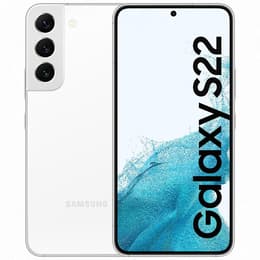
Galaxy S22 5G
Galaxy S22 5G
Starting at

Refurbished price:174.00

Versus €851.00 new

See options
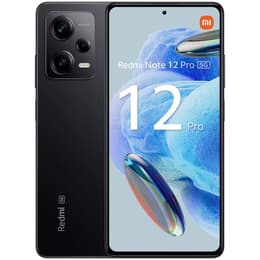
Xiaomi Redmi Note 12 Pro
Starting at

Refurbished price:112.00

Versus €399.00 new

See options

Ratings

The Samsung Galaxy S22 5G and the Xiaomi Redmi Note 12 Pro are both modern smartphones offering distinct user experiences. The Galaxy S22 5G, released in February 2022, is a compact flagship device from Samsung, known for its premium build and advanced camera features. The Xiaomi Redmi Note 12 Pro, launched globally in January 2023, positions itself as a feature-rich option with a focus on display quality and battery longevity. Both devices run on the Android operating system, providing access to a wide ecosystem of applications and services.

Scores

Durability

When considering the practical lifespan of these devices, several factors come into play, including their release timelines, software support, and physical durability.

  • Release Timeline: The Galaxy S22 5G was released in February 2022, while the Redmi Note 12 Pro had its global launch in January 2023. This means the Redmi Note 12 Pro is a newer device, potentially offering a slightly longer period before its hardware is considered outdated.
  • Software Longevity: Samsung typically provides 4 years of major Android OS updates and 5 years of security updates for its flagship devices like the Galaxy S22 5G. This suggests the Galaxy S22 5G will receive software support until at least Android 16 and security updates until February 2027. Xiaomi's update policy for the Redmi Note series generally includes 2 major Android OS updates and 3 years of security updates, meaning the Redmi Note 12 Pro would likely receive updates up to Android 14 and security patches until January 2026.
  • Physical Durability: The Galaxy S22 5G features Gorilla Glass Victus+ on both its front and back, along with an aluminum frame, offering robust protection against drops and scratches. It also boasts an IP68 rating for dust and water resistance, allowing submersion up to 1.5 meters for 30 minutes. The Redmi Note 12 Pro uses Gorilla Glass 5 for its front display and has a plastic frame with a glass back. It carries an IP53 rating, providing protection against dust and splashing water.

Year of Release

2022

2022

Compatible with latest Update

Yes

No

OS

Android

Android

Foldable

No

No

Performance

The performance of a smartphone is crucial for daily tasks, from browsing to demanding applications. Both devices offer capable hardware, but their approaches to processing power and battery management differ.

  • Everyday Responsiveness: The Galaxy S22 5G is equipped with a processor designed for high-end performance, ensuring smooth operation, quick app launches, and efficient multitasking. Users can expect a highly responsive experience even with graphically intensive games and applications. The Redmi Note 12 Pro features a processor that handles daily tasks and most applications smoothly, providing a fluid user experience for general use and moderate gaming.
  • Battery Behavior: The Galaxy S22 5G has a 3700 mAh battery, which for heavy users may require more frequent charging throughout the day. Its smaller capacity means that while it can last a full day for moderate use, demanding tasks will deplete it faster. The Redmi Note 12 Pro comes with a larger 5000 mAh battery, offering extended usage times and often lasting a full day or more even with heavier use. This larger capacity contributes to less frequent charging for many users.
  • Storage and Multitasking: Both devices offer various storage configurations, typically starting from 128GB, with options for 256GB. Neither device supports expandable storage via a microSD card. For multitasking, the Galaxy S22 5G generally comes with 8GB of RAM, providing ample capacity for running multiple applications simultaneously without significant slowdowns. The Redmi Note 12 Pro is available with 6GB or 8GB of RAM, with some regions offering 12GB, which is sufficient for most multitasking needs.

Memory (GB)

8 GB

8 GB

Screen quality

The display is a primary interface for smartphone interaction, and both the Galaxy S22 5G and Redmi Note 12 Pro offer vibrant viewing experiences with distinct characteristics.

  • Display Technology and Clarity: The Galaxy S22 5G features a 6.1-inch Dynamic AMOLED 2X display, known for its exceptional color accuracy, deep blacks, and high contrast. Its resolution of 1080 x 2340 pixels provides sharp and clear visuals. The Redmi Note 12 Pro sports a larger 6.67-inch AMOLED display with a resolution of 1080 x 2400 pixels, also delivering vibrant colors and good clarity, making it suitable for media consumption.
  • Brightness and Refresh Rate: The Galaxy S22 5G's display can reach a peak brightness of 1300 nits, ensuring good visibility even in bright outdoor conditions. It also features an adaptive 120Hz refresh rate, providing smooth scrolling and fluid animations. The Redmi Note 12 Pro offers a peak brightness of 900 nits, which is adequate for most indoor and outdoor scenarios, and also supports a 120Hz refresh rate for a smooth visual experience.
  • Viewing Experience: The Galaxy S22 5G's smaller screen size contributes to a more compact form factor, making it easier for one-handed use. Its display is well-suited for users who prefer a more manageable device without compromising on visual quality. The Redmi Note 12 Pro's larger screen provides a more expansive viewing area, which can enhance the experience for watching videos, gaming, and browsing, appealing to users who prioritize immersive content consumption.

Resolution

1080 x 2340

1080 x 2400

Screen type

Dynamic AMOLED 2X

AMOLED

Audiovisual

Both smartphones offer capable camera systems designed to capture everyday moments, though they approach photography with different sensor configurations and features.

  • Main Camera Capabilities: The Galaxy S22 5G features a versatile triple-camera setup with a 50 MP main sensor, a 12 MP ultrawide lens, and a 10 MP telephoto lens with 3x optical zoom. This configuration allows for detailed wide shots, expansive landscapes, and clear zoomed-in images. The Redmi Note 12 Pro also has a triple-camera system, typically featuring a 50 MP main sensor with Optical Image Stabilization (OIS), an 8 MP ultrawide lens, and a 2 MP macro lens. The OIS on the main sensor helps in capturing stable photos and videos, especially in challenging lighting.
  • Low-Light and Video Performance: The Galaxy S22 5G excels in low-light conditions, utilizing advanced processing to produce bright and detailed images with reduced noise. It supports video recording up to 8K at 24fps and 4K at 30/60fps, offering high-resolution video capture. The Redmi Note 12 Pro's main camera with OIS performs well in low-light, helping to reduce blur. It supports video recording up to 4K at 30fps and 1080p at 30/60fps.
  • Audio and Media Experience: The Galaxy S22 5G includes stereo speakers tuned by AKG, providing a rich audio experience for media consumption and calls. It does not feature a 3.5mm headphone jack. The Redmi Note 12 Pro also offers dual stereo speakers and retains a 3.5mm headphone jack, which can be a convenient feature for users with wired headphones. Both devices support Dolby Atmos for an enhanced audio experience.

Main camera

50 megapixels

50 megapixels

Front camera

10 megapixels

16 megapixels

Miscellaneous

Beyond core performance and display, several practical elements contribute to the overall user experience and device utility.

  • Connectivity and Ports: Both devices support 5G connectivity for fast mobile data speeds and Wi-Fi 6 for efficient wireless networking. The Galaxy S22 5G features a USB-C 3.2 port, offering faster data transfer speeds compared to the Redmi Note 12 Pro's USB-C 2.0 port. Neither phone includes a traditional 3.5mm headphone jack, except for the Redmi Note 12 Pro which retains it.
  • Biometric Security: The Galaxy S22 5G incorporates an ultrasonic in-display fingerprint sensor for secure and convenient unlocking. It also supports face recognition. The Redmi Note 12 Pro features a side-mounted fingerprint sensor integrated into the power button, which many users find intuitive and quick to access, alongside AI face unlock.
  • Design and Handling: The Galaxy S22 5G is a more compact device, weighing 167g and measuring 146 x 70.6 x 7.6 mm, making it comfortable for one-handed use and easy to carry. Its premium build materials, including Gorilla Glass Victus+ and an aluminum frame, contribute to a solid in-hand feel. The Redmi Note 12 Pro is larger and slightly heavier at 187g and dimensions of 162.9 x 76 x 7.9 mm, offering a more expansive screen experience. Its design features a glass front and back with a plastic frame.

Weight

195 g

187 g

Screen size (in)

6.1

6.67

Network

5G

5G

SIM card

Physical SIM + eSIM

Dual Physical SIM

Carrier compatibility

Unlocked

Unlocked

Connector

USB-C + Jack 3.5mm

USB-C

User feedback for the Galaxy S22 5G often praises its compact size, premium feel, and excellent camera system, particularly its telephoto capabilities and low-light performance. Some users, however, have noted that its battery life can be a concern for heavy usage. The Redmi Note 12 Pro is frequently lauded for its large, vibrant AMOLED display, long-lasting battery, and the inclusion of a 3.5mm headphone jack. Criticisms sometimes point to its processor not being as powerful as some competitors in its segment, though it generally performs well for most tasks.

Users prioritizing a compact device with a top-tier camera system, robust build quality, and a longer software support window may find the Samsung Galaxy S22 5G well-suited to their needs. Its smaller form factor makes it ideal for those who prefer one-handed operation and easy pocketability. Conversely, users who value a larger, immersive display for media consumption, extended battery life, and the convenience of a headphone jack might lean towards the Xiaomi Redmi Note 12 Pro. It offers a compelling package for those seeking a feature-rich experience without the most demanding performance requirements.

For those considering either of these devices, exploring quality-assured refurbished options can provide an eco-friendly alternative, allowing access to these features while making a sustainable choice.


See all articles

Our recent comparisons