

Xiaomi 14T Pro Vs Xiaomi Redmi 14C

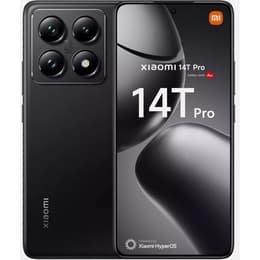
Xiaomi 14T Pro
Xiaomi 14T Pro
Starting at

Refurbished price:372.00

Versus €799.00 new

See options
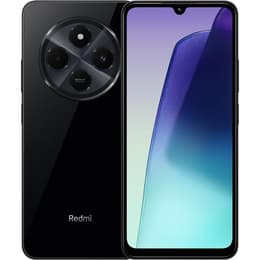
Xiaomi Redmi 14C
Xiaomi Redmi 14C
Starting at

Refurbished price:128.20

Versus €189.00 new

See options

Ratings

The Xiaomi 14T Pro, released in September 2024, and the Xiaomi Redmi 14C, launched in August 2024, are both Android smartphones from Xiaomi, yet they cater to different user expectations. While the 14T Pro is positioned as a device offering advanced features and high-end performance, the Redmi 14C focuses on delivering a comprehensive smartphone experience for everyday use. Both devices run on Android 14 with Xiaomi's HyperOS interface, but they diverge significantly in their core specifications and intended applications.

Scores

Durability

When considering the long-term usability of these devices, several factors come into play, including their release timelines, software support, and physical resilience.

  • Release Timeline: The Xiaomi 14T Pro was introduced in September 2024, making it a relatively recent addition to the market. The Xiaomi Redmi 14C followed closely, launching in August 2024. This means both devices benefit from current software and hardware standards.
  • Software Longevity: Xiaomi generally provides a robust software update policy, with some devices receiving up to four major Android OS upgrades and six years of security patches. The 14T Pro, as a more premium device, is expected to receive extended software support, potentially including an upgrade to Android 15 and beyond, ensuring it remains current with new features and security enhancements for a longer period. The Redmi 14C, while also launching with Android 14, typically receives a slightly shorter, though still substantial, support window, often around two years of OS updates and four years of security updates.
  • Physical Durability: The Xiaomi 14T Pro features an IP68 rating for water and dust resistance, indicating a higher level of protection against environmental elements. Its construction often involves more premium materials like an aluminum alloy frame and a curved glass back, contributing to a solid feel. In contrast, the Redmi 14C typically utilizes a plastic frame and a glass or eco-leather back, offering a decent build quality but without an official IP rating, making it less resistant to water and dust exposure.

Year of Release

2024

2024

Compatible with latest Update

Yes

Yes

OS

Android

Android

Foldable

No

No

Performance

The performance capabilities of these two smartphones are tailored to different user demands, primarily driven by their internal processing units and memory configurations.

  • Processing Power: The Xiaomi 14T Pro is equipped with a high-performance current-generation processor, designed to handle demanding applications, intensive multitasking, and graphic-rich gaming with ease. This results in very smooth operation and quick app loading times. The Redmi 14C, on the other hand, features a processor that balances performance with efficiency, suitable for everyday tasks such as social media browsing, messaging, and light gaming. While it performs smoothly for casual use, it may exhibit occasional stutters when running multiple demanding applications simultaneously.
  • Multitasking and Storage: The 14T Pro typically comes with higher RAM configurations, often 12GB or 16GB, which allows for seamless switching between numerous applications without slowdowns. It also offers substantial internal storage options, up to 1TB, utilizing faster storage technologies. The Redmi 14C is available with 4GB or 6GB of RAM, which is sufficient for typical daily usage, though heavy multitasking might lead to some performance limitations. Its storage options range from 64GB to 256GB, often with the added flexibility of a microSD card slot for expansion.
  • Battery Behavior: Both devices feature large battery capacities. The Xiaomi 14T Pro's 5000mAh battery, combined with an efficient processor, generally provides excellent endurance, often lasting through a full day of heavy use. It also supports very fast wired charging at 120W and 50W wireless charging for quick power-ups. The Redmi 14C's 5160mAh battery offers dependable battery life for most users, often extending to a full day or more with moderate usage. It supports 18W wired charging, which is slower but still provides a reasonable charging speed.

Memory (GB)

16 GB

4 GB

Screen quality

The visual experience on these two smartphones differs significantly due to their display technologies and specifications.

  • Display Technology and Clarity: The Xiaomi 14T Pro boasts a 6.67-inch AMOLED display, offering deep blacks, vibrant colors, and excellent contrast. Its 1.5K resolution (2712x1220 pixels) results in sharp and detailed visuals, making it well-suited for media consumption and detailed work. The Xiaomi Redmi 14C features a larger 6.88-inch IPS LCD screen with an HD+ resolution (720x1640 pixels). While providing ample screen real estate, the lower pixel density means that text and images may appear less sharp compared to the 14T Pro.
  • Brightness and Refresh Rate: The 14T Pro's display offers impressive peak brightness levels, reaching up to 4000 nits, ensuring excellent visibility even in bright outdoor conditions. It also features a high 144Hz adaptive refresh rate, providing exceptionally smooth scrolling and fluid animations. The Redmi 14C has a maximum brightness that is suitable for indoor use and moderately bright environments, typically around 422-566 nits. It also offers a 120Hz refresh rate, which contributes to a smoother user interface experience compared to standard 60Hz displays.
  • Viewing Experience: Users prioritizing a premium visual experience with rich colors, high contrast, and superior sharpness for streaming high-definition content or detailed photo editing will find the 14T Pro's display more appealing. For users who value a larger screen for general browsing and casual media consumption, the Redmi 14C offers a spacious viewing area.

Resolution

1220 x 2712

720 x 1640

Screen type

AMOLED

IPS LCD

Audiovisual

The camera systems on the Xiaomi 14T Pro and Xiaomi Redmi 14C are designed for different levels of photographic capability and user expectations.

  • Rear Camera System: The Xiaomi 14T Pro features a versatile triple-camera setup co-engineered with Leica. It includes a 50MP main sensor with optical image stabilization (OIS), a 50MP telephoto lens offering 2.6x optical zoom, and a 13MP ultrawide lens. This configuration allows for detailed photos across various focal lengths, strong low-light performance, and professional-grade portrait shots. The Redmi 14C comes with a dual-camera system, typically featuring a 50MP main sensor and a 2MP depth sensor. This setup is capable of capturing decent photos in good lighting conditions, with the depth sensor assisting in portrait mode effects.
  • Front Camera and Video Recording: For selfies and video calls, the 14T Pro is equipped with a 32MP front camera, capable of capturing detailed self-portraits. It supports video recording up to 8K resolution at 30 frames per second, offering high-quality video capture with good stabilization. The Redmi 14C has a 13MP front camera, which performs well for basic selfies and video calls. Its video recording capabilities are generally limited to Full HD at 30 frames per second.
  • Audio Experience: While specific details on microphone quality for both devices are not extensively highlighted, the 14T Pro, as a higher-end device, is expected to offer clearer audio capture for calls and recordings. For media consumption, the 14T Pro likely provides a more immersive audio experience through its speakers, potentially with stereo output and enhanced audio technologies. The Redmi 14C typically features a single speaker, which provides adequate sound for casual listening.

Main camera

50 megapixels

50 megapixels

Front camera

32 megapixels

13 megapixels

Miscellaneous

Beyond their core functionalities, several practical elements differentiate the user experience of the Xiaomi 14T Pro and the Xiaomi Redmi 14C.

  • Connectivity and Ports: The Xiaomi 14T Pro supports advanced connectivity standards, including 5G for faster mobile data, Wi-Fi 7 for high-speed wireless internet, and Bluetooth 5.4 for efficient accessory connections. It features a USB Type-C port for charging and data transfer. The Redmi 14C also offers essential connectivity with 4G (and a 5G variant), Wi-Fi, Bluetooth 5.4, and a USB Type-C port. Notably, some Redmi 14C models retain a 3.5mm headphone jack, which is absent on the 14T Pro, offering direct compatibility with wired headphones.
  • Biometric Security and Sensors: Both devices incorporate modern security features. The 14T Pro typically includes advanced face recognition and an in-display fingerprint sensor for secure unlocking. It also features NFC for contactless payments and an infrared (IR) blaster for controlling home appliances. The Redmi 14C commonly uses a side-mounted fingerprint sensor and face unlock for biometric authentication. It also includes NFC in select markets and a range of standard sensors like an accelerometer and proximity sensor.
  • Design and Handling: The 14T Pro, with dimensions of 160.4 x 75.1 x 8.4 mm and a weight of 209g, offers a balanced feel in hand, often with a premium finish. The Redmi 14C is slightly larger and heavier at 171.88 x 77.80 x 8.22 mm and 211g, which might be noticeable during extended use. Its design often aims for a premium aesthetic despite using more common build materials.

Weight

209 g

207 g

Screen size (in)

6.67

6.88

Network

5G

4G

SIM card

Dual Physical SIM

Dual Physical SIM

Carrier compatibility

Unlocked

Unlocked

User feedback for the Xiaomi 14T Pro frequently highlights its impressive display, robust performance for gaming and demanding applications, and its capable camera system co-engineered with Leica. Users often praise its fast wired and wireless charging capabilities, which contribute to a convenient daily experience. Some common observations include its premium feel and solid build quality. Conversely, the Xiaomi Redmi 14C is often lauded for its large, smooth 120Hz display, dependable battery life, and a design that feels more premium than its category might suggest. Users appreciate its solid performance for everyday tasks and the inclusion of features like a 3.5mm headphone jack and expandable storage. Criticisms sometimes point to its lower display resolution and performance limitations with very demanding applications.

Users prioritizing a high-performance device with a top-tier display, advanced camera capabilities, and rapid charging will find the Xiaomi 14T Pro well-suited to their needs. It is ideal for those who engage in mobile gaming, high-resolution content creation, or require a device that can handle intensive multitasking without compromise. Conversely, users who prioritize a large screen for general browsing, reliable battery life for extended use, and solid performance for everyday applications will lean toward the Xiaomi Redmi 14C. It is a practical choice for individuals seeking a feature-rich smartphone experience without the need for flagship-level specifications.

For those considering either of these devices, exploring quality-assured refurbished options can provide an eco-friendly alternative, offering access to these technologies while supporting sustainable consumption practices.


See all articles

Our recent comparisons