

Xiaomi 12T Vs Xiaomi Redmi Note 14 4G

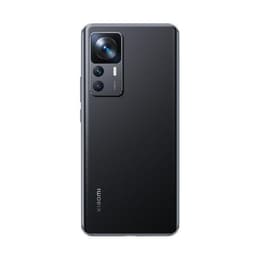
Xiaomi 12T
Xiaomi 12T
Starting at

Refurbished price:138.00

Versus €649.00 new

See options
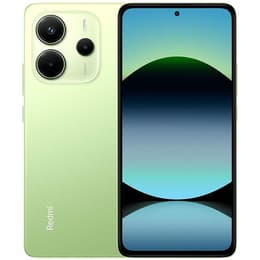
Xiaomi Redmi Note 14 4G
Starting at

Refurbished price:162.00

Versus €229.99 new

See options

Ratings

The Xiaomi 12T, released in October 2022, and the Xiaomi Redmi Note 14 4G, launched in early 2025, are both smartphones from Xiaomi's diverse lineup. While the 12T was positioned with a focus on high-speed charging and a powerful processor, the Redmi Note 14 4G emphasizes a newer software experience and a large battery. Both devices run on the Android operating system, offering a familiar user interface with Xiaomi's custom HyperOS overlay on the newer model.

Scores

Durability

When considering the longevity of these devices, several factors come into play, including their release timelines, software support, and physical resilience.

  • Release Timeline: The Xiaomi 12T was introduced in October 2022, making it an older model compared to the Redmi Note 14 4G, which launched in January 2025. This difference in release date directly impacts the duration of future software updates.
  • Software Longevity: The Xiaomi 12T originally shipped with Android 12 and has since been updated to Android 15 with Xiaomi HyperOS 2, suggesting a commitment to software support. The Redmi Note 14 4G, being newer, launched with Android 14 and HyperOS, likely ensuring a longer period of official Android and security updates from its release date.
  • Physical Durability: Both phones feature Corning Gorilla Glass 5 on the front for screen protection. The Xiaomi 12T has a glass back, while the Redmi Note 14 4G utilizes a plastic back. The 12T carries an IP53 rating for dust and splash resistance, whereas the Redmi Note 14 4G offers a slightly improved IP54 rating, providing better protection against dust and splashes.
  • Repairability: The Redmi Note 14 4G has been noted for good repairability, with a score of 14.5 out of 20, indicating that many repairs can be performed with relative ease. Information regarding the specific repairability score for the Xiaomi 12T is less readily available, though general repair guides exist.

Year of Release

2022

2025

OS

Android

Android

Foldable

No

No

Performance

The performance of a smartphone is crucial for daily tasks, app usage, and multitasking. These two devices offer different levels of processing power and memory configurations.

  • Processing Power: The Xiaomi 12T is equipped with a processor designed for demanding applications and smooth multitasking, capable of handling intensive gaming and heavy usage without significant slowdowns. The Redmi Note 14 4G features a processor that provides reliable performance for everyday tasks and moderate gaming, representing a notable upgrade from its predecessors for general use.
  • System Responsiveness: Users of the Xiaomi 12T generally report fast speeds and good responsiveness when opening and closing applications, contributing to a fluid user experience. The Redmi Note 14 4G also offers solid performance for daily operations, with users noting its smooth operation for typical smartphone activities.
  • Memory and Storage: The Xiaomi 12T typically comes with 8GB of RAM and storage options of 128GB or 256GB, utilizing UFS 3.1 for faster data access. The Redmi Note 14 4G is available with 6GB or 8GB of RAM and 128GB or 256GB of storage, which can be expanded via a microSDXC card in a hybrid SIM slot.
  • Battery Behavior: The Xiaomi 12T houses a 5000mAh battery, with some users reporting it can last up to 1.5 days with moderate use and a 60Hz refresh rate. However, some users have also noted faster battery drain under heavy usage. The Redmi Note 14 4G features a larger 5500mAh battery, which contributes to extended usage without frequent charging, a common praise point from users.

Memory (GB)

8 GB

6 GB

Screen quality

The visual experience is a primary interaction point for any smartphone, and both models offer vibrant displays with distinct characteristics.

  • Display Technology and Clarity: Both the Xiaomi 12T and the Redmi Note 14 4G feature AMOLED displays, known for deep blacks and vibrant colors. The 12T offers a higher resolution of 1220x2712 pixels, resulting in a sharper image with 446 pixels per inch. The Redmi Note 14 4G has a resolution of 1080x2400 pixels, providing clear visuals at 395 pixels per inch.
  • Refresh Rate and Smoothness: Both devices boast a 120Hz refresh rate, which contributes to a smooth and fluid scrolling experience and improved responsiveness in compatible applications and games. The 12T also features a 480Hz touch sampling rate for enhanced touch input recognition.
  • Brightness Levels: The Xiaomi 12T offers a typical brightness of 500 nits and a peak brightness of 900 nits, ensuring good visibility in various lighting conditions. The Redmi Note 14 4G stands out with a higher peak brightness, reaching up to 1800-2100 nits, which significantly enhances outdoor visibility and HDR content viewing.
  • Screen Size: Both smartphones come with a 6.67-inch display, offering a large viewing area suitable for media consumption and productivity tasks.

Resolution

1220 x 2712

1080x2400

Audiovisual

The camera systems on these smartphones cater to different photography needs, with varying capabilities for capturing images and videos.

  • Main Camera Capabilities: Both the Xiaomi 12T and the Redmi Note 14 4G feature a 108-megapixel main camera with optical image stabilization (OIS), designed to capture detailed photos in good lighting conditions. The 12T's main sensor has an f/1.7 aperture. The Redmi Note 14 4G's main camera also includes PDAF for faster focusing.
  • Secondary Lenses: The Xiaomi 12T includes an 8-megapixel ultra-wide-angle lens with a 120-degree field of view and a 2-megapixel macro camera. For the Redmi Note 14 4G, while some specifications mention an 8MP ultrawide, user reviews and other sources often indicate that the secondary lenses (a 2MP macro and a 2MP depth sensor) are less impactful, with the ultrawide camera being effectively absent or significantly downgraded compared to previous models.
  • Low-Light and Everyday Photography: The 12T's main camera performs well in adequate lighting, though some users note it is less impressive in low-light situations. The Redmi Note 14 4G's camera is generally considered good for its segment, especially in good lighting, but may struggle with focus and speed in low-light environments.
  • Video Recording: The Xiaomi 12T supports 4K video recording at 30 frames per second. The Redmi Note 14 4G is limited to 1080p video recording, with the main camera capable of 60 frames per second, but it lacks 4K video capabilities.
  • Audio Experience: Both phones feature stereo speakers. The 12T's speakers are noted as above-average, though some users find them less immersive than desired. The Redmi Note 14 4G also offers stereo speakers with Dolby Atmos support, enhancing the media consumption experience.

Miscellaneous

Beyond the core specifications, several practical features and design elements contribute to the overall user experience of these smartphones.

  • Connectivity Options: The Xiaomi 12T supports 5G connectivity, Wi-Fi 6, and Bluetooth 5.3, offering modern wireless standards for fast data and reliable connections. The Redmi Note 14 4G, as its name suggests, is limited to 4G connectivity, but includes Wi-Fi, Bluetooth, and NFC (region-dependent). Both devices feature an infrared (IR) blaster, allowing them to function as universal remote controls.
  • Port Types: Both smartphones utilize a USB-C port for charging and data transfer. The Redmi Note 14 4G retains a 3.5mm headphone jack, a feature absent on the Xiaomi 12T, which may be a consideration for users who prefer wired audio.
  • Biometric Security: Both devices incorporate an in-display fingerprint sensor for secure unlocking and authentication. They also support face unlock functionality.
  • Design and Handling: The Xiaomi 12T measures 163.1mm x 75.9mm x 8.6mm and weighs 202g, featuring a glass back and Gorilla Glass 5 front. The Redmi Note 14 4G is slightly lighter and thinner at 163.3mm x 76.6mm x 8.2mm and 196.5g, with a plastic back and Gorilla Glass 5 front. The larger size of both phones can make one-handed use challenging for some users.

Weight

220 g

196 g

Screen size (in)

6.67

6.67

Network

5G

4G

SIM card

Dual Physical SIM

Physical SIM + eSIM

Carrier compatibility

Unlocked

Unlocked

The Xiaomi 12T and the Xiaomi Redmi Note 14 4G cater to different user priorities, reflecting their respective release timelines and design philosophies. User feedback for the Xiaomi 12T often highlights its smooth display, fast performance, and exceptionally rapid charging capabilities as strong positives. However, some users have noted occasional software glitches, potential battery drain under heavy use, and autofocus issues with video recording.

For the Redmi Note 14 4G, common praise points include its vibrant AMOLED screen, solid performance for everyday tasks, and extended battery life. Criticisms frequently revolve around its plastic build, the absence of 5G connectivity, and the perceived limitations of its secondary camera lenses. Users have also expressed concerns about delayed software updates and some initial bugs.

Users prioritizing a device with a more powerful processor for demanding applications, faster charging, and 5G connectivity may find the Xiaomi 12T more aligned with their needs. Its higher display resolution also offers a slightly sharper visual experience. Conversely, individuals who value a newer device with a larger battery, a brighter display for outdoor use, and the convenience of a 3.5mm headphone jack, and who do not require 5G, might lean towards the Redmi Note 14 4G. Its better repairability score could also be a factor for those considering long-term maintenance. Both devices offer a quality-assured refurbished option, providing an eco-friendly alternative for consumers seeking to make informed and sustainable choices.
See all articles

Our recent comparisons