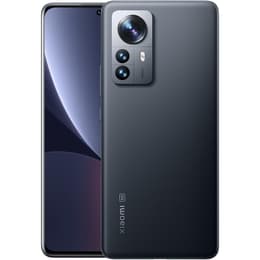
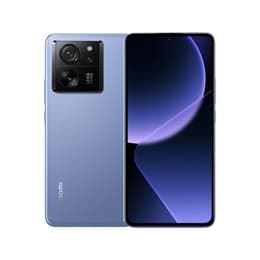


Xiaomi 12T Pro Vs Xiaomi 13T

Xiaomi 12T Pro
Xiaomi 12T Pro
Starting at

Refurbished price:201.00

Versus €1,199.00 new

See options
Xiaomi 13T
Xiaomi 13T
Starting at

Refurbished price:183.00

Versus €630.00 new

See options

Ratings

The Xiaomi 12T Pro, released in October 2022, and the Xiaomi 13T, launched in September 2023, are both Android smartphones from Xiaomi's T-series, designed to offer strong performance and features. While they share a similar design philosophy, the Xiaomi 13T introduces a more refined camera system with Leica co-engineering, an enhanced display, and a longer software support commitment. The 12T Pro, on the other hand, distinguishes itself with a higher-resolution main camera and faster charging capabilities. Both devices operate on the Android platform, providing a consistent user experience with Xiaomi's MIUI interface.

Scores

Durability

When considering the longevity of these devices, several factors come into play, including their release timelines, software support, and physical durability.

  • Release Timeline and OS Support: The Xiaomi 12T Pro, launched in October 2022, shipped with Android 12 and is expected to receive three major Android OS updates, with Android 15 being the final version, and four years of security updates. This means its software support will likely conclude around late 2026. The newer Xiaomi 13T, released in September 2023 with Android 13, benefits from an extended update policy, promising four major Android OS upgrades (up to Android 17) and five years of security patches, extending its support until late 2028.
  • Physical Durability: The Xiaomi 13T features an IP68 rating for dust and water resistance, offering a higher level of protection against environmental elements. The Xiaomi 12T Pro has a less robust IP53 rating, indicating splash and dust resistance but not full submersion. Both devices utilize Gorilla Glass 5 for screen protection.
  • Repairability: The Xiaomi 12T Pro has a repairability index score of 7.6 out of 10, suggesting good availability of spare parts and ease of disassembly. Information on the Xiaomi 13T's repairability is less readily available, but generally, Xiaomi phones aim for reasonable repair access.

Year of Release

2022

2023

Compatible with latest Update

Yes

Yes

OS

Android

Android

Foldable

No

No

Performance

Both smartphones are equipped with powerful processors designed to handle demanding applications and multitasking, though they utilize different chip architectures.

  • Processor Capabilities: The Xiaomi 12T Pro is powered by a processor known for its strong performance in 2022, capable of smoothly running graphics-intensive games and heavy applications. The Xiaomi 13T features a newer, efficient processor that also delivers robust performance for everyday tasks, gaming, and multitasking. While benchmarks suggest the 12T Pro's processor might have a slight edge in raw speed, both offer a fluid user experience.
  • Storage and RAM: The Xiaomi 12T Pro is available with 8GB or 12GB of RAM and 128GB or 256GB of internal storage. The Xiaomi 13T typically comes with 8GB or 12GB of RAM and 256GB of storage. Both models use UFS 3.1 storage, ensuring fast app loading and data transfer speeds.
  • Battery Behavior: Both devices house a 5000 mAh battery, generally providing a full day of use for most users. The Xiaomi 12T Pro supports significantly faster 120W wired charging, capable of a full charge in under 20 minutes. The Xiaomi 13T offers 67W wired charging, which is still fast, completing a full charge in approximately 50 minutes.

Memory (GB)

8 GB

8 GB

Screen quality

The display is a key interaction point, and both devices offer high-quality viewing experiences with some notable differences.

  • Display Technology and Resolution: Both the Xiaomi 12T Pro and Xiaomi 13T feature a 6.67-inch AMOLED display with a resolution of 1220 x 2712 pixels, providing sharp and detailed visuals. AMOLED technology ensures deep blacks and vibrant colors, enhancing media consumption.
  • Refresh Rate and Smoothness: The Xiaomi 12T Pro offers a 120Hz refresh rate, contributing to smooth scrolling and responsive interactions. The Xiaomi 13T steps this up with a 144Hz refresh rate, providing an even smoother visual experience, particularly noticeable in fast-paced content and gaming.
  • Brightness Levels: The Xiaomi 12T Pro has a typical brightness of 500 nits and a peak brightness of 1200 nits. The Xiaomi 13T boasts higher brightness, with a typical HBM (High Brightness Mode) of 1200 nits and an impressive peak brightness of 2600 nits, making it more visible in bright outdoor conditions.

Resolution

1220 x 2712

1220 x 2712

Screen type

AMOLED

AMOLED

Audiovisual

The camera systems on these phones present different strengths, catering to varying photographic preferences.

  • Rear Camera System: The Xiaomi 12T Pro features a 200MP main camera with optical image stabilization (OIS), an 8MP ultrawide lens, and a 2MP macro lens. This high-resolution main sensor excels at capturing detailed images, especially in good lighting. The Xiaomi 13T offers a more versatile triple camera setup co-engineered with Leica, including a 50MP main camera with OIS, a 50MP telephoto lens with 2x optical zoom, and a 12MP ultrawide lens.
  • Photography Performance: While the 12T Pro's 200MP sensor can capture immense detail, its secondary cameras are less capable. The 13T's Leica-tuned system provides a more balanced and consistent experience across its lenses, with the telephoto lens adding significant versatility for zoomed shots. Users report good low-light performance from both, but the 13T's overall system is often praised for its color science and versatility.
  • Video Recording: The Xiaomi 12T Pro is capable of recording video up to 8K resolution at 24fps, and 4K at 30fps or 60fps. The Xiaomi 13T supports 4K video recording at 30fps, with the Pro model offering 4K at 60fps. Both offer good video stabilization.

Main camera

200 megapixels

50 megapixels

Front camera

20 megapixels

20 megapixels

Miscellaneous

Beyond the core specifications, several other features contribute to the overall user experience and practical utility of these smartphones.

  • Connectivity: Both devices support 5G connectivity for fast mobile data speeds and Wi-Fi 6 for efficient wireless networking. The Xiaomi 13T includes Bluetooth 5.4, a slight upgrade from the Bluetooth 5.2 found in the Xiaomi 12T Pro, offering minor improvements in efficiency and range.
  • Ports and Sensors: Both smartphones feature a USB-C port for charging and data transfer and omit a traditional 3.5mm headphone jack. They both incorporate an optical under-display fingerprint sensor for secure unlocking.
  • Design and Build Materials: The Xiaomi 12T Pro features a glass front (Gorilla Glass 5), a glass back, and a plastic frame. The Xiaomi 13T also has a Gorilla Glass 5 front and a plastic frame, with options for either a glass or silicone polymer back. The 13T is slightly lighter and thinner than the 12T Pro.

Weight

204 g

193 g

Screen size (in)

6.67

6.67

Network

5G

5G

SIM card

Dual Physical SIM

Dual Physical SIM

Carrier compatibility

Unlocked

Unlocked

User feedback for the Xiaomi 12T Pro often highlights its impressive 200MP main camera, capable of capturing highly detailed images, and its exceptionally fast 120W charging as significant advantages. However, some users note that its secondary cameras are less capable and that the absence of an official IP rating for water resistance is a drawback.

The Xiaomi 13T receives praise for its versatile Leica-tuned camera system, which includes a dedicated telephoto lens, offering a more balanced photographic experience. Its brighter display, longer software support commitment, and IP68 dust and water resistance are also frequently mentioned as strong points. Criticisms sometimes point to its slower charging speed compared to the 12T Pro and the lack of 8K video recording.

Users prioritizing a high-resolution main camera and the fastest possible charging will find the Xiaomi 12T Pro well-suited to their needs. Conversely, those who value a more versatile camera system with optical zoom, extended software longevity, a brighter display, and enhanced durability with an IP68 rating may lean toward the Xiaomi 13T. Both devices offer a compelling Android experience, and considering a quality-assured refurbished option for either model can be a sustainable choice.


See all articles

Our recent comparisons