
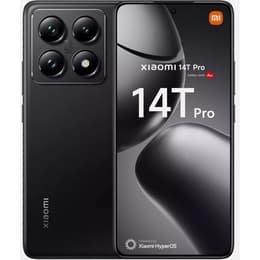


OnePlus 10 Pro Vs Xiaomi 14T Pro

OnePlus 10 Pro
OnePlus 10 Pro
Starting at

Refurbished price:228.00

Versus €999.00 new

See options
Xiaomi 14T Pro
Xiaomi 14T Pro
Starting at

Refurbished price:395.00

Versus €1,500.00 new

See options

Ratings

The OnePlus 10 Pro, released in January 2022, and the Xiaomi 14T Pro, launched in September 2024, are both high-end Android smartphones designed to offer a premium user experience. While the OnePlus 10 Pro focuses on a balanced flagship experience with a strong camera partnership, the Xiaomi 14T Pro emphasizes cutting-edge performance and rapid charging capabilities. Both devices run on the Android operating system, with the Xiaomi 14T Pro featuring a more recent version of Android and Xiaomi's HyperOS.

Scores

Durability

When considering the longevity of these devices, several factors come into play, including their release timelines, software support, and physical durability.

  • Release Timeline: The OnePlus 10 Pro was released in January 2022, making it an older device compared to the Xiaomi 14T Pro, which launched in September 2024. This two-and-a-half-year difference in release dates significantly impacts their expected software support.
  • OS Support Duration: The OnePlus 10 Pro typically receives three major Android updates and four years of security updates, meaning its official software support is likely nearing its end in early 2026. In contrast, the Xiaomi 14T Pro, launching with Android 14 and later updating to Android 15, is expected to receive four years of major OS updates and five years of security patches, offering a longer period of official support.
  • Physical Durability: The Xiaomi 14T Pro features an IP68 rating for water and dust resistance, indicating it can withstand submersion in up to 2 meters of water for 30 minutes under specific conditions. The OnePlus 10 Pro, while featuring a glass front with Gorilla Glass Victus and a glass back with Gorilla Glass 5, does not have an official IP rating for all regions, though some variants may offer resistance.

Year of Release

2022

2024

Compatible with latest Update

Yes

Yes

OS

Android

Android

Foldable

No

No

Performance

Both smartphones are equipped with powerful processors designed to handle demanding tasks, but they utilize different chipsets and offer varying configurations.

  • Processor Capabilities: The OnePlus 10 Pro is powered by a processor from early 2022, which delivers strong performance for everyday applications and gaming. The Xiaomi 14T Pro, being a more recent device, features a newer processor that offers enhanced multi-core performance and improved efficiency, making it well-suited for intensive gaming and complex applications.
  • RAM and Storage: The OnePlus 10 Pro is available with 8GB or 12GB of RAM and storage options of 128GB, 256GB, or 512GB. The Xiaomi 14T Pro offers 12GB or 16GB of RAM and storage configurations of 256GB, 512GB, or 1TB, utilizing faster UFS 4.0 technology for quicker data access.
  • Battery Behavior: The OnePlus 10 Pro features a 5000 mAh battery, providing ample power for a full day of moderate use, with some users reporting nearly 12 hours of screen-on time. The Xiaomi 14T Pro also comes with a 5000 mAh battery, and its efficient processor contributes to a reported battery life of over 20 hours of web browsing.

Memory (GB)

8 GB

12 GB

Screen quality

The visual experience on both devices is a key aspect, with each offering a high-quality display, though with some distinctions in technology and features.

  • Display Technology and Resolution: The OnePlus 10 Pro features a 6.7-inch Fluid AMOLED display with LTPO 2.0 technology, offering a resolution of 1440 x 3216 pixels. The Xiaomi 14T Pro has a 6.67-inch AMOLED display with a resolution of 2712 x 1220 pixels.
  • Refresh Rate and Smoothness: Both phones offer a high refresh rate for smooth scrolling and responsive interactions. The OnePlus 10 Pro has an adaptive 120Hz refresh rate, which can scale down to conserve battery. The Xiaomi 14T Pro boasts a 144Hz refresh rate, providing an even smoother visual experience, particularly noticeable in fast-paced content.
  • Brightness and Clarity: The OnePlus 10 Pro's display can reach a peak brightness of 1300 nits, ensuring good visibility in various lighting conditions. The Xiaomi 14T Pro offers a significantly higher peak brightness of up to 4000 nits, which enhances outdoor visibility and HDR content viewing.

Resolution

1440 x 3216

1220 x 2712

Screen type

LTPO2 Fluid AMOLED

AMOLED

Audiovisual

Both smartphones offer advanced camera systems, each with unique strengths and features for capturing photos and videos.

  • Camera System Configuration: The OnePlus 10 Pro features a triple camera setup co-developed with Hasselblad, including a 48MP main sensor, a 50MP ultrawide lens with a 150-degree field of view, and an 8MP telephoto lens with 3.3x optical zoom. The Xiaomi 14T Pro also has a triple-lens system with Leica optics, comprising a 50MP main sensor, a 50MP telephoto lens with 2.6x optical zoom, and a 12MP ultrawide camera.
  • Photography Performance: The OnePlus 10 Pro emphasizes natural color calibration through its Hasselblad partnership, offering features like Hasselblad Pro Mode for advanced users and enhanced low-light performance. The Xiaomi 14T Pro's Leica-tuned system focuses on detailed and vibrant photos, with advanced computational photography capabilities and improved dynamic range, especially in night photography.
  • Video Recording Capabilities: Both devices are capable of high-resolution video recording. The OnePlus 10 Pro supports 8K video recording at 24fps and 4K at up to 120fps. The Xiaomi 14T Pro also offers 8K video recording at 24/30fps and 4K at up to 60fps, with features like movie mode and director mode for creative control.

Main camera

48 megapixels

50 megapixels

Front camera

32 megapixels

32 megapixels

Miscellaneous

Beyond the core specifications, several practical elements contribute to the overall user experience of these devices.

  • Connectivity and Ports: Both phones support 5G connectivity. The OnePlus 10 Pro includes Wi-Fi 6 and Bluetooth 5.2, with a USB-C 3.1 port. The Xiaomi 14T Pro also features a USB Type-C port, along with NFC for mobile payments and an IR blaster for controlling home electronics. Neither device includes a 3.5mm headphone jack.
  • Physical Design and Handling: The OnePlus 10 Pro weighs 200.5g and has dimensions of 163 x 73.9 x 8.55 mm, featuring a glass front and back with an aluminum frame. The Xiaomi 14T Pro is slightly heavier at 209g and has dimensions of 160.4 x 75.1 x 8.4mm, with a metal frame and a glass and aluminum design.
  • Biometric Security: Both smartphones incorporate optical in-display fingerprint sensors for secure unlocking.

Weight

201 g

209 g

Screen size (in)

6.7

6.67

Network

5G

5G

SIM card

Physical SIM

Dual Physical SIM

Carrier compatibility

Unlocked

Unlocked

Users often praise the OnePlus 10 Pro for its fluid software experience, consistent performance, and the unique color science offered by its Hasselblad-tuned cameras. Some common feedback points include its battery life being good but not class-leading compared to some rivals, and the lack of an official IP rating in all regions. The device is generally seen as a solid performer for everyday use and mobile photography enthusiasts.

The Xiaomi 14T Pro receives acclaim for its powerful processor, exceptionally fast wired and wireless charging capabilities, and its vibrant, high-refresh-rate display. Users appreciate the extended software support and the comprehensive camera system with Leica integration. Some discussions revolve around the battery capacity, with some sources indicating 5000mAh and others 5500mAh, though real-world tests suggest strong battery endurance.

Users prioritizing a device with a longer software support window, a more advanced processor for future-proofing, and extremely fast charging will find the Xiaomi 14T Pro well-suited to their needs. Its higher display brightness and IP68 rating also cater to those seeking enhanced outdoor visibility and durability. Conversely, users who value a refined software experience, a unique camera tuning partnership, and a slightly lighter build might lean towards the OnePlus 10 Pro. Both devices offer a premium Android experience, and choosing between them often comes down to these specific priorities. For those looking for quality-assured refurbished options, both models may be available, offering a sustainable choice for consumers.


See all articles

Our recent comparisons