

Google Pixel Fold Vs iPhone 16 Pro Max

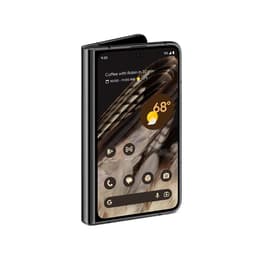
Google Pixel Fold
Google Pixel Fold
Starting at

Refurbished price:431.00

Versus €1,734.65 new

See options
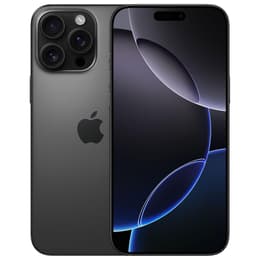
iPhone 16 Pro Max
iPhone 16 Pro Max
Starting at

Refurbished price:821.00

Versus €1,489.00 new

See options

Ratings

The Google Pixel Fold, released in June 2023, represents Google's entry into the foldable smartphone market, offering a unique dual-screen experience. In contrast, the iPhone 16 Pro Max, launched in September 2024, is Apple's latest flagship device, building on its traditional smartphone design with advanced features. The primary distinction lies in their form factors: the Pixel Fold offers a versatile folding display, while the iPhone 16 Pro Max provides a conventional, high-performance smartphone experience. Both devices operate on their respective proprietary ecosystems, Android for the Pixel Fold and iOS for the iPhone 16 Pro Max, each offering distinct user interfaces and app experiences.

Scores

Durability

When considering the long-term usability of these devices, their release timelines and software support are key factors.

  • Software Longevity: The Google Pixel Fold, having been released in mid-2023, typically receives three years of major Android operating system updates and at least five years of security updates from its launch. The iPhone 16 Pro Max, released in late 2024, is expected to benefit from Apple's longer software support cycle, which historically extends to six or seven years of iOS updates. This difference means the iPhone 16 Pro Max will likely receive software enhancements and security patches for a longer duration.
  • Physical Durability: The Pixel Fold features an IPX8 water resistance rating and a design that allows it to fold, introducing a hinge mechanism. Early user feedback on foldables often highlights concerns about the inner screen's resilience and the hinge's long-term durability. The iPhone 16 Pro Max, with its titanium frame and Ceramic Shield front cover, is designed for robust everyday use, offering strong resistance to drops and scratches.
  • Repairability: The Pixel Fold received a repairability score of 6.5 out of 10 from PBK Reviews, indicating that while some components are modular, certain repairs, such as the USB-C port being attached to the motherboard and the battery being somewhat difficult to access, can be complex. Google does provide repair manuals and parts. The iPhone 16 Pro Max, while not having a public repairability score yet, typically follows Apple's design philosophy, which can make self-repair challenging, though authorized service options are widely available.

Year of Release

2023

2024

Compatible with latest Update

Yes

Yes

Foldable

Yes

No

Performance

The performance of these devices is driven by their respective processors and optimized software, impacting daily tasks and demanding applications.

  • Processing Power: The Google Pixel Fold is equipped with Google's Tensor G2 processor, paired with 12GB of RAM. This configuration handles everyday applications, multitasking, and moderate gaming smoothly. Users generally find it responsive for typical smartphone activities. The iPhone 16 Pro Max features Apple's A18 Pro chip, a newer generation processor designed for high-end performance. This chip, combined with an expected 8GB or 12GB of RAM, delivers exceptional speed and efficiency, particularly noticeable in graphically intensive games, professional-grade applications, and advanced AI features.
  • Multitasking and Responsiveness: Both devices offer fluid navigation and app switching. The Pixel Fold's 12GB of RAM provides ample capacity for keeping multiple applications open without significant slowdowns. The iPhone 16 Pro Max's A18 Pro chip and optimized iOS ensure a highly responsive experience, with applications launching quickly and transitions feeling seamless, even under heavy load.
  • Battery Behavior: The Pixel Fold houses a 4821 mAh battery, which, for a foldable device, is substantial and generally provides a full day of moderate use. However, demanding tasks or extensive use of the larger inner display can lead to more rapid battery depletion. The iPhone 16 Pro Max is rumored to feature a 4676 mAh or 4685 mAh battery, the largest capacity in an iPhone to date. Coupled with the A18 Pro's efficiency, it is designed to offer extended usage times, with Apple claiming up to 33 hours of video playback, making it a strong contender for users prioritizing long battery life.

Memory (GB)

12 GB

8 GB

Screen quality

The display technologies and sizes on the Pixel Fold and iPhone 16 Pro Max offer distinct visual experiences tailored to their form factors.

  • Display Technology and Size: The Google Pixel Fold features two OLED displays: a 5.8-inch outer screen and a 7.6-inch inner folding screen when unfolded. Both displays offer vibrant colors and deep blacks, characteristic of OLED technology. The outer screen has a 2092 x 1080 resolution (408 ppi), while the inner screen has a 2208 x 1840 resolution (380 ppi). The iPhone 16 Pro Max boasts a larger 6.9-inch OLED display with ProMotion technology, providing a consistent and expansive viewing area.
  • Brightness and Clarity: Both devices offer excellent clarity. The Pixel Fold's outer screen reaches a peak brightness of 1550 nits, and its inner screen reaches 1450 nits, ensuring good visibility in various lighting conditions, including outdoors. The iPhone 16 Pro Max's display is also expected to offer high brightness levels, maintaining Apple's standard for clear visibility even in direct sunlight.
  • Refresh Rate and Viewing Experience: Both the Pixel Fold's displays and the iPhone 16 Pro Max's display feature a 120Hz refresh rate, contributing to smooth scrolling and fluid animations. The Pixel Fold's wider outer screen aspect ratio is designed for comfortable one-handed use, while its squarish inner display is well-suited for media consumption and productivity. The iPhone 16 Pro Max provides a traditional, immersive full-screen experience with thinner bezels, enhancing content viewing.

Resolution

1840 x 2208

1320 x 2868

Screen type

Foldable OLED

LTPO Super Retina XDR OLED

Audiovisual

Both the Google Pixel Fold and the iPhone 16 Pro Max offer advanced camera systems, though with different strengths and capabilities.

  • Rear Camera System: The Pixel Fold features a triple-lens rear camera setup, including a 48-megapixel main sensor with optical image stabilization, a 10.8-megapixel ultrawide lens, and a 10.8-megapixel telephoto lens capable of 5x optical zoom. It is known for its strong computational photography, producing detailed and color-accurate images. The iPhone 16 Pro Max comes with a 48-megapixel main sensor, which is larger than its predecessor, designed to capture more light for improved low-light performance and dynamic range. It also features an upgraded 48-megapixel ultrawide camera and retains the 5x telephoto tetraprism camera.
  • Low-Light and Video Performance: Google's Pixel line is recognized for its Night Sight capabilities, which translate well to the Pixel Fold, offering impressive low-light photography. Both devices support 4K video recording at 60 frames per second. The iPhone 16 Pro Max is expected to offer enhanced video recording features and improved low-light video capture due to its larger main sensor.
  • Front Cameras and Unique Features: The Pixel Fold has two front-facing cameras: a 9.5-megapixel sensor on the outer screen and an 8-megapixel sensor on the inner screen. It also offers a 'Dual Screen Preview' feature, allowing subjects to see themselves on the outer screen while being photographed with the main cameras. The iPhone 16 Pro Max is expected to have an improved front camera and introduces a new 'Capture Button' for quick photo and video taking.

Main camera

48 megapixels

48 megapixels

Front camera

8 megapixels

12 megapixels

Miscellaneous

Beyond core features, several practical elements differentiate the Pixel Fold and iPhone 16 Pro Max in terms of connectivity, physical design, and user interaction.

  • Connectivity and Ports: The Google Pixel Fold supports 5G, Wi-Fi 6E, and Bluetooth 5.2. It features a USB-C 3.2 Gen 2 port for charging and data transfer. The iPhone 16 Pro Max also supports 5G and is expected to upgrade to Wi-Fi 7 and Bluetooth 5.4, offering faster wireless speeds and improved connectivity. It utilizes a USB-C port, aligning with modern universal charging standards.
  • Physical Design and Handling: The Pixel Fold weighs 283 grams and, when folded, measures 139.7 x 79.5 x 12.1 mm, making it a compact yet thick device. Unfolded, it measures 139.7 x 158.7 x 5.8 mm. Its wider outer screen is designed for comfortable one-handed use. The iPhone 16 Pro Max, with its titanium construction, weighs around 227 grams and has dimensions similar to previous Pro Max models, offering a premium feel and a larger, traditional smartphone footprint.
  • Sensors and User Interaction: The Pixel Fold integrates a fingerprint sensor into its power button for secure unlocking. The iPhone 16 Pro Max continues to rely on Face ID for biometric authentication. Both devices offer a range of sensors for various functionalities, with the iPhone 16 Pro Max introducing a new customizable Action Button and a dedicated Camera Control Button for enhanced user interaction.

Weight

283 g

227 g

Screen size (in)

7.6

6.9

Network

5G

5G

SIM card

Physical SIM + eSIM

Physical SIM + eSIM

Carrier compatibility

Unlocked

Unlocked

The Google Pixel Fold and iPhone 16 Pro Max cater to different user preferences, primarily due to their distinct form factors and operating systems. Users often praise the Pixel Fold for its innovative foldable design, offering a large tablet-like screen in a pocketable format, and its strong camera performance, particularly Google's computational photography. Some common criticisms from users include its weight, the visible crease on the inner display, and the battery life when extensively using the larger screen. The iPhone 16 Pro Max is frequently lauded for its powerful processor, extended software support, and significant camera upgrades, which contribute to its reputation as a reliable and high-performing flagship device. User discussions often highlight its consistent performance and the seamless integration within the Apple ecosystem.

For users prioritizing a versatile device that can transform from a compact smartphone to a larger tablet-like screen for media consumption and productivity, the Google Pixel Fold is a compelling choice. Its unique form factor and Google's software optimizations for foldable displays make it suitable for those who value screen real estate on the go. Conversely, users who prefer a traditional, robust smartphone experience with industry-leading performance, a consistently excellent camera system, and a longer software support window will find the iPhone 16 Pro Max well-suited to their needs. It is particularly appealing to those deeply integrated into the iOS ecosystem or who demand the utmost in processing power and camera capabilities for demanding tasks. Both devices are available as quality-assured refurbished options, providing a sustainable choice for consumers looking to extend the life cycle of electronic products.


See all articles

Our recent comparisons