

Compare models

iPhone 8 Vs iPhone XS

  • 1-year minimum warranty
  • Free delivery on all orders
  • Free 30-day returns
iPhone 8
Starting at

Refurbished price:102.00

Versus €299.00 new

See options
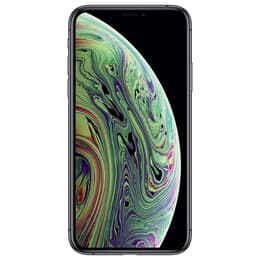
iPhone XS
Starting at

Refurbished price:127.00

Versus €489.00 new

See options

Differences at a glance

The iPhone 8, released in September 2017, and the iPhone Xs, launched in September 2018, represent two distinct generations of Apple's smartphone evolution. While both devices run on the iOS operating system, the iPhone Xs introduced a more modern design with an edge-to-edge display and advanced biometric authentication, alongside significant upgrades in processing power and camera capabilities.

Available Models

Colour

Storage (GB)

Scores

Durability

When considering the practical lifespan of these devices, several factors come into play, including their initial release and ongoing software support.

  • Release Timeline: The iPhone 8 was released in September 2017, making it a year older than the iPhone Xs, which debuted in September 2018. This difference in age directly impacts their remaining support window.
  • Software Longevity: The iPhone 8 originally shipped with iOS 11 and currently supports up to iOS 16.7.15 as of March 2026, indicating that its major operating system updates have likely concluded. In contrast, the iPhone Xs, which launched with iOS 12, continues to receive updates, supporting up to iOS 18.7.7 as of March 2026, offering a longer period of access to the latest software features and security patches.
  • Repairability and Durability: Both models feature glass front and back designs, making them susceptible to damage from drops. The iPhone 8 has an IP67 rating for water and dust resistance, allowing submersion up to 1 meter for 30 minutes. The iPhone Xs improves on this with an IP68 rating, capable of withstanding submersion up to 2 meters for 30 minutes.

Year of Release

2017

2018

Compatible with latest Update

No

Yes

OS

iOS

iOS

Foldable

No

No

Performance

The performance of a smartphone is largely determined by its internal processing power and memory, impacting how smoothly applications run and how efficiently tasks are handled.

  • Processing Capabilities: The iPhone 8 is equipped with a capable processor that handles everyday applications and general multitasking effectively. The iPhone Xs features a newer generation processor, which provides a noticeable boost in speed and efficiency, particularly for more demanding applications, complex computations, and graphics-intensive tasks.
  • Multitasking and Responsiveness: With 2GB of RAM, the iPhone 8 manages multiple applications reasonably well, though users might experience slight delays when switching between many open apps. The iPhone Xs, with 4GB of RAM, offers a smoother multitasking experience, allowing for quicker app launches and more seamless transitions.
  • Storage Options: The iPhone 8 was available with storage capacities of 64GB, 128GB, and 256GB. The iPhone Xs offered larger options, starting at 64GB and extending to 256GB and 512GB, providing more space for media, applications, and files.

Screen quality

The display is a primary interface for smartphone interaction, and the quality of the screen significantly influences the user experience.

  • Display Technology and Clarity: The iPhone 8 features a 4.7-inch Retina HD LCD display, known for its accurate color reproduction and good viewing angles. The iPhone Xs steps up to a 5.8-inch Super Retina HD OLED display, which offers deeper blacks, higher contrast ratios, and more vibrant colors, enhancing the visual experience for photos, videos, and general content.
  • Resolution and Pixel Density: The iPhone 8 has a resolution of 1334x750 pixels at 326 pixels per inch (ppi). The iPhone Xs provides a sharper image with a resolution of 2436x1125 pixels at 458 ppi, resulting in finer detail and text clarity.
  • Brightness and Features: Both devices offer a typical maximum brightness of 625 nits and include True Tone technology, which adjusts the display's white balance to match ambient light. The iPhone Xs further enhances viewing with HDR display capabilities, providing a wider dynamic range for compatible content.

Resolution

750 x 1334

1125 x 2436

Screen type

Retina IPS LCD

Super Retina OLED

Audiovisual

For many users, the camera system is a crucial component of a smartphone, and both the iPhone 8 and iPhone Xs offer capable photographic tools.

  • Rear Camera System: The iPhone 8 features a single 12-megapixel wide-angle camera with an f/1.8 aperture and optical image stabilization, capable of recording 4K video at up to 60 frames per second. The iPhone Xs boasts a dual 12-megapixel camera system, including a wide-angle lens (f/1.8) and a telephoto lens (f/2.4), offering 2x optical zoom and dual optical image stabilization. This dual-camera setup allows for Portrait mode with adjustable depth of field and improved low-light performance.
  • Front Camera and Video: Both phones include a 7-megapixel front-facing camera with an f/2.2 aperture, suitable for selfies and video calls. The iPhone Xs's TrueDepth front camera system enables Portrait mode for selfies and supports Smart HDR for improved dynamic range in photos. Video recording on both models supports 4K at various frame rates, with the iPhone Xs adding stereo audio recording for videos.
  • Photography Enhancements: The iPhone Xs benefits from a newer image signal processor and the Neural Engine within its chip, which contribute to features like Smart HDR, resulting in more balanced exposures and better detail in challenging lighting conditions.

Main camera

12 megapixels

12 megapixels

Front camera

7 megapixels

7 megapixels

Miscellaneous

Beyond core performance and display, several other features contribute to the overall user experience and practical utility of these smartphones.

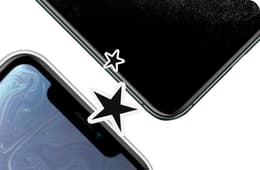
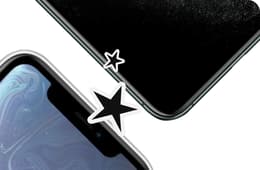
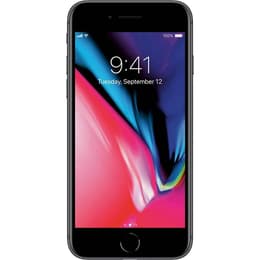
  • Biometric Security and Design: The iPhone 8 retains the classic home button with Touch ID for fingerprint authentication. The iPhone Xs adopts a more modern, all-screen design, replacing Touch ID with Face ID, which uses facial recognition for secure unlocking and payments. The iPhone 8 has an aluminum frame, while the iPhone Xs features a more robust stainless steel frame.
  • Connectivity and Ports: Both devices support Wi-Fi 802.11ac with MIMO and Bluetooth 5.0 for wireless connectivity. The iPhone Xs introduces Gigabit-class LTE, offering potentially faster cellular data speeds in supported areas. Both models utilize the Lightning port for charging and data transfer.
  • Dimensions and Handling: The iPhone 8 is a more compact device, weighing 148 grams and featuring a 4.7-inch display. The iPhone Xs is slightly larger and heavier at 177 grams, accommodating its 5.8-inch display.

Weight

148 g

177 g

Screen size (in)

4.7

5.8

Network

4G

4G

SIM card

Physical SIM

Physical SIM + eSIM

Carrier compatibility

Unlocked

Unlocked

Connector

Lightning

Lightning

What the community thinks

User feedback for the iPhone 8 often highlights its reliable performance for everyday tasks and the familiarity of the Touch ID home button. Many appreciate its compact size and the continued support for essential applications. However, some users note its dated design with larger bezels and the limitations of its LCD display compared to newer technologies. The battery life is also a common point of discussion, with heavy users often needing to recharge during the day.

The iPhone Xs generally receives praise for its vibrant OLED display, which offers a more immersive viewing experience, and its significantly improved camera system, particularly the addition of a telephoto lens and Smart HDR. Users also value the faster performance for demanding applications and the modern Face ID authentication. Criticisms sometimes revolve around its battery life, which, while improved over the iPhone 8, may still require careful management for very heavy use. The notch design, while now common, was a point of contention for some upon its release.

For users who prioritize a compact form factor, the traditional home button, and a device that still capably handles daily tasks, the iPhone 8 remains a viable option. It suits those who may not require the absolute latest in display technology or advanced camera features. Conversely, individuals seeking a more modern aesthetic, a superior display for media consumption, enhanced photographic capabilities, and a device with a longer software support window will find the iPhone Xs better suited to their needs. Choosing a quality-assured refurbished option for either device can be a sustainable choice, offering access to these technologies while extending their lifecycle.