
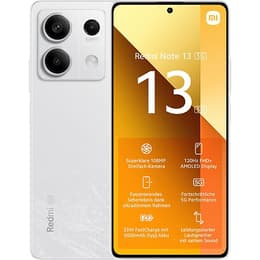


iPhone 17 Pro Vs Xiaomi Redmi Note 13

iPhone 17 Pro
iPhone 17 Pro
Starting at

Refurbished price:1,064.00

Versus €1,339.00 new

See options
Xiaomi Redmi Note 13
Starting at

Refurbished price:137.00

Versus €340.00 new

See options

Ratings

The iPhone 17 Pro, released in late 2025, represents Apple's latest flagship smartphone, running on the iOS 26 operating system. In contrast, the Xiaomi Redmi Note 13, launched in early 2024, is a mid-range Android device featuring MIUI 14, with an update to HyperOS 2 available. These two devices cater to different segments of the smartphone market, with the iPhone 17 Pro offering cutting-edge performance and advanced camera capabilities, while the Redmi Note 13 focuses on delivering a balanced experience for everyday use.

Scores

Durability

The expected lifespan and software support differ significantly between these two smartphones, primarily due to their release timelines and operating system ecosystems.

  • Release Timeline: The iPhone 17 Pro was released in September 2025, making it a newer device compared to the Xiaomi Redmi Note 13, which launched in January 2024. This difference in release year directly impacts the duration of future software updates.
  • Software Longevity: Apple typically provides iOS updates for its devices for five to six years or more from their release date. Given its late 2025 launch, the iPhone 17 Pro can be expected to receive major iOS updates well into the early 2030s. The Redmi Note 13, running Android 13 with MIUI 14 (upgradable to HyperOS 2), generally receives fewer major Android version updates and security patches over a shorter period, typically two to three major Android updates and three to four years of security updates.
  • Physical Durability: The iPhone 17 Pro features Ceramic Shield Glass 2 for enhanced screen protection and a unibody aluminum chassis, contributing to its overall robustness. It also boasts a higher level of water and dust resistance. The Redmi Note 13 offers IP54 splash and dust resistance and uses Corning Gorilla Glass 3 for screen protection, providing a reasonable level of durability for daily use.

Year of Release

2025

2024

Compatible with latest Update

Yes

Yes

OS

iOS

Android

Foldable

No

No

Performance

Performance is a key area where these two devices diverge, reflecting their different market positions and hardware philosophies.

  • Processing Power: The iPhone 17 Pro is equipped with Apple's latest generation processor, designed for demanding applications, intensive multitasking, and advanced computational tasks. This results in exceptionally smooth operation, rapid app loading, and efficient handling of graphics-heavy games. The Redmi Note 13 features a mid-range processor, which capably handles daily tasks such as web browsing, social media, and light gaming. Users may notice occasional delays with very demanding applications or when switching rapidly between many apps.
  • Multitasking and Storage: The iPhone 17 Pro comes with a substantial amount of RAM, allowing for seamless multitasking and keeping numerous applications open in the background without performance degradation. It offers various internal storage options, starting from 256GB. The Redmi Note 13 offers configurations with 6GB or 8GB of RAM, which can be expanded virtually with memory fusion technology, providing adequate capacity for typical user needs. It also supports expandable storage via microSD, a feature not present on the iPhone.
  • System Responsiveness: The iPhone 17 Pro delivers consistently fluid and responsive interactions across the operating system and applications. The Redmi Note 13 provides a generally smooth experience for its class, though some users have noted that its processor can be on the slower side for more intensive operations.

Memory (GB)

12 GB

8 GB

Screen quality

The display experience on both devices offers distinct characteristics, catering to different visual preferences and usage scenarios.

  • Display Technology and Clarity: The iPhone 17 Pro features an LTPO Super Retina XDR OLED display, known for its deep blacks, vibrant colors, and excellent contrast. Its high resolution and pixel density contribute to sharp text and detailed images. The Redmi Note 13 sports a 6.67-inch AMOLED display with Full HD+ resolution, offering vivid colors and good clarity for media consumption and daily tasks.
  • Brightness and Outdoor Visibility: The iPhone 17 Pro boasts a high peak outdoor brightness of up to 3000 nits, ensuring excellent visibility even in direct sunlight. It also offers strong HDR peak brightness. The Redmi Note 13 provides a peak brightness of 1000 nits, which is sufficient for most indoor and outdoor conditions, though it may struggle slightly more in very bright environments compared to the iPhone.
  • Refresh Rate and Smoothness: Both devices feature a 120Hz refresh rate, which contributes to smoother scrolling, more fluid animations, and a more responsive feel during interactions. The iPhone 17 Pro's ProMotion technology dynamically adjusts the refresh rate for power efficiency. The Redmi Note 13 also offers a 120Hz refresh rate, enhancing the visual fluidity of the interface.

Resolution

2622x1206

1080 x 2400

Screen type

Super Retina XDR

AMOLED

Audiovisual

The camera systems on the iPhone 17 Pro and Xiaomi Redmi Note 13 are designed with different photographic priorities and capabilities.

  • Rear Camera System: The iPhone 17 Pro features an advanced triple 48-megapixel fusion camera system, including a main, ultrawide, and a telephoto lens with up to 8x optical-quality zoom. This setup is designed for versatility and high-quality imaging across various lighting conditions, with a focus on detail and color accuracy. The Redmi Note 13 comes with a 108-megapixel main camera, an 8-megapixel ultra-wide lens, and a 2-megapixel macro camera. The high-resolution main sensor is capable of capturing detailed images in good lighting.
  • Low-Light and Everyday Photography: The iPhone 17 Pro excels in low-light conditions, producing clear images with reduced noise, and offers advanced computational photography features. Its everyday photography is characterized by consistent results and natural color reproduction. The Redmi Note 13's main camera performs well in adequate lighting, but its performance in low-light and with its secondary lenses can be inconsistent.
  • Video Recording and Front Camera: The iPhone 17 Pro supports 4K video recording at various frame rates, offering advanced stabilization and cinematic features. Its 18-megapixel front camera includes Centre Stage for video calls. The Redmi Note 13 records video at Full HD resolution at 30 frames per second and features a 16-megapixel selfie camera.

Main camera

48 megapixels

108 megapixels

Front camera

18 megapixels

16 megapixels

Miscellaneous

Beyond core specifications, several practical elements contribute to the overall user experience and differentiate these two smartphones.

  • Connectivity and Ports: The iPhone 17 Pro supports the latest Wi-Fi 7 and Bluetooth 6 standards, along with 5G connectivity, ensuring fast and reliable wireless communication. It features a USB-C port for charging and data transfer. The Redmi Note 13 supports 4G connectivity, standard Wi-Fi, and Bluetooth. It includes a 3.5mm headphone jack and an IR blaster, which allows it to control home appliances.
  • Biometric Security: The iPhone 17 Pro relies on Face ID for secure facial recognition. The Redmi Note 13 incorporates a responsive fingerprint sensor, often integrated into the power button or under the display, for biometric authentication.
  • Design and Handling: The iPhone 17 Pro features a refined design with a unibody aluminum chassis, contributing to a premium feel and specific dimensions. The Redmi Note 13 has a sleek design with a flat frame and a plastic build, offering a comfortable grip and a lighter feel.
  • Audio Experience: The iPhone 17 Pro provides a robust audio experience through its stereo speakers. The Redmi Note 13 also offers stereo speakers, with some variants supporting Dolby Atmos for an immersive audio experience.

Weight

206 g

175 g

Screen size (in)

6.3

6.67

Network

5G

5G

SIM card

Physical SIM + eSIM

Dual Physical SIM

Carrier compatibility

Unlocked

Unlocked

Connector

USB-C

USB-C

User sentiment for the iPhone 17 Pro, following its late 2025 release, indicates strong demand, particularly for the Pro models. Users frequently praise its enhanced battery life, new design elements, display improvements, and significant camera upgrades as key motivators for upgrading. However, some users express a sentiment that Apple might be making incremental rather than revolutionary changes, and the high cost remains a primary deterrent for a segment of potential buyers.

For the Xiaomi Redmi Note 13, users generally appreciate its vibrant AMOLED display and the capabilities of its main 108-megapixel camera. Its battery life is often cited as good for daily use. Criticisms often point to the processor being less powerful for demanding tasks and inconsistencies in the performance of its secondary cameras. Some users also find the software interface, MIUI, to be less intuitive or more frustrating than desired.

Users prioritizing cutting-edge performance, a highly advanced camera system with extensive video capabilities, and long-term software support within the iOS ecosystem may find the iPhone 17 Pro well-suited to their needs. Its robust build and high-brightness display also appeal to those seeking a premium experience. Conversely, users who value a large, vibrant display, a capable main camera for everyday photos, and features like expandable storage and a headphone jack, all within the Android ecosystem, may lean toward the Xiaomi Redmi Note 13. It offers a solid experience for general use and media consumption.

For those considering either device, exploring quality-assured refurbished options can provide an eco-friendly alternative to purchasing new, allowing for informed and sustainable choices.


See all articles

Our recent comparisons






