

Compare models
Galaxy Z Fold5 Vs Google Pixel 9a
- 1-year minimum warranty
- Free delivery on all orders
- Free 30-day returns
Differences at a glance
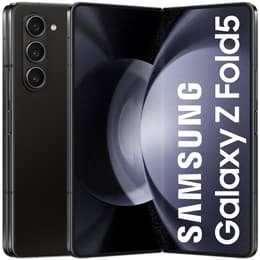
The Samsung Galaxy Z Fold5 (2023) and the Google Pixel 9a (2025) represent two distinct approaches to modern mobile device design and everyday computing. While the Galaxy Z Fold5 offers an innovative foldable form factor with dual screens for expanded multitasking, the Google Pixel 9a provides a traditional slate design focused on streamlined software integration and long-term support. Operating on Android platforms with custom manufacturer interfaces, these devices cater to very different workflows and hardware preferences.
Available Models
Colour
Storage
Scores
Durability
Both devices offer distinct structural frameworks and support lifecycles that influence their long-term viability and day-to-day durability in regular use.
- Software longevity and updates: The Google Pixel 9a benefits from an extended software support window spanning seven years from launch, whereas the Galaxy Z Fold5 follows a shorter multi-year update schedule typical of its release year.
- Repairability and physical endurance: The traditional slate build of the Pixel 9a features robust water resistance and a solid monolithic frame, while the complex hinge mechanism and flexible internal screen of the Galaxy Z Fold5 require more careful handling over years of regular opening and closing.
- Expected practical lifespan: Users can expect both handsets to maintain reliable core functionality over several years, though the Pixel 9a's simplified hardware structure presents fewer moving parts for long-term wear and tear.
Year of Release
2023
2025
Compatible with latest Update
Yes
Yes
OS
Android
Android
Foldable
Yes
No
Performance
Performance metrics differ noticeably across these devices, shaped by variations in memory allocation, thermal management, and day-to-day hardware optimization.
- Multitasking and memory capacity: The Galaxy Z Fold5 features a larger memory pool that easily sustains simultaneous multi-window layouts, while the Pixel 9a relies on an efficient mid-range memory configuration optimized for single-screen daily apps.
- System responsiveness: Both devices handle standard web browsing, messaging, and streaming smoothly, though demanding applications and extended gaming sessions run with high stability and thermal efficiency on both platforms.
- Battery behavior: The Pixel 9a incorporates a high-capacity battery designed to comfortably stretch through a full day of mixed usage, while the Galaxy Z Fold5's dual-screen setup draws additional power, resulting in more frequent charging routines for heavy users.
Screen quality
Display configurations represent the single most defining characteristic separating these two models, offering entirely different visual environments for media and productivity.
- Display technology and layout: The Galaxy Z Fold5 deploys a compact outer screen alongside a large foldable internal screen that transforms into a tablet-sized canvas, while the Pixel 9a features a single, flat OLED panel with crisp clarity and consistent color reproduction.
- Brightness and outdoor visibility: Both models achieve high peak brightness levels to maintain legibility under direct sunlight, ensuring clear viewing outdoors.
- Refresh rate and smoothness: Fluid scrolling and responsive touch tracking are standard on both devices thanks to adaptive high refresh rate support reaching up to 120 Hz.
Resolution
1812 x 2176
2424 x 1080
Audiovisual
Imaging hardware and media playback systems are tailored to different capture styles and content consumption habits.
- Camera system versatility: The Galaxy Z Fold5 utilizes a flexible multi-lens rear array including a dedicated telephoto zoom lens, whereas the Pixel 9a focuses on a dual-rear camera configuration paired with advanced computational photography tools for balanced everyday snapshots.
- Low-light and video performance: Both units capture detailed low-light photos and steady video recordings with built-in stabilization, though automated software processing helps the Pixel maintain sharp details in challenging lighting.
- Audio and media output: Stereo speaker setups on both devices deliver clear sound for hands-free calls and casual video viewing, though the folding screen of the Samsung device provides an immersive cinematic canvas for media enthusiasts.
Front camera
4 megapixels
13 megapixels
Miscellaneous
Practical everyday features, physical dimensions, and connectivity standards dictate how comfortably each device integrates into daily routines.
- Handling and physical footprint: The Pixel 9a offers a lightweight, pocket-friendly slate profile that is easy to hold with one hand, whereas the Galaxy Z Fold5 is heavier and thicker when folded, reflecting its dual-screen hardware.
- Connectivity and ports: Modern 5G connectivity, Wi-Fi standards, and USB-C charging ports are standard across both handsets, alongside secure biometric authentication methods.
- Build materials: The Galaxy Z Fold5 combines glass panels with an aluminum armor frame, while the Pixel 9a utilizes a streamlined composite back and durable outer edges designed for everyday resilience.
Weight
150 g
186 g
Screen size (in)
7.6
6.3
Network
4G
5G
SIM card
Dual Physical SIM + eSIM
Physical SIM + eSIM
Carrier compatibility
Unlocked
Unlocked
Connector
USB-C
USB-C
What the community thinks
Choosing between the Samsung Galaxy Z Fold5 and the Google Pixel 9a depends heavily on individual workflow habits and preferred form factors. Users prioritizing expansive screen space for multitasking and document editing will find the Galaxy Z Fold5 well-suited to their needs. Conversely, users prioritizing a lightweight traditional design, extended software longevity, and straightforward daily reliability will lean toward the Google Pixel 9a.
Reviewers and everyday users frequently praise the Galaxy Z Fold5 for its innovative dual-screen workspace, while noting its heavier weight and shorter battery endurance under heavy multi-window use. On the other hand, the Pixel 9a receives consistent recognition for its reliable battery life and long-term update commitment, though some users miss the specialized camera zoom lenses found on more complex flagships. Exploring a quality-assured refurbished option through Back Market can also provide an eco-friendly alternative for acquiring either of these capable devices with verified performance standards.