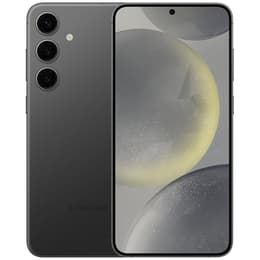
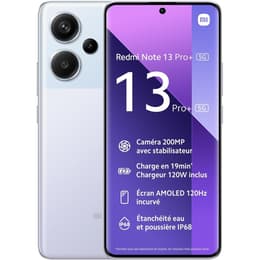


Galaxy S24+ Vs Xiaomi Redmi Note 13 Pro+

Galaxy S24+
Galaxy S24+
Starting at

Refurbished price:399.00

Versus €1,167.06 new

See options
Xiaomi Redmi Note 13 Pro+
Starting at

Refurbished price:198.00

Versus €449.00 new

See options

Ratings

The Samsung Galaxy S24 Plus, released in January 2024, and the Xiaomi Redmi Note 13 Pro Plus, with a global release in January 2024 following a September 2023 launch, are contemporary smartphones offering distinct experiences. While both devices operate on the Android platform, they differentiate themselves through their approach to software longevity, display technology, and camera systems.

Scores

Durability

When considering the long-term usability of these devices, their release timelines and software support policies are key factors.

  • Release Timeline and OS Support: The Samsung Galaxy S24 Plus launched in January 2024 with Android 14 and is set to receive an extensive seven years of OS upgrades and security updates, extending its support until 2031. The Xiaomi Redmi Note 13 Pro Plus, released globally in January 2024 (initially September 2023), shipped with Android 13 and is promised three major OS updates (up to Android 16) and four years of security updates, with support ending around January 2028.
  • Repairability: The Samsung Galaxy S24 Plus generally receives a high repairability score, often rated around 8 to 9 out of 10, with features like easily removable batteries with pull tabs and minimal adhesive use for certain components. The Xiaomi Redmi Note 13 Pro Plus has an average repairability score, typically around 6.5 to 8.1 out of 10, with some adhesive use for the back cover and battery, though pull tabs are present for battery removal.
  • Expected Practical Lifespan: Users prioritizing extended software support and a longer period of official updates may find the Galaxy S24 Plus more aligned with their needs, while the Redmi Note 13 Pro Plus offers a solid, though shorter, commitment to software maintenance.

Year of Release

2024

2023

Compatible with latest Update

Yes

Yes

OS

Android

Android

Foldable

No

No

Performance

Both smartphones deliver capable performance for daily tasks, but they approach processing power and memory management with different configurations.

  • Processor Capabilities: The Samsung Galaxy S24 Plus is equipped with a current-generation processor (either the Snapdragon 8 Gen 3 or Exynos 2400 depending on region), enabling smooth operation for demanding applications, intensive multitasking, and graphic-rich gaming. The Xiaomi Redmi Note 13 Pro Plus features a MediaTek Dimensity 7200 Ultra chipset, which provides a responsive experience for everyday use and handles most games and applications effectively within its segment.
  • Storage and RAM: The Galaxy S24 Plus typically comes with 12GB of RAM and storage options of 256GB or 512GB, providing ample space and memory for fluid multitasking. The Redmi Note 13 Pro Plus offers configurations with 8GB or 12GB of RAM and 256GB or 512GB of internal storage, allowing for efficient app management and data storage.
  • Battery Behavior: The Galaxy S24 Plus houses a 4900 mAh battery, offering solid battery life that can last through a full day for many users, with support for 45W wired and 15W wireless charging. The Redmi Note 13 Pro Plus features a 5000 mAh battery and stands out with its 120W wired charging capability, allowing for very rapid power replenishment, though its overall battery endurance for heavy use has been noted as average by some users.

Memory (GB)

12 GB

12 GB

Screen quality

The visual experience on both devices is designed to be immersive, though they differ in resolution and peak brightness.

  • Display Technology and Resolution: The Samsung Galaxy S24 Plus features a 6.7-inch Dynamic LTPO AMOLED 2X display with a QHD+ resolution (3120x1440 pixels), offering sharp details and vibrant colors. The Xiaomi Redmi Note 13 Pro Plus comes with a 6.67-inch AMOLED display with a 1.5K resolution (2712x1220 pixels), providing clear visuals and good color reproduction.
  • Brightness and Refresh Rate: The Galaxy S24 Plus boasts a high peak brightness of 2600 nits, ensuring excellent visibility even in bright outdoor conditions, and an adaptive refresh rate that can scale from 1Hz to 120Hz for smooth scrolling and power efficiency. The Redmi Note 13 Pro Plus offers a peak brightness of 1800 nits and a 120Hz refresh rate, delivering a fluid viewing experience, though its refresh rate is not as dynamically adaptive as the S24 Plus.
  • Screen Protection: Both devices incorporate durable glass protection on their displays, with the Galaxy S24 Plus using Gorilla Glass Victus 2 and the Redmi Note 13 Pro Plus featuring Gorilla Glass Victus.

Resolution

1440 x 3120

1220 x 2712

Screen type

Dynamic LTPO AMOLED 2X

AMOLED

Audiovisual

Both smartphones offer versatile camera systems, but they approach imaging with different sensor configurations and processing philosophies.

  • Rear Camera System: The Samsung Galaxy S24 Plus features a triple-camera setup with a 50MP main sensor, a 12MP ultrawide lens, and a 10MP telephoto lens with 3x optical zoom, capable of capturing detailed photos and 8K video. The Xiaomi Redmi Note 13 Pro Plus is equipped with a 200MP main camera, an 8MP ultrawide lens, and a 2MP macro sensor, offering high-resolution main shots and 4K video recording.
  • Photography Performance: The Galaxy S24 Plus is noted for its consistent image quality across its lenses, producing good photos in various lighting conditions, with improvements in image processing. The Redmi Note 13 Pro Plus's 200MP main sensor can capture impressive detail in good lighting, though the ultrawide and macro cameras are considered less capable by some users.
  • Front Camera: For selfies and video calls, the Galaxy S24 Plus includes a 12MP front camera, while the Redmi Note 13 Pro Plus has a 16MP front-facing camera, both capable of producing clear images.

Main camera

50 megapixels

200 megapixels

Front camera

12 megapixels

16 megapixels

Miscellaneous

Beyond core features, several practical elements contribute to the overall user experience of these devices.

  • Connectivity and Ports: Both phones support 5G connectivity and modern Wi-Fi standards. The Galaxy S24 Plus features a USB Type-C 3.2 port, while the Redmi Note 13 Pro Plus also uses a USB Type-C port.
  • Biometrics and Sensors: Both devices include in-display fingerprint sensors for secure unlocking. The Galaxy S24 Plus also offers face recognition.
  • Build Materials and Durability: The Galaxy S24 Plus features a glass front and back (Gorilla Glass Victus 2) with an aluminum frame, and both phones carry an IP68 rating for dust and water resistance. The Redmi Note 13 Pro Plus also has an IP68 rating and a Gorilla Glass Victus front, with some variants offering a vegan leather back for a distinct feel.
  • Dimensions and Handling: The Galaxy S24 Plus measures 158.5 x 75.9 x 7.7 mm and weighs 196g or 197g, offering a substantial yet manageable feel. The Redmi Note 13 Pro Plus has dimensions of 161.4 x 74.2 x 8.9 mm and weighs 204.5g, providing a comfortable grip for many users.

Weight

197 g

204 g

Width

7,59 cm

7,42 cm

Height

15,85 cm

16,14 cm

Depth

0,77 cm

0,89 cm

Screen size (in)

6.7

6.67

Network

5G

5G

SIM card

Dual Physical SIM + eSIM

Dual Physical SIM

Carrier compatibility

Unlocked

Unlocked

User feedback indicates that the Samsung Galaxy S24 Plus is praised for its bright, high-resolution display, consistent camera performance, and the significant commitment to software updates. Some users have noted that while its battery life is solid, it might not be the absolute longest-lasting compared to some competitors, and in some regions, the processor performance can vary.

The Xiaomi Redmi Note 13 Pro Plus is frequently lauded for its rapid charging capabilities and its vibrant AMOLED display. Common criticisms sometimes point to the inconsistency of its secondary cameras (ultrawide and macro) and a shorter software update policy compared to some flagship devices.

Users prioritizing long-term software support, a consistently high-quality camera system with optical zoom, and a very bright, high-resolution display may find the Samsung Galaxy S24 Plus well-suited to their needs. Conversely, individuals who value extremely fast charging, a high-megapixel main camera, and a distinct design may lean towards the Xiaomi Redmi Note 13 Pro Plus. Both devices offer a quality-assured refurbished option, providing an eco-friendly alternative for consumers.

See all articles

Our recent comparisons