

iPhone 15 Plus Vs Xiaomi 14T Pro

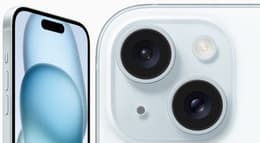
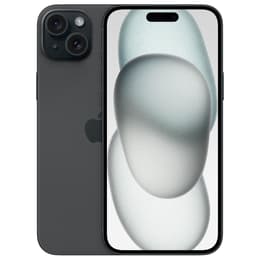
iPhone 15 Plus
iPhone 15 Plus
Starting at

Refurbished price:421.00

Versus €979.00 new

See options
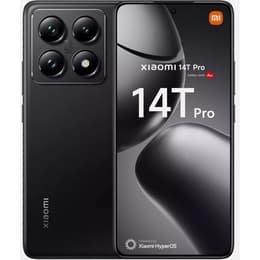
Xiaomi 14T Pro
Xiaomi 14T Pro
Starting at

Refurbished price:395.00

Versus €1,500.00 new

See options

Ratings

The iPhone 15 Plus, released in September 2023, and the Xiaomi 14T Pro, launched in September 2024, represent two distinct approaches to the modern smartphone experience. While both devices offer robust performance and advanced camera systems, they differ significantly in their operating systems, display technologies, and overall design philosophies. This comparison aims to highlight the practical distinctions between these two devices to help users make an informed decision, especially when considering quality-assured refurbished options.

Scores

Durability

When evaluating the long-term usability of a smartphone, software support and physical resilience are key factors.

  • Software Longevity: The iPhone 15 Plus launched with iOS 17 and is compatible with iOS 26.4 as of March 2026, indicating a long period of software updates and security patches from Apple. The Xiaomi 14T Pro, released with Xiaomi HyperOS based on Android 14, has already received an update to HyperOS 2 based on Android 15, suggesting a commitment to ongoing software support from Xiaomi.
  • Physical Durability: Both devices offer a degree of protection against environmental elements. The iPhone 15 Plus features a Ceramic Shield front and an aluminum design, along with an IP68 rating for water and dust resistance, allowing submersion up to 6 meters for 30 minutes. The Xiaomi 14T Pro also boasts an IP68 rating, with resistance up to 2 meters for 30 minutes, and incorporates a metal frame in its construction.
  • Expected Lifespan: Given their respective release timelines and typical manufacturer support cycles, both phones are designed for several years of reliable operation. The iPhone 15 Plus, being an Apple device, generally benefits from extended iOS update cycles, potentially offering a slightly longer period of feature and security updates.

Year of Release

2023

2024

Compatible with latest Update

Yes

Yes

OS

iOS

Android

Foldable

No

No

Performance

The performance of a smartphone is crucial for handling daily tasks, demanding applications, and multitasking.

  • Processing Power: The iPhone 15 Plus is equipped with a powerful current-generation processor, enabling smooth operation across various applications and efficient handling of graphics-intensive tasks. The Xiaomi 14T Pro features a high-end MediaTek Dimensity 9300+ processor, designed to deliver strong performance for gaming and complex applications.
  • Multitasking and Storage: The iPhone 15 Plus comes with 6 GB of RAM, which is sufficient for most multitasking scenarios and app switching. Storage options range from 128GB to 512GB. The Xiaomi 14T Pro offers more RAM, with configurations including 12GB, and storage options up to 1TB, providing ample room for numerous applications and large files.
  • Real-world Responsiveness: Both devices are engineered to provide a fluid user experience. The iPhone 15 Plus offers consistent responsiveness, benefiting from tight hardware-software integration. The Xiaomi 14T Pro's powerful processor and higher RAM capacity contribute to a responsive interface, particularly noticeable during heavy usage and switching between many open applications.

Memory (GB)

6 GB

12 GB

Screen quality

The display is a primary interface for user interaction, and both devices offer high-quality viewing experiences with distinct characteristics.

  • Display Technology and Size: The iPhone 15 Plus features a 6.7-inch Super Retina XDR OLED display, known for its deep blacks and vibrant color reproduction. The Xiaomi 14T Pro comes with a 6.67-inch OLED display, also offering rich colors and contrast.
  • Resolution and Clarity: The iPhone 15 Plus provides a resolution of 2796x1290 pixels at 460 ppi, ensuring sharp text and detailed images. The Xiaomi 14T Pro offers a resolution of 2712x1220 pixels, resulting in clear and crisp visuals.
  • Refresh Rate and Brightness: A key difference lies in the refresh rate; the iPhone 15 Plus has a standard 60Hz refresh rate. The Xiaomi 14T Pro features a higher 144Hz refresh rate, which translates to smoother scrolling and more fluid animations. For outdoor visibility, the iPhone 15 Plus can reach a peak outdoor brightness of 2000 nits, while the Xiaomi 14T Pro also offers a bright display suitable for various lighting conditions.

Resolution

1290 x 2796

1220 x 2712

Screen type

Super Retina XDR OLED

AMOLED

Audiovisual

Camera capabilities are a significant consideration for many users, and both smartphones are equipped with advanced imaging systems.

  • Main Camera System: The iPhone 15 Plus features an advanced dual-camera system with a 48MP main sensor (f/1.6) and a 12MP ultra-wide lens (f/2.4). It also includes a 12MP 2x telephoto option enabled by its quad-pixel sensor, offering optical image stabilization for clear shots. The Xiaomi 14T Pro boasts a triple-camera setup, highlighted by a 50MP Omnivision OVX9000 main sensor (f/1.7) with Leica imaging, covering focal lengths from 15mm to 120mm.
  • Photography Performance: The iPhone 15 Plus excels in computational photography, delivering detailed 24MP photos by default and strong low-light performance. The Xiaomi 14T Pro, with its Leica collaboration, aims for cinema-level dynamic range and advanced computational photography through Xiaomi AISP, promising vivid details and HDR visuals.
  • Video Recording and Front Camera: Both devices offer high-quality video recording. The iPhone 15 Plus supports 4K video recording up to 60fps and cinematic mode. Its front camera is 12MP. The Xiaomi 14T Pro can record up to 8K video at 24/30fps and features a 32MP front camera, offering higher resolution for selfies and video calls.

Main camera

48 megapixels

50 megapixels

Front camera

12 megapixels

32 megapixels

Miscellaneous

Beyond core features, several practical elements contribute to the overall user experience.

  • Connectivity and Ports: Both phones support 5G connectivity for fast mobile data. The iPhone 15 Plus uses a USB-C port, marking a shift from its proprietary connector, though with USB 2.0 transfer speeds. The Xiaomi 14T Pro also features a USB Type-C port and includes NFC for mobile payments and an infrared (IR) blaster for controlling home electronics.
  • Biometric Security and Design: The iPhone 15 Plus relies on Face ID for secure authentication and features the Dynamic Island for interactive alerts. The Xiaomi 14T Pro typically uses an in-display fingerprint sensor for biometric security. In terms of physical design, the iPhone 15 Plus weighs 201 grams and measures 160.9 x 77.8 x 7.8 mm. The Xiaomi 14T Pro is slightly heavier at 209 grams and measures 160.4 x 75.1 x 8.4mm.
  • Audio Experience: Neither device includes a traditional 3.5mm headphone jack, relying on USB-C or wireless audio solutions. Both offer stereo speaker setups for media consumption.

Weight

171 g

209 g

Screen size (in)

6.7

6.67

Network

5G

5G

SIM card

eSIM

Dual Physical SIM

Carrier compatibility

Unlocked

Unlocked

The iPhone 15 Plus and Xiaomi 14T Pro cater to users with differing priorities, each excelling in specific areas based on user feedback and specifications.

Users often praise the iPhone 15 Plus for its consistent software experience, robust ecosystem, and reliable camera performance, particularly its computational photography capabilities and the intuitive Dynamic Island. Its long-term software support is also a frequently cited advantage. Some users, however, might note its standard 60Hz display refresh rate as a point of comparison against devices offering smoother visuals.

The Xiaomi 14T Pro is often lauded for its high refresh rate display, powerful processor, and fast charging capabilities, including 120W wired and 50W wireless charging, which significantly reduce downtime. Its higher RAM configurations and larger storage options are also appealing to power users. Potential considerations for some users might include the Android ecosystem's fragmentation compared to iOS, though Xiaomi's HyperOS aims to provide a cohesive experience.

Users prioritizing a highly integrated ecosystem, consistent software updates over many years, and a refined user experience may find the iPhone 15 Plus well-suited to their needs. Conversely, users who value a high refresh rate display for smoother interactions, faster charging speeds, and potentially more customizable software with higher base RAM and storage options might lean towards the Xiaomi 14T Pro. Both devices are available as quality-assured refurbished options, providing an eco-friendly alternative for consumers.


See all articles

Our recent comparisons