

iPhone 16 Pro Max Vs Xiaomi 12T Pro

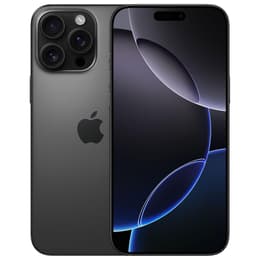
iPhone 16 Pro Max
iPhone 16 Pro Max
Starting at

Refurbished price:812.00

Versus €1,489.00 new

See options
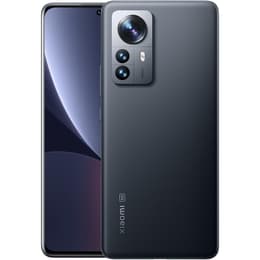
Xiaomi 12T Pro
Xiaomi 12T Pro
Starting at

Refurbished price:201.00

Versus €1,199.00 new

See options

Ratings

The iPhone 16 Pro Max (released in September 2024) and the Xiaomi 12T Pro (launched in October 2022) represent different generations and ecosystems within the smartphone market. While both devices offer advanced features, the iPhone 16 Pro Max stands as a more recent premium offering running on iOS, whereas the Xiaomi 12T Pro provides a robust Android experience from an earlier release cycle. Key differentiators lie in their software longevity, processing power, and camera system philosophies.

Scores

Durability

The practical lifespan of a smartphone is significantly influenced by its release timeline and the duration of software support it receives.

  • Software Updates: The iPhone 16 Pro Max, having been released in late 2024, is expected to receive iOS updates for approximately 5 to 7 years, potentially extending its software support until around 2031. In contrast, the Xiaomi 12T Pro, launched in late 2022, was promised three major Android OS updates (up to Android 15) and four years of security updates, concluding around October 2026. This difference means the iPhone will maintain access to the latest features and security patches for a considerably longer period.
  • Build Quality: The iPhone 16 Pro Max features a durable titanium frame and Ceramic Shield front cover, contributing to its robust construction and resistance to everyday wear. The Xiaomi 12T Pro utilizes Gorilla Glass 5 for its front display and a glass back with a plastic frame, offering a good level of protection but with a slightly lower IP rating for dust and splash resistance compared to the iPhone's IP68 rating.
  • Repairability: While specific repairability scores can vary, Apple devices generally have a well-established ecosystem for repairs, though component costs can be a factor. The Xiaomi 12T Pro's design also allows for component replacement, but the availability of parts and authorized service centers might differ by region.

Year of Release

2024

2022

Compatible with latest Update

Yes

Yes

Foldable

No

No

Performance

Performance is a critical aspect for daily smartphone usage, impacting everything from app responsiveness to demanding tasks like gaming and video editing.

  • Processing Power: The iPhone 16 Pro Max is equipped with Apple's A18 Pro chip, a newer generation processor designed for high efficiency and demanding computational tasks. This allows it to handle complex applications, intensive multitasking, and advanced gaming with considerable ease and responsiveness. The Xiaomi 12T Pro features the Qualcomm Snapdragon 8+ Gen 1 processor, which was a top-tier chip at its release and remains capable for most everyday applications and gaming. However, due to the age difference, the iPhone 16 Pro Max offers a significant performance advantage and more headroom for future software demands.
  • Multitasking and Storage: Both devices offer ample RAM (8GB on the iPhone 16 Pro Max and 8GB/12GB on the Xiaomi 12T Pro) to ensure smooth multitasking and app switching. Storage options are generous on both, with the iPhone 16 Pro Max starting at 256GB and going up to 1TB, while the Xiaomi 12T Pro offers 128GB or 256GB variants. Neither device supports expandable storage via microSD cards.
  • Battery Behavior: The iPhone 16 Pro Max features a 4685mAh battery, delivering exceptional endurance, with users reporting over 17-18 hours of web browsing on a single charge. The Xiaomi 12T Pro comes with a larger 5000mAh battery, providing good all-day usage for most users, often lasting over 12 hours with heavy use.

Memory (GB)

8 GB

8 GB

Screen quality

The display is the primary interface for smartphone interaction, and both devices offer high-quality viewing experiences with distinct characteristics.

  • Display Technology and Clarity: The iPhone 16 Pro Max features a 6.9-inch LTPO Super Retina XDR OLED display, known for its deep blacks, vibrant colors, and excellent contrast. It boasts a resolution of 1320 x 2868 pixels, resulting in a sharp pixel density of approximately 460 ppi. The Xiaomi 12T Pro has a 6.67-inch AMOLED display with a resolution of 1220 x 2712 pixels, offering a pixel density of around 446 ppi, also providing a clear and colorful viewing experience.
  • Brightness and Refresh Rate: The iPhone 16 Pro Max offers high peak brightness levels, reaching up to 2000 nits in high brightness mode (HBM), making it highly visible even in direct sunlight. Its ProMotion technology provides an adaptive refresh rate up to 120Hz, ensuring smooth scrolling and fluid animations. The Xiaomi 12T Pro also features a 120Hz refresh rate for smooth visuals and reaches around 900 nits of typical brightness, which is good for most indoor and outdoor conditions.
  • Viewing Experience: Both displays support HDR content, enhancing the viewing of compatible videos and images. The iPhone's slightly larger screen and higher peak brightness may offer a more immersive experience for media consumption and outdoor use.

Resolution

1320 x 2868

1220 x 2712

Screen type

LTPO Super Retina XDR OLED

AMOLED

Audiovisual

Camera capabilities are a significant factor for many users, and these two devices approach photography with different strengths.

  • Rear Camera Systems: The iPhone 16 Pro Max features a versatile triple-camera system, including a 48MP main sensor with sensor-shift optical image stabilization (OIS), a 12MP periscope telephoto lens offering 5x optical zoom with OIS, and a 48MP ultrawide lens. It is praised for its consistent image quality across all lenses and excellent computational photography. The Xiaomi 12T Pro highlights its 200MP main camera with OIS, which can capture highly detailed images in good lighting conditions. However, its accompanying 8MP ultrawide and 2MP macro cameras are generally considered less capable and can produce softer details, especially in challenging light.
  • Video Recording: The iPhone 16 Pro Max excels in video recording, offering 4K resolution at up to 120 frames per second, ProRes video, and Spatial Video capabilities, providing professional-grade video capture with strong dynamic range and stabilization. The Xiaomi 12T Pro supports 8K video recording at 24fps, and 4K at 60fps, which is good for high-resolution footage, though stabilization might be less consistent at higher resolutions.
  • Front Camera and Audio: The iPhone 16 Pro Max includes a 12MP selfie camera with autofocus and OIS, capable of high-quality photos and 4K video. The Xiaomi 12T Pro has a 20MP front camera, suitable for clear selfies and video calls. Both devices offer stereo speakers, with the Xiaomi 12T Pro featuring Harman Kardon tuning for an enhanced audio experience.

Main camera

48 megapixels

200 megapixels

Front camera

12 megapixels

20 megapixels

Miscellaneous

Beyond core performance and display, several practical elements contribute to the overall user experience and daily convenience.

  • Connectivity: The iPhone 16 Pro Max supports the latest Wi-Fi 7 standard, along with Bluetooth 5.3, ensuring fast and reliable wireless connections. The Xiaomi 12T Pro supports Wi-Fi 6E and Bluetooth 5.2, which also provide robust connectivity for most current needs. Both devices offer 5G cellular connectivity for high-speed mobile data.
  • Ports and Biometrics: The iPhone 16 Pro Max has transitioned to a USB-C port, offering universal compatibility and faster data transfer speeds. It relies on Face ID for secure facial recognition. The Xiaomi 12T Pro features a USB-C 2.0 port and an in-display fingerprint sensor for biometric authentication.
  • Design and Handling: The iPhone 16 Pro Max features a premium titanium design, contributing to its durability and a refined feel. It weighs 227g and has dimensions that make it a substantial device in hand. The Xiaomi 12T Pro, with its glass and plastic construction, weighs 205g, offering a slightly lighter feel. The iPhone also includes an Action Button and a dedicated Camera Control button for quick access to functions.

Weight

227 g

204 g

Screen size (in)

6.9

6.67

Network

5G

5G

SIM card

eSIM

Dual Physical SIM

Carrier compatibility

Unlocked

Unlocked

The iPhone 16 Pro Max and Xiaomi 12T Pro cater to different user priorities, largely due to their release timelines and operating system philosophies. User sentiment often highlights the iPhone 16 Pro Max for its exceptional battery life, consistent and high-quality camera system, and long-term software support. Users appreciate its robust build and the seamless integration within the Apple ecosystem. Some common criticisms, though minor, might revolve around its size for one-handed use or the incremental nature of some upgrades compared to its direct predecessor.

The Xiaomi 12T Pro is frequently praised for its powerful main camera, particularly the 200MP sensor's ability to capture detailed images in good lighting, and its incredibly fast wired charging capabilities. Users also value its capable performance for everyday tasks and gaming. However, some users note that the secondary cameras (ultrawide and macro) do not match the quality of the main sensor, and the software update policy is shorter compared to the iPhone. The lack of wireless charging is also a point of consideration for some.

Users prioritizing long-term software support, top-tier performance for demanding applications, and a highly consistent, versatile camera system with excellent video capabilities will find the iPhone 16 Pro Max well-suited to their needs. Its premium build and extended lifespan make it a strong choice for those seeking a device that remains current for many years. Conversely, users who prioritize a high-megapixel main camera, exceptionally fast wired charging, and a capable Android experience for daily use and gaming, and are comfortable with a shorter software support window, may lean towards the Xiaomi 12T Pro. Both devices, whether new or as quality-assured refurbished options, offer distinct advantages for different user profiles, enabling informed and sustainable choices.


See all articles

Our recent comparisons