

Galaxy S10 Vs iPhone 11 Pro Max

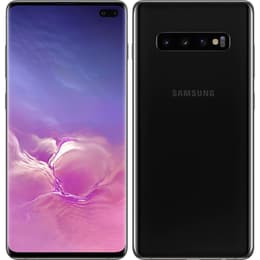
Galaxy S10
Galaxy S10
Starting at

Refurbished price:114.00

Versus €549.00 new

See options
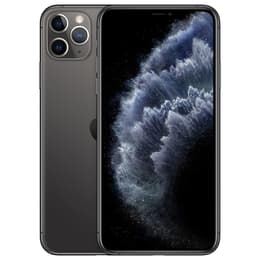
iPhone 11 Pro Max
iPhone 11 Pro Max
Starting at

Refurbished price:219.00

Versus €939.00 new

See options

Ratings

The Samsung Galaxy S10 and the iPhone 11 Pro Max, both released in 2019, represent flagship smartphones from their respective manufacturers. While the Galaxy S10 operates on the Android platform, offering a customizable experience, the iPhone 11 Pro Max runs on Apple's iOS, known for its integrated ecosystem. Key differentiators between these two devices include their display technologies, camera philosophies, and overall user interface, catering to distinct preferences.

Scores

Durability

Both devices launched in 2019, meaning they have received several years of software updates since their release. The practical lifespan of a smartphone is often influenced by its software support and physical durability.

  • Software Longevity: The iPhone 11 Pro Max, running iOS, typically receives major software updates for approximately five to six years from its release, potentially extending its functional life for users who prioritize the latest features and security. The Galaxy S10, an Android device, generally received three major Android OS updates and an additional year of security updates, concluding its official support cycle sooner than its Apple counterpart.
  • Physical Durability: The Galaxy S10 features Gorilla Glass 6 on the front and Gorilla Glass 5 on the back, offering a good level of scratch and drop resistance. The iPhone 11 Pro Max utilizes a custom-engineered glass that Apple described as the toughest in a smartphone at its release, though it predates the Ceramic Shield found in later iPhone models. Both devices carry an IP68 rating for water and dust resistance, indicating they can withstand submersion in up to 1.5 meters of water for 30 minutes.
  • Repairability: User experiences suggest that while both phones are repairable, the availability of parts and service expertise can vary. Older devices like these may benefit from the option of replacing components like batteries to extend their usability.

Year of Release

2019

2019

Compatible with latest Update

No

Yes

OS

Android

iOS

Foldable

No

No

Performance

Performance in both the Galaxy S10 and iPhone 11 Pro Max is designed to handle daily tasks efficiently, though they approach this with different hardware and software optimizations.

  • System Responsiveness: The iPhone 11 Pro Max is equipped with a processor that delivers smooth performance for demanding applications and multitasking. Users often report a fluid experience, even with graphically intensive games and video editing. The Galaxy S10, depending on the region, features either a Snapdragon or Exynos processor, both capable of handling everyday apps, browsing, and moderate gaming without significant lag.
  • Multitasking and Storage: The iPhone 11 Pro Max typically comes with 4GB of RAM, which, combined with iOS's memory management, allows for efficient app switching. Storage options range from 64GB to 512GB. The Galaxy S10 offers 8GB or 12GB of RAM, providing ample capacity for running multiple applications simultaneously. It also offers expandable storage via a microSD card, a feature not present in the iPhone, with internal storage options up to 1TB.
  • Battery Behavior: The iPhone 11 Pro Max is noted for its extended battery life, often lasting a full day or more for many users, even with heavy usage. The Galaxy S10, with its 3400 mAh battery, generally provides a full day of use for average users, though heavy usage might require a midday top-up.

Memory (GB)

8 GB

4 GB

Screen quality

Both smartphones offer high-quality displays, but they differ in their underlying technology and visual characteristics.

  • Display Technology and Clarity: The iPhone 11 Pro Max features a 6.5-inch Super Retina XDR OLED display, known for its deep blacks, vibrant colors, and excellent contrast. The Galaxy S10 boasts a 6.1-inch Dynamic AMOLED display with a QHD+ resolution, providing a very sharp and colorful viewing experience.
  • Brightness and Outdoor Visibility: The iPhone 11 Pro Max's display can reach high brightness levels, making it highly legible even in bright outdoor conditions. The Galaxy S10's Dynamic AMOLED screen also offers strong brightness, with users reporting good visibility outdoors.
  • Refresh Rate and Viewing Experience: Both devices feature a standard 60Hz refresh rate. While this provides a smooth experience for most content, it does not offer the ultra-smooth scrolling found on devices with higher refresh rates. The iPhone 11 Pro Max's larger screen provides an expansive viewing area, which is beneficial for media consumption. The Galaxy S10's curved edges contribute to an immersive, nearly bezel-less appearance.

Resolution

1440 x 3040

1242 x 2688

Screen type

Dynamic AMOLED

Super Retina XDR OLED

Audiovisual

Both the Galaxy S10 and iPhone 11 Pro Max feature versatile camera systems designed to capture high-quality photos and videos, each with its own strengths.

  • Rear Camera Systems: The iPhone 11 Pro Max introduced a triple 12MP camera system, including wide, ultra-wide, and telephoto lenses, offering significant versatility for different shooting scenarios. Its Night mode was a notable improvement for low-light photography. The Galaxy S10 also features a triple-lens setup with a 12MP wide, 12MP telephoto, and 16MP ultra-wide lens. Users often praise the S10's vibrant colors and dynamic range in good lighting.
  • Video Recording: The iPhone 11 Pro Max is highly regarded for its video recording capabilities, offering excellent 4K video at up to 60 frames per second with extended dynamic range and cinematic video stabilization. The Galaxy S10 can also record 4K video at 60 frames per second, with good image quality and stabilization.
  • Front Camera and Audio: Both phones feature capable front-facing cameras for selfies and video calls. The iPhone 11 Pro Max has a 12MP TrueDepth camera that supports 4K video recording. The Galaxy S10 has a 10MP front camera. For audio, both devices offer good speaker output for media consumption, and their microphones are suitable for calls and voice recording. The Galaxy S10 retains a 3.5mm headphone jack, which is absent on the iPhone 11 Pro Max.

Main camera

12 megapixels

12 megapixels

Front camera

10 megapixels

12 megapixels

Miscellaneous

Beyond core performance and display, several practical features and design elements differentiate these two devices.

  • Connectivity and Ports: Both the Galaxy S10 and iPhone 11 Pro Max support modern connectivity standards, including Wi-Fi 6 and Bluetooth 5.0. The Galaxy S10 uses a USB-C port for charging and data transfer, while the iPhone 11 Pro Max utilizes Apple's proprietary Lightning port. A notable difference is the inclusion of a 3.5mm headphone jack on the Galaxy S10, a feature absent from the iPhone 11 Pro Max.
  • Biometric Security: The iPhone 11 Pro Max relies on Face ID for secure facial recognition. The Galaxy S10 features an ultrasonic in-display fingerprint scanner, offering a convenient and secure unlocking method.
  • Design and Handling: The iPhone 11 Pro Max has a stainless steel frame and a glass back, contributing to a substantial feel and weight of 226 grams. Its larger size can make one-handed use challenging for some. The Galaxy S10, with its glass and aluminum construction, weighs 157 grams and is generally considered comfortable for single-handed use due to its more compact dimensions. The Galaxy S10 also offers Wireless PowerShare, allowing it to wirelessly charge other compatible devices.

Weight

158 g

226 g

Screen size (in)

6.1

6.5

Network

4G

4G

SIM card

Physical SIM

Physical SIM + eSIM

Carrier compatibility

Unlocked

Unlocked

The Samsung Galaxy S10 and iPhone 11 Pro Max, both from 2019, continue to offer compelling smartphone experiences, each with distinct advantages. User sentiment often praises the iPhone 11 Pro Max for its exceptional battery life and robust video recording capabilities. Its integrated iOS ecosystem and long-term software support are also frequently highlighted as strong points. Some users, however, find its size and weight to be a drawback for one-handed use.

The Galaxy S10 is often lauded for its vibrant Dynamic AMOLED display, the inclusion of a 3.5mm headphone jack, and expandable storage via microSD. Its camera system is appreciated for producing colorful and detailed photos, particularly in good lighting. Common criticisms sometimes point to its battery life not matching the longevity of the iPhone 11 Pro Max for heavy users, and its software update cycle has concluded.

Users prioritizing an expansive display, industry-leading video capabilities, and extended battery life within a streamlined software experience may find the iPhone 11 Pro Max well-suited to their needs. Conversely, those who value display customization, the flexibility of expandable storage, a traditional headphone jack, and a more compact design might lean towards the Galaxy S10. Both devices remain capable for everyday use, and opting for a quality-assured refurbished option can be a sustainable choice for either model.


See all articles

Our recent comparisons