

iPhone 14 Pro Vs Xiaomi Redmi Note 11

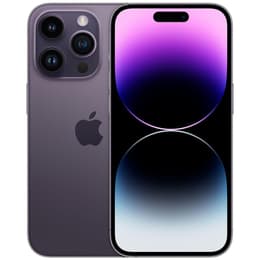
iPhone 14 Pro
iPhone 14 Pro
Starting at

Refurbished price:424.00

Versus €1,339.00 new

See options
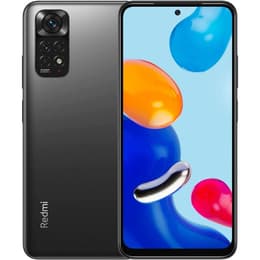
Xiaomi Redmi Note 11
Starting at

Refurbished price:108.00

Versus €249.99 new

See options

Ratings

The iPhone 14 Pro, released in September 2022, and the Xiaomi Redmi Note 11, launched globally in January 2022, represent distinct approaches to smartphone design and functionality. While the iPhone 14 Pro focuses on advanced features and a premium user experience within the iOS ecosystem, the Redmi Note 11 aims to deliver a comprehensive Android experience with a strong emphasis on battery longevity and display quality. These devices cater to different user priorities, offering varied strengths in performance, camera capabilities, and overall ecosystem integration.

Scores

Durability

The practical lifespan of a smartphone is influenced by its initial release, software support, and physical durability. Both devices offer different trajectories in these aspects.

  • Software Longevity: The iPhone 14 Pro, running iOS, typically receives major software updates for an extended period, with support expected until around 2029, having shipped with iOS 16 and currently supporting iOS 26. The Redmi Note 11, initially on Android 11 with MIUI 13, has received updates to HyperOS based on Android 13, suggesting a shorter, though still significant, update cycle compared to its counterpart.
  • Physical Durability: The iPhone 14 Pro features a surgical-grade stainless steel frame and a Ceramic Shield front cover, contributing to its robust build. The Redmi Note 11, while offering a solid build for its category, does not feature the same advanced protective materials.
  • Repairability: The Redmi Note 11 Pro, a close variant, has been noted for its relatively high repairability, with components like the battery and screen cable being accessible without extensive disassembly. Information on the iPhone 14 Pro's repairability suggests a more complex process due to its integrated design.

Year of Release

2022

2022

Compatible with latest Update

Yes

No

OS

iOS

Android

Foldable

No

No

Performance

Performance is a key differentiator, impacting how smoothly applications run, how quickly tasks are completed, and the overall responsiveness of the device.

  • Processing Power: The iPhone 14 Pro is equipped with a powerful current-generation processor, enabling it to handle demanding applications, complex multitasking, and graphics-intensive games with ease. The Redmi Note 11 features a capable processor designed for efficient everyday use, managing common apps and general multitasking effectively, though it may show limitations with very intensive gaming or heavy computational tasks.
  • Storage and RAM: The iPhone 14 Pro offers a range of internal storage options up to 1TB, providing ample space for extensive media and applications. The Redmi Note 11 comes with up to 128GB of internal storage, which can be expanded significantly using a microSD card, offering flexibility for users who need more space for photos and files.
  • Battery Performance: The Redmi Note 11 is known for its substantial 5,000mAh battery, often providing up to two days of usage for many users. It also supports 33W Pro fast charging, allowing for a full charge in approximately an hour. The iPhone 14 Pro, with its approximately 3,200mAh battery, typically offers a full day of mixed usage, with some tests indicating around 10-12 hours of screen-on time. It supports faster wired charging with a 20W+ adapter and wireless charging via MagSafe and Qi standards.

Memory (GB)

6 GB

4 GB

Screen quality

The display is the primary interface for user interaction, and differences in technology and specifications can significantly affect the visual experience.

  • Display Technology and Clarity: The iPhone 14 Pro features a 6.1-inch Super Retina XDR OLED display, known for its deep blacks, vibrant colors, and high pixel density of approximately 460 pixels per inch (ppi), resulting in sharp and detailed visuals. The Redmi Note 11 sports a 6.43-inch FHD+ AMOLED DotDisplay with a resolution of 1080x2400 pixels and around 409 ppi, offering a clear and colorful viewing experience.
  • Brightness and Refresh Rate: The iPhone 14 Pro's display boasts an adaptive ProMotion refresh rate that can scale from 1Hz to 120Hz, providing smooth scrolling and responsiveness while conserving battery. It also achieves high brightness levels, reaching up to 1000 nits typical, 1600 nits for HDR content, and a peak of 2000 nits for outdoor visibility. The Redmi Note 11 offers a 90Hz refresh rate for a smoother visual experience than standard displays and reaches a peak brightness of 1000 nits, with a Sunlight Display feature for better outdoor readability.
  • Special Features: The iPhone 14 Pro includes an Always-On display and the Dynamic Island, which integrates notifications and activities into a fluid interface. The Redmi Note 11 features Reading Mode 3.0, designed to reduce eye strain during prolonged use.

Resolution

1179 x 2556

1080 x 2400

Screen type

LTPO Super Retina XDR OLED

AMOLED

Audiovisual

Camera capabilities are a significant factor for many users, and both devices offer distinct photographic and videographic experiences.

  • Rear Camera System: The iPhone 14 Pro features a versatile triple-camera system, including a 48MP main sensor that uses pixel binning to produce detailed 12MP photos, with the option for full 48MP ProRAW capture. It also has a 12MP ultra-wide camera and a 12MP telephoto lens with 3x optical zoom. The Redmi Note 11 is equipped with a quad-camera setup, featuring a 50MP main sensor, an 8MP ultra-wide lens, a 2MP macro lens, and a 2MP depth sensor.
  • Photography Performance: The iPhone 14 Pro excels in various lighting conditions, with its Photonic Engine enhancing low-light performance and capturing fine details and accurate colors. The Redmi Note 11 performs well in good lighting, producing clear images suitable for social media, but its performance in low-light scenarios is less robust.
  • Video Recording and Front Camera: The iPhone 14 Pro supports 4K video recording at up to 60 frames per second, along with advanced features like Cinematic Mode, Action Mode, and ProRes video. Its 12MP TrueDepth front camera includes autofocus for sharp selfies and video calls. The Redmi Note 11 records video at 1080p at 30 frames per second and features a 13MP front camera for selfies.

Main camera

48 megapixels

50 megapixels

Front camera

12 megapixels

13 megapixels

Miscellaneous

Beyond core features, several practical elements contribute to the overall user experience and daily convenience.

  • Connectivity: The iPhone 14 Pro supports 5G cellular networks, Wi-Fi 6, and Bluetooth 5.3, offering fast and reliable wireless connections. The Redmi Note 11 provides 4G connectivity, Wi-Fi (802.11 a/b/g/n/ac), and Bluetooth 5.0, suitable for standard wireless needs.
  • Ports and Biometrics: The iPhone 14 Pro utilizes a Lightning port for charging and data transfer and relies on Face ID for secure facial recognition. The Redmi Note 11 features a USB Type-C port, a 3.5mm headphone jack, and a side-mounted fingerprint sensor for unlocking.
  • Design and Materials: The iPhone 14 Pro has dimensions of 147.5 x 71.5 x 7.85 mm and weighs 206 grams, featuring a premium build with surgical-grade stainless steel and a Ceramic Shield front. The Redmi Note 11 measures 159.87 x 73.87 x 8.09 mm and weighs 179 grams, offering a comfortable in-hand feel.

Weight

206 g

179 g

Screen size (in)

6.1

6.43

Network

5G

4G

SIM card

Physical SIM + eSIM

Dual Physical SIM

Carrier compatibility

Unlocked

Unlocked

User feedback for the iPhone 14 Pro often highlights its exceptional camera performance, particularly in diverse lighting conditions, its vibrant and smooth display with the Dynamic Island, and its powerful processing capabilities that ensure a fluid user experience. Some users have noted concerns regarding battery health degradation over time.

The Xiaomi Redmi Note 11 is frequently praised for its impressive battery life, often lasting up to two days on a single charge, its bright AMOLED display, and its overall build quality, especially considering its market segment. Common criticisms tend to focus on its camera performance in challenging lighting and the absence of 5G connectivity.

Users prioritizing a highly advanced camera system, top-tier performance for demanding applications, and a long-term software support commitment within the Apple ecosystem may find the iPhone 14 Pro well-suited to their needs. Conversely, individuals who value extended battery life, a large and bright display for media consumption, expandable storage, and a traditional headphone jack, while being content with 4G connectivity and solid everyday performance, might lean towards the Xiaomi Redmi Note 11. Both devices can be excellent choices, and exploring quality-assured refurbished options for either model presents an eco-friendly alternative for making an informed purchasing decision.

See all articles

Our recent comparisons