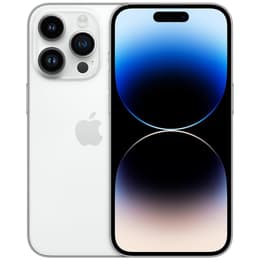

iPhone 14 Pro Vs Xiaomi Redmi Note 14 Pro

iPhone 14 Pro
iPhone 14 Pro
Starting at

Refurbished price:424.00

Versus €1,339.00 new

See options
Xiaomi Redmi Note 14 Pro
Starting at

Refurbished price:260.77

Versus €349.99 new

See options

Ratings

The iPhone 14 Pro, released in September 2022, and the Xiaomi Redmi Note 14 Pro, which launched in September 2024, represent distinct approaches to smartphone design and functionality. While both devices offer advanced features, they cater to different user expectations through their operating systems, performance capabilities, and camera systems. The iPhone 14 Pro operates on Apple's iOS, known for its integrated ecosystem, whereas the Redmi Note 14 Pro runs on Android, offering greater customization.

Scores

Durability

When considering the long-term usability of these devices, several factors contribute to their expected lifespan.

  • Release Timeline and Software Support: The iPhone 14 Pro, launched in September 2022, benefits from Apple's extended software support, typically receiving iOS updates for five to six years from its release. As of March 2026, it runs on iOS 26.3.1, indicating continued support. The Xiaomi Redmi Note 14 Pro, released in September 2024, is expected to receive three years of OS updates and four years of security updates, aligning with typical Android device support cycles.
  • Durability Features: The iPhone 14 Pro features a Ceramic Shield front cover and an IP68 rating for water and dust resistance, allowing submersion up to 6 meters for 30 minutes. The Redmi Note 14 Pro also boasts an IP68 rating for water and dust resistance and is protected by Corning Gorilla Glass Victus 2 on its display, offering robust protection against everyday wear and tear.
  • Repairability Considerations: While the iPhone 14 Pro initially received a favorable repairability assessment, its score was later adjusted due to Apple's parts pairing policies, which can complicate independent repairs. Information regarding the Redmi Note 14 Pro's repairability is less detailed, but Android devices generally offer more flexibility for third-party repairs. Choosing a quality-assured refurbished option for either device can extend its practical lifespan by ensuring it meets functional standards upon purchase.

Year of Release

2022

2025

OS

iOS

Android

Foldable

No

No

Performance

The performance of a smartphone is largely determined by its internal components and how efficiently they handle various tasks.

  • Processing Power: The iPhone 14 Pro is equipped with Apple's A16 Bionic chip, a powerful processor designed to handle demanding applications, complex graphics, and intensive multitasking with fluidity. The Xiaomi Redmi Note 14 Pro is expected to feature a modern processor for its segment, with some reports suggesting the MediaTek Dimensity 7300 Ultra or Snapdragon 7s Gen 3 SoC, both designed to offer capable performance for daily use and gaming.
  • Multitasking and Storage: The iPhone 14 Pro comes with 6GB of RAM, which contributes to smooth app switching and background process management. Storage options range from 128GB up to 1TB. The Redmi Note 14 Pro offers 8GB or 12GB of RAM, providing ample capacity for multitasking, and storage options from 128GB to 512GB, with some variants supporting expandable storage via microSD.
  • Battery Performance: The iPhone 14 Pro has a 3200 mAh battery, providing up to 23 hours of video playback. The Redmi Note 14 Pro is equipped with a larger 5500 mAh battery, which is expected to offer extended usage times. For charging, the iPhone 14 Pro supports 15W MagSafe wireless charging and 20W wired fast charging, while the Redmi Note 14 Pro features 45W turbo charging.

Memory (GB)

6 GB

8 GB

Screen quality

The display is a primary interface for user interaction, and both devices offer high-quality viewing experiences.

  • Display Technology and Clarity: The iPhone 14 Pro features a 6.1-inch Super Retina XDR OLED display with a resolution of 2556x1179 pixels, resulting in a sharp 460 pixels per inch (ppi). The Redmi Note 14 Pro comes with a larger 6.67-inch AMOLED display, offering a 1.5K resolution (1220x2712 or 2400x1080 pixels), which also provides a clear visual experience.
  • Brightness and Smoothness: The iPhone 14 Pro's display can reach a typical brightness of 1000 nits and a peak outdoor brightness of 2000 nits, ensuring visibility in various lighting conditions. It also features ProMotion technology, offering an adaptive refresh rate up to 120Hz for smooth scrolling and responsive interactions. The Redmi Note 14 Pro's AMOLED display boasts a peak brightness of up to 3000 nits and a 120Hz refresh rate, contributing to vibrant visuals and fluid motion.
  • Advanced Display Features: The iPhone 14 Pro introduced the Dynamic Island and an Always-On display, which dynamically present alerts and activities. Both displays support HDR content, offering enhanced contrast and color reproduction for media consumption.

Resolution

1179 x 2556

1080x2400

Audiovisual

Both smartphones are equipped with advanced camera systems designed to capture detailed photos and videos.

  • Rear Camera Systems: The iPhone 14 Pro features a versatile triple-camera setup, including a 48MP main sensor with sensor-shift optical image stabilization (OIS), a 12MP ultra-wide lens, and a 12MP telephoto lens with 3x optical zoom and OIS. It also incorporates a LiDAR scanner for improved depth sensing and low-light performance. The Redmi Note 14 Pro is expected to come with a 200MP main camera with OIS, an 8MP ultra-wide camera, and a 2MP macro lens.
  • Photography Performance: The iPhone 14 Pro utilizes a Photonic Engine to enhance image quality, particularly in low-light conditions. Its quad-pixel sensor on the main camera allows for detailed captures, defaulting to 12MP images through pixel binning but offering full 48MP ProRAW capture. The Redmi Note 14 Pro's high-resolution main sensor is designed to capture extensive detail, and its ultra-wide lens provides a broader perspective for landscape and group shots.
  • Video Capabilities and Front Camera: The iPhone 14 Pro supports 4K video recording at up to 60 frames per second (fps), with features like Cinematic mode for shallow depth-of-field effects and Action mode for stabilized footage. Its front camera is a 12MP sensor with autofocus. The Redmi Note 14 Pro features a 20MP front camera and supports 1080p video recording at 30fps.

Front camera

12 megapixels

32 MP

Miscellaneous

Beyond core features, several practical elements differentiate these devices in daily use.

  • Connectivity and Ports: Both devices support 5G cellular connectivity and modern Wi-Fi standards. The iPhone 14 Pro uses a Lightning port for charging and data transfer, while the Redmi Note 14 Pro features a USB-C port, which is a more universal standard. The Redmi Note 14 Pro also includes a 3.5mm headphone jack in some variants, a feature absent on the iPhone 14 Pro.
  • Biometric Security and Sensors: The iPhone 14 Pro relies on Face ID for secure facial recognition. The Redmi Note 14 Pro offers an in-screen fingerprint sensor and AI Face Unlock for biometric security. Additionally, the Redmi Note 14 Pro includes an IR Blaster, allowing it to function as a universal remote control.
  • Design and Handling: The iPhone 14 Pro has a compact design with dimensions of 147.5 x 71.5 x 7.85 mm and weighs 206g, featuring a stainless steel frame. The Redmi Note 14 Pro is a larger device at 162.33 x 74.42 x 8.24 mm and weighs 190g, with a design that may include glass or vegan leather finishes.

Weight

206 g

180 g

Screen size (in)

6.1

6.67

Network

5G

4G

SIM card

Physical SIM + eSIM

Dual Physical SIM

Carrier compatibility

Unlocked

Unlocked

User feedback for the iPhone 14 Pro often highlights its robust performance, the quality of its camera system, and the seamless integration within the Apple ecosystem. Users frequently praise the vibrant and bright display, as well as the innovative Dynamic Island feature. Common criticisms sometimes point to its battery life, which, while capable of lasting a full day for many users, was noted by some as not significantly improved over its predecessor.

For the Xiaomi Redmi Note 14 Pro, early impressions and expectations suggest praise for its large, high-refresh-rate AMOLED display and its substantial battery capacity, which is anticipated to provide extended usage. The high-megapixel main camera is also a frequent point of interest. Potential concerns might revolve around software update longevity compared to Apple, or the real-world performance of its processor against more established flagship chipsets.

Users prioritizing a compact device with a highly refined operating system, consistent long-term software support, and advanced video capabilities may find the iPhone 14 Pro well-suited to their needs. Its integrated ecosystem and strong privacy features are also key considerations. Conversely, users who value a larger display, potentially longer battery life, greater customization options through Android, and a high-resolution main camera may lean toward the Xiaomi Redmi Note 14 Pro. This device could appeal to those who appreciate a feature-rich experience with a focus on media consumption and photography. Both devices are available as quality-assured refurbished options, providing an eco-friendly alternative for consumers.


See all articles

Our recent comparisons