

iPhone 13 mini Vs iPhone 16 Pro

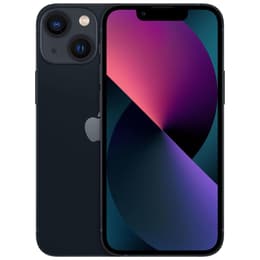
iPhone 13 mini
iPhone 13 mini
Starting at

Refurbished price:228.00

Versus €829.00 new

See options
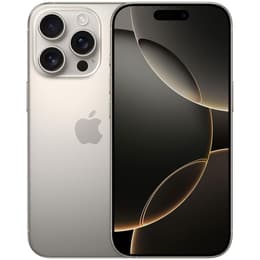
iPhone 16 Pro
iPhone 16 Pro
Starting at

Refurbished price:645.00

Versus €1,239.00 new

See options

Ratings

The iPhone 13 Mini, released in September 2021, and the iPhone 16 Pro, launched in September 2024, represent distinct approaches within Apple's smartphone lineup. While both devices operate on the iOS platform, they cater to different user preferences, primarily distinguished by their size, generational advancements in performance, and camera capabilities. The iPhone 13 Mini offers a compact form factor, whereas the iPhone 16 Pro delivers a larger, more advanced flagship experience with cutting-edge technology.

Scores

Durability

The practical lifespan of a smartphone is influenced by its release timeline, software support, and physical durability. These two iPhones, separated by three generations, offer different expectations in these areas.

  • Release Timeline: The iPhone 13 Mini was released in September 2021, making it an older model compared to the iPhone 16 Pro, which debuted in September 2024. This three-year gap means the 16 Pro benefits from more recent hardware and design advancements.
  • OS Support Duration: Both devices receive regular iOS updates. The iPhone 13 Mini, having launched with iOS 15, currently supports iOS 26.4 and is expected to receive major software updates for approximately 5-6 years from its release, likely until iOS 19 or 20 (around 2026-2027). The iPhone 16 Pro, launching with iOS 18, will benefit from a longer support window, extending its software longevity by several years, potentially until iOS 23 or 24 (around 2029-2030).
  • Physical Durability: Both models feature Apple's Ceramic Shield front cover, designed for enhanced drop performance. They also carry an IP68 rating for water and dust resistance, indicating protection against submersion. The iPhone 16 Pro, however, incorporates a titanium frame, which offers a different balance of strength and weight compared to the aluminum frame of the iPhone 13 Mini.

Year of Release

2021

2024

Compatible with latest Update

Yes

Yes

Foldable

No

No

Performance

Performance differences between these two models are significant due to the generational leap in internal components, impacting speed, efficiency, and multitasking capabilities.

  • Processing Power: The iPhone 16 Pro features a significantly more advanced processor, the A18 Pro chip, which includes a 6-core CPU, a 6-core GPU, and an enhanced Neural Engine for artificial intelligence tasks. This provides a substantial boost in speed and efficiency compared to the iPhone 13 Mini's A15 Bionic chip, which has a 6-core CPU and a 4-core GPU. Users will experience faster app loading, smoother multitasking, and more capable handling of demanding applications and games on the 16 Pro.
  • Battery Behavior: The iPhone 13 Mini, with its compact size, houses a 2406 mAh battery. While it offers improved battery life over its predecessor, heavy users may find themselves needing to charge it before the end of a full day. The iPhone 16 Pro, with its larger physical size, accommodates a larger battery, estimated around 3577 mAh, and benefits from the A18 Pro chip's improved power efficiency. This combination generally translates to longer overall battery endurance for the 16 Pro, even with its more powerful components and larger display.
  • Storage and Responsiveness: Both devices offer various storage configurations, with the iPhone 16 Pro typically starting at higher base storage and offering a maximum of 1TB, compared to the 13 Mini's maximum of 512GB. While both iPhones are known for their fluid responsiveness, the 16 Pro's newer processor and potentially increased RAM (8GB vs 4GB in the 13 Mini) contribute to a more seamless experience, especially when running multiple applications simultaneously or handling future software advancements.

Memory (GB)

4 GB

8 GB

Screen quality

The display experience differs considerably between these two models, primarily due to advancements in size, refresh rate, and brightness.

  • Display Technology and Size: Both the iPhone 13 Mini and the iPhone 16 Pro feature Super Retina XDR OLED displays, offering deep blacks and vibrant colors. However, the 13 Mini has a compact 5.4-inch screen with a resolution of 2340x1080 pixels at 476 ppi. The iPhone 16 Pro boasts a larger 6.3-inch display with a resolution of 2622x1206 pixels at 460 ppi, providing a more expansive viewing area.
  • Refresh Rate and Brightness: A key differentiator is the refresh rate. The iPhone 13 Mini features a standard 60Hz refresh rate. The iPhone 16 Pro, on the other hand, includes ProMotion technology, offering an adaptive refresh rate that can scale from 1Hz to 120Hz. This results in noticeably smoother scrolling and more fluid animations on the 16 Pro. In terms of brightness, the 13 Mini reaches 800 nits typical and 1200 nits peak for HDR content. The 16 Pro significantly surpasses this with 1000 nits typical brightness and up to 2000 nits peak for HDR content, making it more legible in bright outdoor conditions.
  • Additional Display Features: The iPhone 16 Pro also includes an Always-On display feature, which is not present on the iPhone 13 Mini. This allows for glanceable information without fully waking the device. The larger screen-to-body ratio on the 16 Pro also contributes to a more immersive viewing experience with slimmer bezels.

Resolution

1080 x 2340

1206 x 2622

Screen type

Super Retina XDR OLED

LTPO Super Retina XDR OLED

Audiovisual

The camera systems of the iPhone 13 Mini and iPhone 16 Pro reflect significant advancements over three generations, particularly in versatility and low-light performance.

  • Rear Camera System: The iPhone 13 Mini features a capable dual 12MP camera system, comprising a wide-angle lens with sensor-shift optical image stabilization and an ultra-wide lens. It supports features like Cinematic mode and Night mode. The iPhone 16 Pro elevates this with a triple camera system, including a 48MP main sensor, an upgraded 48MP ultra-wide lens, and a 12MP telephoto lens with 5x optical zoom, a feature previously exclusive to larger Pro Max models. This provides greater flexibility for different photographic scenarios, from expansive landscapes to distant subjects.
  • Photography Performance: The 16 Pro's larger sensors and advanced computational photography capabilities lead to superior low-light performance, capturing more detail and reducing noise in challenging conditions compared to the 13 Mini. The 16 Pro also offers new Photographic Styles with improved machine learning and support for Spatial Photos, enhancing creative options.
  • Video Recording and Audio: Both devices are capable of high-quality video recording, with the 13 Mini supporting 4K video up to 60 frames per second. The iPhone 16 Pro pushes this further, with support for 4K video recording at 120 frames per second, allowing for more detailed slow-motion capture. The 16 Pro also introduces features like a dedicated Camera Control button for easier photo and video capture, and advancements in microphone quality for clearer audio recording.

Main camera

12 megapixels

48 megapixels

Front camera

12 megapixels

12 megapixels

Miscellaneous

Beyond core features, several practical elements distinguish the user experience between the iPhone 13 Mini and the iPhone 16 Pro.

  • Connectivity and Ports: Both phones support 5G connectivity, but the iPhone 16 Pro incorporates newer standards like Wi-Fi 7 and potentially a faster 5G modem, offering improved wireless speeds and reliability compared to the iPhone 13 Mini's Wi-Fi 6 and Bluetooth 5.0. A significant difference is the charging and data port: the 13 Mini uses Apple's proprietary Lightning port, while the 16 Pro has transitioned to a USB-C port, which also supports faster data transfer speeds (Thunderbolt).
  • Biometrics and User Interface: Both devices rely on Face ID for secure authentication. The iPhone 16 Pro introduces an Action Button, a customizable physical button that can be assigned to various functions, and a new Camera Control button for enhanced photography interaction, features absent on the 13 Mini.
  • Physical Design and Handling: The iPhone 13 Mini is notably smaller and lighter, measuring 131.5 x 64.2 x 7.65 mm and weighing 141g, making it ideal for one-handed use and pocketability. The iPhone 16 Pro is a larger and heavier device at 149.6 x 71.5 x 8.25 mm and 199g, offering a more substantial feel and a larger screen for media consumption and productivity. The 16 Pro also features a titanium frame, contributing to its premium feel and durability.

Weight

140 g

199 g

Screen size (in)

5.4

6.3

Network

5G

5G

SIM card

Physical SIM + eSIM

eSIM

Carrier compatibility

Unlocked

Unlocked

Connector

Lightning

USB-C (USB 3)

User sentiment for the iPhone 13 Mini often praises its unique compact size, making it a preferred choice for those who value one-handed usability and a phone that easily fits into smaller pockets. Many users appreciate its capable performance for everyday tasks and its surprisingly good camera for its size. However, common criticisms revolve around its battery life, which, while improved over its predecessor, can still be a limitation for heavy users, and its 60Hz display, which feels less fluid compared to higher refresh rate screens.

The iPhone 16 Pro, conversely, is lauded for its cutting-edge performance, advanced camera system with enhanced low-light capabilities and optical zoom, and its larger, smoother ProMotion display. Users often highlight its suitability for demanding applications, professional-grade photography and videography, and an immersive media experience. Potential concerns might include its larger size and weight, which some users may find less comfortable for extended one-handed use compared to smaller devices.

For users prioritizing a highly portable device that excels in basic smartphone functions and offers a comfortable, compact form factor, the iPhone 13 Mini remains a compelling choice. Its smaller dimensions are unmatched by newer flagship models. Conversely, individuals who require the latest processing power, a versatile and advanced camera system, a larger and more fluid display, and longer software support will find the iPhone 16 Pro better suited to their needs. Both devices offer a quality-assured experience, and considering a refurbished option for either model can be an eco-friendly alternative to extend their lifecycle.


See all articles

Our recent comparisons