


iPhone 12 mini Vs Xiaomi Redmi Note 11 Pro 5G

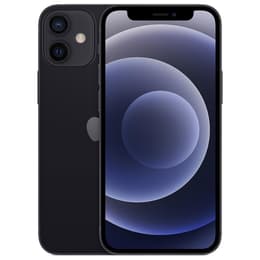
iPhone 12 mini
iPhone 12 mini
Starting at

Refurbished price:146.50

Versus €689.00 new

See options
Xiaomi Redmi Note 11 Pro 5G
Starting at

Refurbished price:126.00

Versus €699.00 new

See options

Ratings

The iPhone 12 Mini, released in November 2020, is Apple's compact offering from its 12th generation of smartphones, running on iOS. In contrast, the Xiaomi Redmi Note 11 Pro 5G, launched in January 2022, is an Android-based device positioned in the mid-range segment. The primary distinctions between these two devices lie in their physical size, operating systems, and their respective approaches to core features and user experience.

Scores

Durability

When considering the practical lifespan of these devices, several factors contribute to their longevity, including software support and physical resilience.

  • Software Support: The iPhone 12 Mini, running iOS, typically receives major operating system updates for approximately five to six years from its release, offering extended software longevity. The Xiaomi Redmi Note 11 Pro 5G launched with Android 11 and is generally expected to receive two major Android version updates, providing a shorter, though still substantial, period of official software support.
  • Physical Durability: The iPhone 12 Mini features a Ceramic Shield front cover, which Apple states enhances drop performance. It also boasts an IP68 rating for water and dust resistance. The Redmi Note 11 Pro 5G is equipped with Corning Gorilla Glass 5 for screen protection and carries an IP53 rating, indicating splash and dust resistance.
  • Repairability: The iPhone 12 Mini received a repairability score of 6 out of 10 from iFixit, with display and battery replacements noted as relatively straightforward due to modular design. Information on the Redmi Note 11 Pro 5G's specific repairability score is less widely detailed, but its construction generally allows for component replacement.

Year of Release

2020

2022

Compatible with latest Update

Yes

No

OS

iOS

Android

Foldable

No

No

Performance

The performance of a smartphone impacts how smoothly applications run, how quickly tasks are completed, and the overall responsiveness of the device.

  • Processing Power: The iPhone 12 Mini is equipped with a processor that delivers strong performance, ensuring demanding applications and graphics-intensive games run smoothly without noticeable lag. It handles multitasking and 4K HDR video processing efficiently. The Xiaomi Redmi Note 11 Pro 5G features a processor that provides competent performance for everyday tasks and moderate gaming. While capable, it may not match the sustained high-end performance of the iPhone for the most intensive applications or games at their highest settings.
  • Battery Behavior: The iPhone 12 Mini's compact size necessitates a smaller battery, which often results in a shorter battery life, particularly for heavy users. Users may find themselves needing to charge it more frequently throughout the day. The Redmi Note 11 Pro 5G includes a larger battery capacity, typically providing sufficient power for a full day of heavy use and often extending into a second day for moderate usage. It also supports fast charging, allowing for quick power replenishment.
  • Storage and Multitasking: Both devices offer various internal storage configurations. The iPhone 12 Mini is available with 64GB, 128GB, or 256GB of internal storage. The Redmi Note 11 Pro 5G comes with 64GB or 128GB of internal storage, with the added flexibility of expandable storage via a microSD card. Both devices are designed to handle typical multitasking demands effectively, with their respective operating systems optimizing memory usage.

Memory (GB)

4 GB

6 GB

Screen quality

The display is a primary interface for smartphone interaction, and differences in technology and specifications can significantly affect the viewing experience.

  • Display Technology and Clarity: The iPhone 12 Mini features a 5.4-inch Super Retina XDR OLED display, offering deep blacks, vibrant colors, and high contrast. Its resolution of 2340x1080 pixels results in a pixel density of 476 pixels per inch (ppi), providing a very sharp and detailed image. The Xiaomi Redmi Note 11 Pro 5G sports a larger 6.67-inch Super AMOLED display with a resolution of 1080x2400 pixels, yielding a pixel density of 395 ppi. This also delivers vibrant colors and good contrast, though with a slightly lower pixel density.
  • Brightness and Refresh Rate: The iPhone 12 Mini offers a typical brightness of 625 nits, with a peak brightness of 1200 nits for HDR content, ensuring good visibility in various lighting conditions. It has a standard 60Hz refresh rate. The Redmi Note 11 Pro 5G provides a typical brightness of 700 nits and also reaches a peak of 1200 nits, making it bright enough for outdoor use. A key feature is its 120Hz refresh rate and 360Hz touch sampling rate, which contribute to smoother scrolling and a more responsive touch experience.
  • Screen Size and Viewing Experience: The iPhone 12 Mini's 5.4-inch screen is ideal for one-handed use and those who prefer a compact device. The Redmi Note 11 Pro 5G's larger 6.67-inch display offers a more expansive viewing area, which can enhance media consumption and gaming experiences, though it typically requires two hands for comfortable operation.

Resolution

1080 x 2340

1080 x 2400

Screen type

Super Retina XDR OLED

Super AMOLED

Audiovisual

The camera systems on both smartphones offer distinct capabilities for capturing photos and videos, catering to different user priorities.

  • Rear Camera System: The iPhone 12 Mini features a dual-camera setup on the rear, consisting of a 12-megapixel wide lens with an f/1.6 aperture and a 12-megapixel ultrawide lens with an f/2.4 aperture. This system is known for producing excellent photos in good lighting and significantly improved low-light performance with its Night mode, available across all cameras. The Xiaomi Redmi Note 11 Pro 5G comes with a triple rear camera array, including a 108-megapixel main sensor with an f/1.9 aperture, an 8-megapixel ultrawide lens with an f/2.2 aperture, and a 2-megapixel macro lens. Its main camera performs well in daylight, and its dedicated low-light mode can produce fair results. However, the ultrawide and macro cameras are generally considered less capable.
  • Video Recording and Front Camera: The iPhone 12 Mini supports 4K video recording at up to 60 frames per second (fps) and includes Dolby Vision HDR video capture at up to 30fps, offering high-quality video capabilities. It has a 12-megapixel front-facing camera. The Redmi Note 11 Pro 5G's video recording is limited to 1080p at 30fps, lacking 4K capability, which is a notable difference from some competitors. Its front camera is a 16-megapixel sensor.
  • Audio Experience: Both devices offer a good audio experience for media consumption. The iPhone 12 Mini provides stereo sound recording for videos. The Redmi Note 11 Pro 5G features stereo speakers that deliver loud and robust sound.

Main camera

12 megapixels

108 megapixels

Front camera

12 megapixels

16 megapixels

Miscellaneous

Beyond core performance and display, several practical features and design elements contribute to the overall user experience.

  • Connectivity and Ports: Both smartphones support 5G connectivity, enabling faster mobile data speeds. The iPhone 12 Mini includes Wi-Fi 6 and Bluetooth 5, utilizing a Lightning port for charging and data transfer. The Redmi Note 11 Pro 5G features Wi-Fi 5 and Bluetooth 5.1, and it uses a USB-C port. A notable inclusion on the Redmi Note 11 Pro 5G is a 3.5mm headphone jack, which is absent on the iPhone 12 Mini.
  • Biometrics and Additional Features: The iPhone 12 Mini relies on Face ID for secure authentication. It also incorporates MagSafe for magnetic attachment of accessories and wireless charging. The Redmi Note 11 Pro 5G features a side-mounted fingerprint sensor for biometric security. Additional features on the Redmi include an IR blaster for controlling home electronics and NFC for contactless payments.
  • Physical Design and Handling: The iPhone 12 Mini is characterized by its compact dimensions of 131.5 x 64.2 x 7.4 mm and a weight of 135 grams, making it exceptionally easy for one-handed use and pocketability. It features flat sides and an aluminum frame with a glass back. The Redmi Note 11 Pro 5G is a larger device, measuring 164.2 x 76.1 x 8.1 mm and weighing 202 grams, offering a more substantial feel and a larger screen area. It also features a flat-edged design with a glass back.

Weight

135 g

202 g

Screen size (in)

5.4

6.67

Network

5G

5G

SIM card

Physical SIM + eSIM

Dual Physical SIM

Carrier compatibility

Unlocked

Unlocked

Connector

Lightning

USB-C + Jack 3.5mm

User feedback for the iPhone 12 Mini frequently praises its compact form factor, which many users find ideal for one-handed operation and portability. Its flagship-level performance and capable camera system are also consistently highlighted as strong points. However, a common criticism revolves around its battery life, which is often reported as shorter than desired for heavy usage.

For the Xiaomi Redmi Note 11 Pro 5G, users often commend its large, vibrant 120Hz AMOLED display and its robust battery life, complemented by very fast charging capabilities. The inclusion of stereo speakers and a 3.5mm headphone jack are also frequently appreciated. Conversely, some users express disappointment with the camera's video recording limitations, specifically the absence of 4K, and some report occasional software glitches.

Users prioritizing a highly compact device with premium performance and a strong camera in a small package may find the iPhone 12 Mini well-suited to their needs. Those who value a large, high-refresh-rate display, extended battery life, and rapid charging, and are less concerned with top-tier video recording capabilities, might lean towards the Xiaomi Redmi Note 11 Pro 5G. Both devices offer distinct advantages, and considering quality-assured refurbished options can provide an eco-friendly alternative for either choice.


See all articles

Our recent comparisons