

Compare models

iPhone 11 Vs iPhone 13 mini

  • 1-year minimum warranty
  • Free delivery on all orders
  • Free 30-day returns
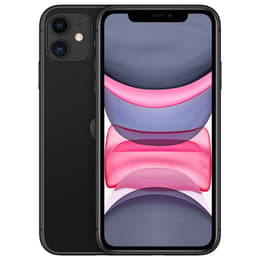
iPhone 11
iPhone 11
Starting at

Refurbished price:145.00

Versus €589.00 new

See options
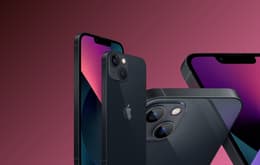
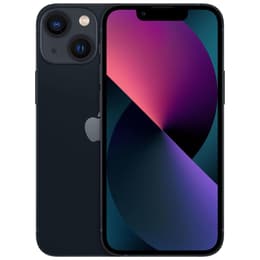
iPhone 13 mini
iPhone 13 mini
Starting at

Refurbished price:230.00

Versus €829.00 new

See options

Differences at a glance

The iPhone 11, released in September 2019, and the iPhone 13 Mini, launched in September 2021, represent different approaches within Apple's smartphone lineup. While the iPhone 11 offers a larger display and a more traditional form factor, the iPhone 13 Mini provides a compact design with more advanced internal components and an enhanced display. Both devices operate on Apple's iOS platform, ensuring a consistent software experience, though the 13 Mini benefits from a longer period of software support due to its later release.

Scores

Durability

When considering the longevity of these devices, several factors come into play, including software support, physical resilience, and ease of repair.

  • Release Timeline: The iPhone 11 was released in September 2019, while the iPhone 13 Mini followed in September 2021. This two-year difference means the iPhone 13 Mini will receive software updates for a longer period.
  • Software Longevity: The iPhone 11 is compatible with iOS 18, released in September 2024, and is expected to support iOS 26 in September 2025. The iPhone 13 Mini, being newer, supports the current public release of iOS, which is iOS 26, ensuring a longer future-proof experience for software features and security updates.
  • Repairability: Both models generally offer a moderate level of repairability. The iPhone 11 received a repairability score of 6 out of 10. The iPhone 13 Mini initially scored 5 out of 10, but this was later improved to 6 out of 10 with an iOS update that addressed Face ID repair issues. Both devices feature an IP68 rating for dust and water resistance, indicating a similar level of protection against environmental elements.

Year of Release

2019

2021

Compatible with latest Update

Yes

Yes

OS

iOS

iOS

Foldable

No

No

Performance

The performance of a smartphone is largely determined by its internal processing capabilities and how efficiently it manages tasks and power.

  • Processor Capabilities: The iPhone 11 is equipped with a capable processor that handles everyday applications and moderate multitasking smoothly. The iPhone 13 Mini features a newer generation processor, which provides a noticeable improvement in speed and efficiency. This translates to faster app loading times, smoother transitions, and more responsive performance, especially with demanding applications and games.
  • System Responsiveness: Users will find both devices responsive for general use. However, the iPhone 13 Mini's newer processor allows for more fluid navigation and quicker execution of complex tasks, offering a more refined user experience.
  • Battery Behavior: The iPhone 11 generally provides a full day of use for most users. The iPhone 13 Mini, despite its smaller size, offers improved battery efficiency due to its advanced processor and display technology, often resulting in comparable or slightly better real-world battery life for its form factor, with up to 17 hours of video playback.
  • Storage Options: The iPhone 11 was available with 64 GB, 128 GB, and 256 GB storage options. The iPhone 13 Mini starts with 128 GB and goes up to 256 GB and 512 GB, offering more base storage and a higher maximum capacity. Both devices come with 4 GB of RAM, which supports efficient multitasking.

Memory (GB)

4 GB

4 GB

Screen quality

The visual experience is a key differentiator, with significant advancements in display technology between these two models.

  • Display Technology: The iPhone 11 features a 6.1-inch Liquid Retina HD display, which is an IPS LCD panel. The iPhone 13 Mini, on the other hand, boasts a 5.4-inch Super Retina XDR display, utilizing OLED technology. This shift to OLED in the 13 Mini provides deeper blacks, higher contrast, and more vibrant colors compared to the LCD of the iPhone 11.
  • Resolution and Clarity: The iPhone 11 has a resolution of 1792 x 828 pixels at 326 pixels per inch (PPI). The iPhone 13 Mini offers a sharper 2340 x 1080 pixel resolution at 476 PPI, resulting in a noticeably clearer and more detailed image.
  • Brightness Levels: The iPhone 11 has a typical maximum brightness of 625 nits. The iPhone 13 Mini significantly improves upon this with a typical maximum brightness of 800 nits and a peak brightness of 1200 nits for HDR content, making it more visible in bright outdoor conditions.
  • Refresh Rate: Both devices feature a standard 60 Hz refresh rate, providing a smooth experience for most content.

Resolution

828 x 1792

1080 x 2340

Screen type

Liquid Retina IPS LCD

Super Retina XDR OLED

Audiovisual

Both smartphones offer capable camera systems, but the newer iPhone 13 Mini introduces several enhancements for photography and videography.

  • Camera System Capabilities: Both the iPhone 11 and iPhone 13 Mini feature a dual 12MP camera system, including a wide and an ultra-wide lens. The iPhone 13 Mini's wide camera has a larger sensor and a wider aperture (f/1.6 compared to f/1.8 on the iPhone 11), allowing it to capture more light.
  • Low-Light and Everyday Photography: The iPhone 11 introduced Night mode, which significantly improves low-light photos. The iPhone 13 Mini builds on this with an improved Night mode and features like Deep Fusion and Smart HDR 4, which enhance detail and dynamic range in various lighting conditions. The 13 Mini also benefits from sensor-shift optical image stabilization on its main camera, leading to sharper images and more stable videos, especially in challenging conditions.
  • Video Recording Quality: Both phones support 4K video recording at up to 60 frames per second. The iPhone 13 Mini introduces Cinematic mode, which allows for a shallow depth of field and automatic focus transitions in videos, providing a more professional look.
  • Audio Experience: Both devices offer stereo speakers for media consumption and clear microphone quality for calls and recordings.

Main camera

12 megapixels

12 megapixels

Front camera

12 megapixels

12 megapixels

Miscellaneous

Beyond core performance and display, several practical features contribute to the overall user experience of these devices.

  • Connectivity Options: The iPhone 11 supports Gigabit-class LTE and Wi-Fi 6. The iPhone 13 Mini upgrades to 5G connectivity, offering faster cellular data speeds in supported areas, and also includes Wi-Fi 6. Both have Bluetooth 5.0 and an Ultra Wideband (UWB) chip for spatial awareness.
  • Port Types: Both devices utilize the Lightning port for charging and data transfer. Neither includes a traditional 3.5mm headphone jack.
  • Useful Sensors and Biometrics: Both the iPhone 11 and iPhone 13 Mini rely on Face ID for secure facial recognition and authentication. They also include standard sensors like accelerometers, gyroscopes, compasses, and barometers.
  • Weight and Dimensions: The iPhone 11 is larger and heavier, measuring 150.9 x 75.7 x 8.3 mm and weighing 194 grams. The iPhone 13 Mini is significantly more compact and lighter, at 131.5 x 64.2 x 7.65 mm and 141 grams, making it easier for one-handed use and pocketability. Both feature a glass front and back with an aluminum frame.

Weight

194 g

140 g

Width

7,57 cm

6,42 cm

Height

15,09 cm

13,15 cm

Depth

0,83 cm

0,75 cm

Screen size (in)

6.1

5.4

Network

4G

5G

SIM card

Physical SIM + eSIM

Physical SIM + eSIM

Carrier compatibility

Unlocked

Unlocked

Connector

Lightning

Lightning

What the community thinks

The iPhone 11 and iPhone 13 Mini cater to different user preferences, primarily distinguished by size, display technology, and processing power. Users often praise the iPhone 11 for its larger screen, which provides an expansive viewing experience for media and general browsing. Its camera system, particularly the introduction of Night mode, was a significant highlight at its release and continues to perform well for everyday photography. Some users appreciate its robust build and the overall value it offers as a slightly older model.

Conversely, the iPhone 13 Mini is frequently lauded for its compact form factor, making it an ideal choice for those who prefer a smaller device that is easy to handle with one hand. Its OLED display is a common point of praise, offering superior contrast and color reproduction compared to the iPhone 11's LCD. The improved camera features, including Cinematic mode and enhanced low-light performance, along with its more powerful processor, are also highly regarded by users seeking advanced capabilities in a small package. Criticisms for the iPhone 13 Mini sometimes revolve around its smaller screen size, which might not be ideal for extensive media consumption or gaming for some individuals.

Users prioritizing a larger display and a capable, reliable smartphone for general use may find the iPhone 11 well-suited to their needs. Those who value a highly portable device with a superior display, enhanced camera features, and more current processing power will likely lean towards the iPhone 13 Mini. Both devices offer a quality-assured refurbished option, providing an eco-friendly alternative for consumers looking to make informed and sustainable choices.