

Compare models
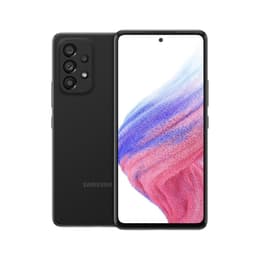
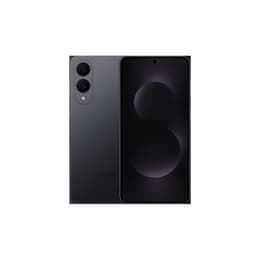
Galaxy A53 5G Vs Galaxy S25 Edge
- 1-year minimum warranty
- Free delivery on all orders
- Free 30-day returns
Differences at a glance
The Samsung Galaxy A53 5G (2022) and the Samsung Galaxy S25 Edge (2025) represent different tiers and generations of Samsung's mobile lineup, catering to distinct user expectations. While the Galaxy A53 5G focuses on delivering everyday essentials in a mid-range package, the Galaxy S25 Edge introduces flagship-tier performance within an ultra-slim chassis. Both devices operate on Android with Samsung's custom interface, though they differ significantly in release timeline, hardware capabilities, and physical design.
Available Models
Colour
Storage
Scores
Durability
When evaluating structural longevity and software support, both devices offer distinct timelines shaped by their respective release years and market tiers.
- Software support lifecycle: The Galaxy A53 5G features an extended update commitment for a mid-range device, while the Galaxy S25 Edge benefits from a later release window and flagship-tier support longevity.
- Build durability: The Galaxy A53 5G utilizes a reinforced plastic construction with standard glass protection, whereas the Galaxy S25 Edge incorporates a titanium frame paired with advanced scratch-resistant glass.
- Expected lifespan: Users can anticipate several years of functional service from both models, though hardware headroom favors the newer flagship architecture for long-term demanding tasks.
Year of Release
2022
2025
Compatible with latest Update
Yes
Yes
OS
Android
Android
Foldable
No
No
Performance
Daily operation and multitasking capabilities differ noticeably based on the internal hardware configurations built into each smartphone.
- Multitasking and memory: The Galaxy S25 Edge includes generous RAM capacity to handle intensive background processes smoothly, while the Galaxy A53 5G handles standard daily multitasking adequately with moderate memory configurations.
- System responsiveness: App loading times and graphic-intensive tasks run with high fluidity on the Galaxy S25 Edge, whereas the Galaxy A53 5G manages everyday browsing, messaging, and media streaming reliably without matching flagship execution speeds.
- Battery behavior: The Galaxy A53 5G relies on a larger physical battery capacity to sustain extended daily use, while the Galaxy S25 Edge balances a slimmer profile with power-efficient component management.
Screen quality
Viewing experiences vary between the two models through distinct display technologies, refreshing behaviors, and sizing dimensions.
- Display panel technology: Both devices feature vibrant AMOLED screens delivering deep contrast levels, though the Galaxy S25 Edge employs advanced dynamic refresh technology for optimized visual smoothness.
- Outdoor visibility: High peak brightness capabilities on the Galaxy S25 Edge ensure clear legibility under direct sunlight, while the Galaxy A53 5G provides sufficient illumination for standard outdoor viewing environments.
- Screen dimensions: The Galaxy S25 Edge offers a slightly larger viewing canvas with narrower bezels, whereas the Galaxy A53 5G presents a compact form factor suited for comfortable single-handed navigation.
Resolution
1080 x 2400
1440 x 3120
Audiovisual
Multimedia capture and audio playback hardware reflect the foundational differences between a mid-range device and a modern flagship release.
- Main photography systems: The Galaxy S25 Edge incorporates a high-resolution primary sensor backed by advanced image processing for detailed low-light captures, while the Galaxy A53 5G utilizes a versatile quad-lens layout for standard daily photography.
- Video and audio output: Recording stable video clips and capturing clear audio is handled capably by both handsets, with the flagship model offering enhanced stabilization features for moving shots.
- Media consumption: Built-in stereo speakers on both units deliver clear sound output for casual video viewing and hands-free calls.
Miscellaneous
Physical handling characteristics and connectivity standards shape the everyday practical experience of carrying and using each phone.
- Physical dimensions: The Galaxy S25 Edge emphasizes an exceptionally thin profile and lightweight titanium build for effortless pocketability, whereas the Galaxy A53 5G has a slightly thicker frame housing its larger power cell.
- Connectivity standards: Both smartphones support modern fifth-generation cellular networks, rapid wireless local area networking, and Bluetooth accessories.
- Authentication sensors: Secure unlocking is available on both models through integrated biometric sensors, offering quick access alongside standard passcode options.
Weight
189 g
163 g
Screen size (in)
6.5
6.7
Network
5G
5G
SIM card
Physical SIM
Physical SIM + eSIM
Carrier compatibility
Unlocked
Unlocked
Connector
USB-C
USB-C
What the community thinks
User discussions across community forums highlight distinct preferences for each device based on practical everyday requirements. Owners of the Galaxy A53 5G frequently praise its dependable battery endurance and balanced feature set relative to its class. Conversely, users of the Galaxy S25 Edge often emphasize appreciation for the lightweight titanium build, rapid system fluidity, and advanced camera clarity, though some note that the exceptionally slim profile requires careful handling.
Users prioritizing extended battery retention and a reliable everyday tool for standard tasks may find the Galaxy A53 5G well-suited to their routine. Meanwhile, users prioritizing a lightweight form factor, high-tier processing capabilities, and advanced photographic tools will likely lean toward the Galaxy S25 Edge. For those exploring sustainable purchasing routes, choosing a quality-assured refurbished option provides an eco-friendly alternative that extends device lifecycles without compromising on performance standards.










