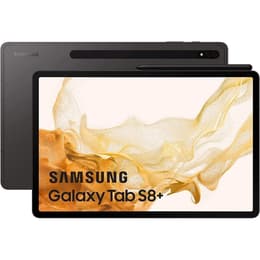
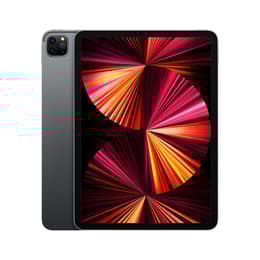


Galaxy Tab S8+ (12.4", 2022) Vs iPad Pro (2021, M1 series)

Galaxy Tab S8+ (12.4", 2022)
Starting at

Refurbished price:479.00

Versus €999.00 new

See options
iPad Pro (2021, M1 series)
Starting at

Refurbished price:462.00

Versus €909.00 new

See options

Ratings

The Samsung Galaxy Tab S8 Plus, released in February 2022, and the Apple iPad Pro M1 Series, launched in May 2021, represent two distinct approaches to premium tablet computing. While both devices offer powerful performance and large, immersive displays, they differ significantly in their underlying operating systems and hardware philosophies. The Galaxy Tab S8 Plus operates on Android with Samsung's One UI, offering a versatile ecosystem, whereas the iPad Pro M1 Series runs on iPadOS, providing a streamlined and integrated experience within Apple's ecosystem. These differences lead to varied user experiences, particularly in terms of software functionality and accessory integration.

Scores

Durability

When considering the longevity of a tablet, software support and physical durability are key factors. Both devices offer robust build quality, but their respective ecosystems approach software updates differently.

  • Release Timeline: The iPad Pro M1 Series was released in May 2021, preceding the Galaxy Tab S8 Plus which launched in February 2022. This difference in release year means the Tab S8 Plus may receive software updates for a slightly longer period from its manufacturer.
  • Software Longevity: Apple typically provides iPadOS updates for many years, often exceeding five years from a device's release. Samsung has committed to several years of Android and security updates for its premium tablets, generally offering four generations of OS upgrades and five years of security updates for the Tab S8 Plus. Users prioritizing the absolute longest software support might find the iPad Pro's historical track record appealing, though the Tab S8 Plus also offers substantial support.
  • Repairability and Build: Both tablets feature premium materials, with the Galaxy Tab S8 Plus utilizing an Armor aluminum casing. The iPad Pro M1 Series also features a durable design. While specific repairability scores can vary, both are designed with a focus on a premium feel and structural integrity.

Year of Release

2022

2021

Compatible with latest Update

Yes

Yes

OS

Android

iPadOS

Performance

Both the Galaxy Tab S8 Plus and the iPad Pro M1 Series are equipped with powerful internal components designed for demanding tasks, though their architectures differ.

  • Processing Power: The iPad Pro M1 Series features a processor known for its exceptional performance, capable of handling intensive applications, complex multitasking, and high-fidelity gaming with remarkable fluidity. The Galaxy Tab S8 Plus is powered by a current-generation Android processor, which provides smooth operation for everyday tasks, productivity applications, and graphic-intensive games.
  • Multitasking and Responsiveness: Users will find both tablets highly responsive. The iPad Pro's unified memory architecture allows for efficient handling of numerous applications simultaneously, contributing to a seamless user experience. The Galaxy Tab S8 Plus, with its ample RAM configurations, also manages multitasking effectively, especially when utilizing Samsung's DeX mode for a desktop-like interface.
  • Battery Behavior: The Galaxy Tab S8 Plus houses a large battery, providing extended usage times for mixed activities like browsing, video consumption, and light productivity. The iPad Pro M1 Series also offers substantial battery life, typically lasting a full day of varied use, with some users reporting around 10 hours of continuous use. Heavy usage, such as sustained gaming or video editing, will naturally reduce battery duration on both devices.

Memory (GB)

8 GB

8 GB

Screen quality

The visual experience on both tablets is a highlight, with each offering a large, high-resolution display, though they employ different panel technologies.

  • Display Technology: The Galaxy Tab S8 Plus features a 12.4-inch Super AMOLED display, known for its deep blacks, vibrant colors, and excellent contrast. The 12.9-inch iPad Pro M1 Series boasts a Liquid Retina XDR display, which uses mini-LED technology to achieve exceptional brightness, precise local dimming, and a high contrast ratio, delivering an experience akin to OLED. The 11-inch iPad Pro M1 model uses a Liquid Retina IPS LCD display.
  • Resolution and Clarity: Both tablets offer sharp resolutions suitable for detailed work and media consumption. The Tab S8 Plus has a resolution of 2800 x 1752 pixels, while the 12.9-inch iPad Pro has 2732 x 2048 pixels. Both provide a clear viewing experience.
  • Brightness and Refresh Rate: The 12.9-inch iPad Pro's Liquid Retina XDR display can reach very high peak brightness levels, particularly for HDR content, making it well-suited for outdoor use and HDR video playback. The Tab S8 Plus's Super AMOLED display also offers good brightness for various lighting conditions. Both tablets feature a 120Hz refresh rate, contributing to smooth scrolling and fluid animations.

Resolution

1752 x 2800

2388 x 1668

Screen type

Super AMOLED

Liquid Retina display

Pixel density

270ppp

264ppp

Audiovisual

While tablets are not typically primary photography devices, both the Galaxy Tab S8 Plus and the iPad Pro M1 Series offer capable camera systems for video calls, document scanning, and casual photography.

  • Rear Camera Capabilities: The Galaxy Tab S8 Plus includes a dual-camera setup on the rear, typically consisting of a main wide lens and an ultrawide lens, suitable for general photography and capturing broader scenes. The iPad Pro M1 Series also features a dual-camera system with a wide and an ultrawide lens, complemented by a LiDAR scanner for enhanced depth sensing and augmented reality applications.
  • Front Camera and Video Calls: Both tablets excel in front-facing camera performance, crucial for video conferencing. The Tab S8 Plus has a 12-megapixel ultrawide front camera with auto-framing technology that keeps the subject centered during calls. The iPad Pro M1 Series features a 12MP TrueDepth front camera with Center Stage, which automatically adjusts the camera to keep users in view as they move around.
  • Video Recording and Audio: Both devices are capable of recording high-quality video. The iPad Pro M1 Series offers strong microphone quality and a four-speaker audio system for an immersive media experience. The Galaxy Tab S8 Plus also provides quad stereo speakers with audio tuning, delivering clear sound for media consumption.

Miscellaneous

Beyond core performance and display, several practical features differentiate these two premium tablets, impacting their overall utility and user experience.

  • Connectivity Options: Both tablets support modern wireless standards, including Wi-Fi 6E on the Galaxy Tab S8 Plus and Wi-Fi 6 on the iPad Pro M1 Series, ensuring fast and reliable internet connections. Cellular models of both devices offer 5G connectivity for high-speed mobile data.
  • Ports and Accessories: Both devices utilize a USB-C port for charging and data transfer. However, the iPad Pro M1 Series' USB-C port supports Thunderbolt 3 and USB4, offering significantly faster data transfer speeds and broader compatibility with external displays and accessories. The Galaxy Tab S8 Plus includes an S Pen stylus in the box, which attaches magnetically for charging. The Apple Pencil (2nd generation) for the iPad Pro is a separate purchase.
  • Biometric Security: The Galaxy Tab S8 Plus features an in-display fingerprint scanner for secure unlocking. The iPad Pro M1 Series relies on Face ID for biometric authentication, using its TrueDepth camera system.
  • Dimensions and Handling: The Galaxy Tab S8 Plus, with its 12.4-inch display, is slightly smaller and lighter than the 12.9-inch iPad Pro, potentially making it more comfortable for extended handheld use. Both devices maintain a slim profile.

Weight

567 g

466 g

Screen size (in)

12.4

11

Network

Wi-Fi

Wi-Fi

Carrier compatibility

Without SIM Port

Without SIM Port

User feedback for the Galaxy Tab S8 Plus often highlights its vibrant Super AMOLED display and the included S Pen as significant advantages, making it a strong contender for creative tasks and media consumption within the Android ecosystem. Some users appreciate the versatility offered by Samsung's DeX mode, which provides a desktop-like experience for enhanced productivity. Criticisms sometimes point to the Android tablet software experience, which, while improving, may not always be as optimized for larger screens as iPadOS.

The iPad Pro M1 Series receives consistent praise for its exceptional performance, driven by the M1 chip, and the stunning Liquid Retina XDR display on the 12.9-inch model. Users frequently commend its smooth operation, robust app ecosystem, and the effectiveness of features like Center Stage for video calls. Common concerns sometimes revolve around the limitations of iPadOS for certain professional workflows compared to a traditional desktop operating system, despite its powerful hardware.

Users prioritizing a vibrant OLED display, an included stylus, and the flexibility of the Android ecosystem with a desktop-like mode may find the Galaxy Tab S8 Plus well-suited to their needs. Those who value industry-leading processing power, a highly refined tablet operating system, and a premium mini-LED display (on the 12.9-inch model) will likely lean towards the iPad Pro M1 Series. Both devices offer a quality-assured refurbished option, providing an eco-friendly alternative for consumers seeking high-performance tablets. The choice ultimately depends on individual preferences for operating system, specific display technology, and ecosystem integration.


See all articles

Our recent comparisons







