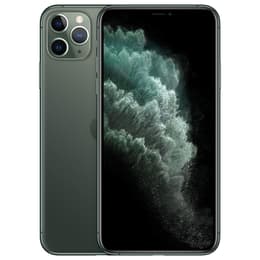


Huawei P30 Pro Vs iPhone 11 Pro Max

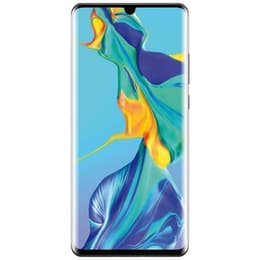
Huawei P30 Pro
Huawei P30 Pro
Starting at

Refurbished price:186.00

Versus €849.00 new

See options
iPhone 11 Pro Max
iPhone 11 Pro Max
Starting at

Refurbished price:219.00

Versus €939.00 new

See options

Ratings

The Huawei P30 Pro and the iPhone 11 Pro Max, both released in 2019, represented flagship offerings from their respective manufacturers. The P30 Pro, launched in March 2019, operates on Android with Huawei's EMUI interface, while the iPhone 11 Pro Max, released in September 2019, runs on Apple's iOS. These devices primarily differentiate themselves through their camera systems and software ecosystems, catering to distinct user preferences.

Scores

Durability

When considering the long-term usability of these devices, their release timelines and software support play a significant role.

  • Release Timeline: The Huawei P30 Pro was released in March 2019, while the iPhone 11 Pro Max followed in September 2019. This six-month difference means the iPhone 11 Pro Max generally benefits from a slightly longer period of official software updates from its manufacturer.
  • Software Longevity: The iPhone 11 Pro Max, running iOS, typically receives major operating system updates for approximately five to six years from its release, potentially extending its functional lifespan for users who prioritize the latest software features and security patches. The Huawei P30 Pro, an Android device, received updates to Android 10 and EMUI 10, but its update cycle has been impacted by external factors, potentially leading to a shorter period of major OS upgrades compared to its Apple counterpart. [2, 3, 5, 19, 27]
  • Repairability: The Huawei P30 Pro received an iFixit repairability score of 4 out of 10, indicating it is relatively difficult to repair due to extensive use of adhesive and compact internal components. [24, 30, 40] Information regarding the iPhone 11 Pro Max's specific repairability score from iFixit was not readily available, but iPhones generally present challenges for independent repair due to proprietary components and design.

Year of Release

2019

2019

Compatible with latest Update

No

Yes

OS

Android

iOS

Foldable

No

No

Performance

Both devices were equipped with powerful processors at their launch, designed to handle demanding applications and multitasking efficiently.

  • Processing Capabilities: The Huawei P30 Pro features a Kirin 980 processor, which at its release, provided smooth performance for everyday tasks, gaming, and running multiple applications simultaneously. The iPhone 11 Pro Max is powered by the A13 Bionic chip, known for its robust performance, offering rapid app loading times and fluid navigation, particularly beneficial for graphically intensive games and video editing. [1, 5, 7, 11, 20, 22, 25, 27, 36]
  • Multitasking and Responsiveness: The P30 Pro typically comes with 6GB or 8GB of RAM, allowing for effective multitasking and quick switching between applications. The iPhone 11 Pro Max, with 4GB of RAM, leverages iOS's efficient memory management to maintain smooth performance even with numerous apps open in the background. [7, 9, 12, 13, 27, 28, 36]
  • Battery Behavior: The Huawei P30 Pro houses a 4200 mAh battery, consistently delivering extended usage, with many users reporting it can last up to two days on a single charge with moderate use. [8, 11, 25, 39, 41] The iPhone 11 Pro Max, with a 3969 mAh battery, also offers impressive battery longevity, often providing over a full day of heavy use and up to 12-14 hours of screen-on time in various tests. [20, 31, 33, 34, 35]

Memory (GB)

8 GB

4 GB

Screen quality

The visual experience on both smartphones is delivered through high-quality OLED displays, though with some distinctions in their specifications.

  • Display Technology and Clarity: Both the Huawei P30 Pro and the iPhone 11 Pro Max feature OLED displays, which are known for producing deep blacks and vibrant colors. The P30 Pro has a 6.47-inch OLED screen with a resolution of 1080 x 2340 pixels, resulting in a pixel density of approximately 398-415 pixels per inch (ppi). [3, 6, 9, 12, 17, 25, 43] The iPhone 11 Pro Max offers a 6.5-inch Super Retina XDR OLED display with a higher resolution of 2688 x 1242 pixels, yielding a pixel density of 458 ppi, providing a slightly sharper image. [1, 4, 5, 13, 14, 27, 36]
  • Brightness and Viewing Experience: The iPhone 11 Pro Max's display can reach a typical maximum brightness of 800 nits and a peak of 1200 nits for HDR content, contributing to excellent visibility in bright outdoor conditions and a dynamic HDR viewing experience. [4, 5] While the P30 Pro's display also offers good brightness and supports HDR10, specific typical and peak brightness figures are less consistently highlighted in comparisons. [9, 25]
  • Refresh Rate: Both devices feature a standard 60Hz refresh rate, which provides a smooth visual experience for most content and interactions. [1]

Resolution

1080 x 2340

1242 x 2688

Screen type

OLED

Super Retina XDR OLED

Audiovisual

Both devices were celebrated for their advanced camera capabilities at their respective launches, each offering distinct strengths in mobile photography and videography.

  • Rear Camera Systems: The Huawei P30 Pro features a quad-camera setup, including a 40MP main sensor with an f/1.6 aperture, a 20MP ultra-wide lens, an 8MP periscope telephoto lens offering 5x optical zoom, and a Time-of-Flight (ToF) sensor for depth sensing. [7, 8, 9, 12, 16, 18, 23, 25, 29] The iPhone 11 Pro Max sports a triple 12MP camera system, comprising an ultra-wide, wide, and telephoto lens, with the telephoto offering 2x optical zoom. [5, 15, 36, 38]
  • Photography Performance: The P30 Pro was particularly lauded for its exceptional low-light performance, capable of capturing detailed and bright images in very dim conditions, and its impressive 5x optical zoom, extending to 50x digital zoom. [8, 16, 18, 23] The iPhone 11 Pro Max introduced a dedicated Night mode and Deep Fusion technology, significantly improving low-light photography and detail capture across various lighting conditions. [5, 15, 20]
  • Video Recording and Front Camera: Both phones are capable of recording 4K video at up to 60 frames per second, with the iPhone 11 Pro Max offering extended dynamic range and cinematic video stabilization. [4, 36, 38] For selfies, the P30 Pro has a 32MP front camera, while the iPhone 11 Pro Max features a 12MP front camera, both capable of capturing detailed self-portraits. [7, 8, 16, 17, 23, 29, 36, 38]

Main camera

40 megapixels

12 megapixels

Front camera

32 megapixels

12 megapixels

Miscellaneous

Beyond core performance and display, several practical features and design elements distinguish these two smartphones.

  • Connectivity and Ports: The Huawei P30 Pro supports 4G LTE and Wi-Fi 5 (802.11ac), along with Bluetooth 5.0 and NFC. It features a USB-C port for charging and data transfer. [3, 7, 12, 29, 32, 43] The iPhone 11 Pro Max also supports 4G LTE, but includes the newer Wi-Fi 6 (802.11ax) standard, Bluetooth 5.0, and an Ultra Wideband (U1) chip for spatial awareness. It uses Apple's proprietary Lightning port. Neither device includes a 3.5mm headphone jack. [1, 4, 15, 27, 36, 37, 38]
  • Biometric Security: The P30 Pro incorporates an in-display optical fingerprint sensor for secure unlocking. [2, 9, 43] The iPhone 11 Pro Max relies on Face ID, an advanced facial recognition system, for biometric authentication. [37]
  • Build and Handling: The P30 Pro measures 158 x 73.4 x 8.4 mm and weighs 192g, featuring a glass and aluminum alloy construction with IP68 dust and water resistance. [2, 6, 12, 24] The iPhone 11 Pro Max is slightly larger and heavier at 158 x 77.8 x 8.1 mm and 226g, also with a glass and stainless steel design and IP68 water resistance, rated for a maximum depth of 4 meters for up to 30 minutes. [4, 13, 14, 35, 36, 38]

Weight

192 g

226 g

Screen size (in)

6.47

6.5

Network

4G

4G

SIM card

Dual Physical SIM

Physical SIM + eSIM

Carrier compatibility

Unlocked

Unlocked

The Huawei P30 Pro and iPhone 11 Pro Max, both released in 2019, offer distinct experiences tailored to different user priorities. The P30 Pro is frequently praised for its exceptional camera system, particularly its low-light capabilities and impressive optical zoom, which were groundbreaking at its release. Users also often highlight its long-lasting battery life, often extending to two days of use. Some criticisms have focused on the software experience due to the impact of external factors on Android updates and the lack of a higher resolution display compared to some competitors. [8, 11, 18, 23, 25, 39, 41]

The iPhone 11 Pro Max is widely recognized for its powerful processing performance, ensuring smooth operation across demanding applications and games. Its display is noted for its brightness and color accuracy, and its battery life was a significant improvement over previous iPhone models, often providing extensive usage on a single charge. User feedback often points to the robust iOS ecosystem and consistent software updates as key advantages. Some users have found its size and weight to be substantial, impacting one-handed use. [20, 31, 33, 34, 35]

Users prioritizing advanced photography features, especially optical zoom and low-light performance, coupled with extended battery life, may find the Huawei P30 Pro well-suited to their needs. Conversely, individuals who value a highly optimized software experience, strong overall performance, and a slightly sharper display, along with a robust app ecosystem, might lean towards the iPhone 11 Pro Max. Both devices remain capable smartphones, and opting for a quality-assured refurbished option can provide an eco-friendly alternative for those seeking these features.


See all articles

Our recent comparisons