

Google Pixel Fold Vs Xiaomi 13T

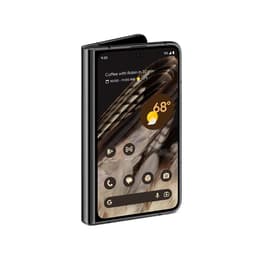
Google Pixel Fold
Google Pixel Fold
Starting at

Refurbished price:454.00

Versus €1,750.29 new

See options
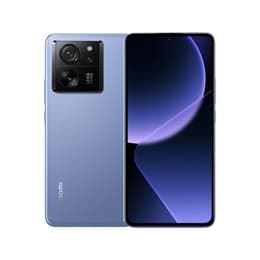
Xiaomi 13T
Xiaomi 13T
Starting at

Refurbished price:183.00

Versus €630.00 new

See options

Ratings

The Google Pixel Fold, released in June 2023, and the Xiaomi 13T, launched in September 2023, represent distinct approaches to modern smartphone design. The Pixel Fold introduces a unique foldable form factor, offering a larger screen experience in a compact design, while the Xiaomi 13T provides a traditional smartphone experience with a focus on camera capabilities and display quality. Both devices operate on the Android platform, offering a wide range of applications and customization options.

Scores

Durability

When considering the long-term usability of these devices, software support and physical resilience are key factors.

  • Release Timeline: The Google Pixel Fold was released in June 2023, and the Xiaomi 13T followed in September 2023. This means the Pixel Fold has been on the market slightly longer.
  • OS Support Duration: The Google Pixel Fold is set to receive five years of OS and security updates from its release date, extending its support until at least June 2028. The Xiaomi 13T is committed to four generations of Android OS upgrades and five years of security patches. This means the Xiaomi 13T will likely receive OS updates until Android 17 (around 2026) and security updates until 2028.
  • Physical Durability: The Pixel Fold features IPX8 water resistance, meaning it can withstand water immersion, and Gorilla Glass Victus on its cover screen. However, its inner foldable screen is plastic and can be susceptible to scratches. Early reports also indicated some concerns about the overall structural integrity of the Pixel Fold when subjected to bending stress. The Xiaomi 13T offers IP68 dust and water resistance and features Gorilla Glass 5 on its front.

Year of Release

2023

2023

Compatible with latest Update

Yes

Yes

OS

Android

Android

Foldable

Yes

No

Performance

The performance of a smartphone is crucial for daily tasks, from browsing to demanding applications.

  • Processor Capabilities: The Google Pixel Fold is powered by a processor designed by Google, known for its machine learning capabilities and efficient handling of image processing tasks. This contributes to smooth navigation and responsive app usage. The Xiaomi 13T utilizes a MediaTek processor, which delivers solid performance for various tasks, including intensive gaming.
  • Multitasking and Responsiveness: Both devices offer ample RAM, with the Pixel Fold typically featuring 12GB and the Xiaomi 13T offering 8GB or 12GB, allowing for efficient multitasking and smooth transitions between applications. The Pixel Fold's larger internal display, when unfolded, provides more screen real estate for running multiple apps simultaneously.
  • Battery Behavior: The Pixel Fold houses a 4821 mAh battery. User experiences suggest that while it can last a full day with moderate use, heavy usage might require a charge before the day ends. The Xiaomi 13T comes with a 5000 mAh battery. While it offers a full day of mixed usage, some users have noted that heavy use might lead to needing a charge by evening.

Memory (GB)

12 GB

8 GB

Screen quality

The visual experience is a primary consideration for many users, and both devices offer distinct display characteristics.

  • Display Technology and Resolution: The Google Pixel Fold features a 5.8-inch OLED cover display and a 7.6-inch foldable OLED inner display, both with a 120Hz refresh rate. The inner display has a resolution of 2208 x 1840 pixels, while the cover display is 1080 x 2092 pixels. The Xiaomi 13T sports a 6.67-inch AMOLED display with a 1220 x 2712 pixel resolution and a 144Hz refresh rate.
  • Brightness Levels: The Pixel Fold's cover display can reach up to 1200 nits (HDR) and 1450 nits (peak), ensuring good visibility in various lighting conditions. The Xiaomi 13T's display offers up to 1200 nits (HBM) and an impressive 2600 nits (peak brightness), providing excellent outdoor visibility.
  • Viewing Experience: The Pixel Fold's large, foldable inner screen offers an immersive experience for media consumption and productivity, akin to a small tablet. The Xiaomi 13T's flat AMOLED display provides vibrant colors and smooth scrolling due to its high refresh rate.

Resolution

1840 x 2208

1220 x 2712

Screen type

Foldable OLED

AMOLED

Audiovisual

Both smartphones offer capable camera systems, each with its own strengths for capturing photos and videos.

  • Rear Camera Systems: The Google Pixel Fold features a triple rear camera setup, including a 48 MP wide lens with optical image stabilization, a 10.8 MP ultrawide lens, and a 10.8 MP telephoto lens with 5x optical zoom. The Xiaomi 13T also has a triple rear camera system, comprising a 50 MP wide lens with OIS, a 50 MP telephoto lens with 2x optical zoom, and a 12 MP ultrawide lens.
  • Photography Performance: The Pixel Fold leverages Google's advanced computational photography, resulting in balanced and natural-looking photos, even with slightly smaller sensors compared to some other flagship devices. Its 5x optical zoom is a notable feature for capturing distant subjects. The Xiaomi 13T, with its Leica-tuned cameras, excels in capturing detailed images with vibrant colors, performing well in both daylight and low-light conditions, especially with its dedicated Night mode.
  • Video Recording and Front Cameras: The Pixel Fold can record video at up to 4K resolution at 60fps with its rear cameras, and features a 9.5 MP front camera on the cover screen and an 8 MP inner camera. The Xiaomi 13T supports 4K video recording at 30fps across all focal lengths and includes a 20 MP front camera for selfies.

Main camera

48 megapixels

50 megapixels

Front camera

8 megapixels

20 megapixels

Miscellaneous

Beyond the core features, several practical elements differentiate these devices in daily use.

  • Connectivity and Ports: Both devices support 5G connectivity. The Pixel Fold includes Wi-Fi 6E and Bluetooth 5.2, with a USB-C 3.2 port. The Xiaomi 13T features Wi-Fi 6 and Bluetooth 5.4, with a USB-C 2.0 port.
  • Biometric Security: The Pixel Fold incorporates a side-mounted fingerprint sensor and face unlock. The Xiaomi 13T utilizes an in-display fingerprint sensor.
  • Physical Characteristics: The Pixel Fold weighs 283g and, when folded, measures 139.7 x 79.5 x 12.1 mm, unfolding to 139.7 x 158.7 x 5.8 mm. Its build materials include glass (Gorilla Glass Victus) and an aluminum frame. The Xiaomi 13T is lighter at 193g (glass back) or 197g (eco-leather back) and measures 162.2 x 75.7 x 8.5 mm.

Weight

283 g

193 g

Screen size (in)

7.6

6.67

Network

5G

5G

SIM card

Physical SIM + eSIM

Dual Physical SIM

Carrier compatibility

Unlocked

Unlocked

Connector

USB-C

USB-C

User feedback for the Google Pixel Fold often highlights the appeal of its innovative foldable design, with many appreciating the larger inner screen for media consumption and multitasking. The camera system, benefiting from Google's image processing, also receives praise for its consistent results. However, some users have expressed concerns regarding the durability of the foldable screen and the overall weight of the device. The Xiaomi 13T is frequently lauded for its strong camera performance, particularly its Leica-tuned optics, and its vibrant display. Its battery life is generally considered good, though some power users might find it requires an evening top-up.

Users who prioritize a large, adaptable screen for productivity and immersive media experiences, and who value Google's software ecosystem and camera processing, may find the Google Pixel Fold well-suited to their needs. Those who prefer a traditional smartphone form factor with a strong emphasis on photography, a high-refresh-rate display, and reliable all-day battery life might lean towards the Xiaomi 13T. Both devices offer a compelling Android experience, and considering a quality-assured refurbished option for either model can be an eco-friendly alternative for consumers.


See all articles

Our recent comparisons