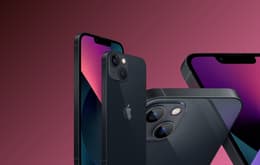


Google Pixel 9 Vs Xiaomi Redmi Note 13 Pro

Google Pixel 9
Google Pixel 9
Starting at

Refurbished price:376.00

Versus €1,066.71 new

See options
Xiaomi Redmi Note 13 Pro
Starting at

Refurbished price:179.00

Versus €349.00 new

See options

Ratings

The Google Pixel 9, released in August 2024, and the Xiaomi Redmi Note 13 Pro 5G, globally launched in January 2024, are both Android smartphones designed to offer distinct user experiences. While the Pixel 9 emphasizes a refined software experience, advanced computational photography, and long-term software support, the Redmi Note 13 Pro 5G focuses on high-resolution camera hardware, a vibrant display, and rapid charging capabilities. Both devices run on the Android operating system, but they approach core smartphone functionalities with different priorities.

Scores

Durability

When considering the long-term usability of these devices, their respective release timelines and software support policies are key factors.

  • Software Longevity: The Google Pixel 9 stands out with an impressive commitment of seven years of OS and security updates, extending its support until approximately Android 21 or 22. This means the device will receive regular feature drops and security patches for a significantly longer period. In contrast, the Xiaomi Redmi Note 13 Pro 5G, while receiving updates, typically follows a shorter support cycle, generally offering 2-3 major Android updates and 3-4 years of security updates.
  • Durability Features: The Pixel 9 features Gorilla Glass Victus 2 protection for its display and an IP68 rating for dust and water resistance, indicating a high level of protection against environmental elements. The Redmi Note 13 Pro 5G is equipped with Corning Gorilla Glass Victus for its display and carries an IP54 rating, providing protection against splashes and dust.
  • Practical Lifespan: Users prioritizing extended software support and a higher degree of water and dust resistance for a longer practical lifespan may find the Pixel 9 more aligned with their needs. The Redmi Note 13 Pro 5G offers robust physical protection for its segment, but its software update timeline is shorter.

Year of Release

2024

2023

Compatible with latest Update

Yes

Yes

OS

Android

Android

Foldable

No

No

Performance

The performance of both smartphones is tailored to different user expectations, influencing how smoothly applications run and how efficiently daily tasks are handled.

  • Everyday Responsiveness: The Google Pixel 9 is powered by a current-generation processor designed to enhance overall system responsiveness, efficiency, and artificial intelligence capabilities. Users report a snappy and smooth experience, even with demanding applications and multitasking. The Redmi Note 13 Pro 5G utilizes a processor that delivers high-speed output and smooth performance for general use and gaming within its category.
  • Multitasking and Storage: The Pixel 9 comes with 12GB of RAM and offers storage options of 128GB or 256GB, utilizing a fast storage standard. The Redmi Note 13 Pro 5G is available with 8GB or 12GB of RAM and 256GB or 512GB of storage, with an option for expandable storage up to 1TB via a microSD card. It also includes a memory extension feature that can add virtual RAM for smoother operation.
  • Battery Behavior: The Pixel 9 features a 4700mAh battery, with users generally reporting it lasts a full day for moderate use, achieving around 13 hours in web surfing tests. It supports fast wired and wireless charging, along with adaptive battery features to optimize power consumption. The Redmi Note 13 Pro 5G includes a 5100mAh battery, often providing up to 1.5 days or 36 hours of use on a single charge, and supports 67W turbo charging for rapid power replenishment.

Memory (GB)

12 GB

8 GB

Screen quality

Both devices offer displays that provide clear visuals, but they differ in their underlying technology and specific enhancements.

  • Display Technology and Clarity: The Google Pixel 9 features a 6.3-inch OLED display with a 2400x1080 pixel resolution, resulting in a pixel density of 422 ppi. This OLED panel delivers deep blacks and vibrant colors. The Xiaomi Redmi Note 13 Pro 5G sports a larger 6.67-inch AMOLED display with a 1.5K resolution (1220x2712 pixels), offering sharp and detailed visuals.
  • Brightness and Smoothness: The Pixel 9's display can reach up to 1800 nits for local brightness and 2700 nits for peak brightness, ensuring good visibility in various lighting conditions. It also features a dynamic 120Hz refresh rate for smooth scrolling and animations. The Redmi Note 13 Pro 5G's display has a typical peak brightness of 1300 nits, with some variants reaching 1800 nits, and supports an AdaptiveSync 120Hz refresh rate for fluid motion. It also includes Dolby Vision support for enhanced visual quality.
  • User Experience: The Pixel 9 incorporates an Adaptive Touch feature, which adjusts touch sensitivity based on environmental factors like wet fingers or screen protectors. The Redmi Note 13 Pro 5G's display is optimized for improved touch recognition and control, even when wet.

Resolution

1080 x 2424

1220 x 2712

Screen type

OLED

AMOLED

Audiovisual

The camera systems on both smartphones are designed to capture high-quality images and videos, though they employ different approaches and offer distinct features.

  • Main Camera Capabilities: The Google Pixel 9 features a dual-camera setup with a 50MP main sensor (f/1.68 with OIS) and a 48MP ultrawide sensor (f/1.7 with macro autofocus). The Xiaomi Redmi Note 13 Pro 5G boasts a 200MP main camera (f/1.65 or f/1.7 with OIS and Super QPD), an 8MP ultrawide camera, and a 2MP macro camera. Its main sensor uses advanced pixel-binning technology and offers up to 4x lossless zoom.
  • Photography Features: The Pixel 9 includes computational photography features such as Night Sight, Astrophotography, Portrait Mode, Face Unblur, and a unique 'Add Me' feature for group photos. The Redmi Note 13 Pro 5G offers various modes like Profession, Document, Portrait, Night, AI, HDR, and 200M Ultra HD Photography.
  • Video and Front Camera: Both devices support 4K video recording at 30fps, with the Pixel 9 also capable of 4K 60fps. The Pixel 9 has a 10.5MP front camera with autofocus, while the Redmi Note 13 Pro 5G features a 16MP front camera.

Main camera

50 megapixels

200 megapixels

Front camera

10.5 megapixels

16 megapixels

Miscellaneous

Beyond core specifications, several practical elements contribute to the overall user experience and daily functionality of these smartphones.

  • Connectivity and Ports: Both the Google Pixel 9 and Xiaomi Redmi Note 13 Pro 5G support 5G connectivity, ensuring access to faster mobile networks. The Pixel 9 includes USB-C 3.2, while the Redmi Note 13 Pro 5G features a standard USB-C port. Both devices offer NFC for contactless payments and other interactions.
  • Biometric Security: The Pixel 9 incorporates an ultrasonic in-display fingerprint scanner, which is noted for its speed and security. The Redmi Note 13 Pro 5G also features a secure in-screen fingerprint sensor for convenient unlocking.
  • Design and Audio: The Pixel 9 has dimensions of 152.8 x 72 x 8.5 mm and weighs 198g, featuring a design with Gorilla Glass Victus 2 on both the front and back. The Redmi Note 13 Pro 5G measures 161.15 x 74.24 x 7.98 mm and weighs 187g, with Corning Gorilla Glass Victus protecting its display. Both smartphones are equipped with dual stereo speakers for an enhanced audio experience. The Pixel 9 also supports MagSafe for wireless charging.

Weight

198 g

187 g

Width

7.198 cm

7,42 cm

Height

15.283 cm

16,11 cm

Depth

8.54 cm

0,8 cm

Screen size (in)

6.3

6.67

Network

5G

5G

SIM card

Physical SIM + eSIM

Dual Physical SIM

Carrier compatibility

Unlocked

Unlocked

User feedback for the Google Pixel 9 often highlights its exceptional camera performance, particularly its computational photography features and AI enhancements, which are praised for producing high-quality images in various conditions. Users also appreciate its smooth software experience and the long-term commitment to software updates. Some common observations include its solid battery life for daily use and a refined design. For the Xiaomi Redmi Note 13 Pro 5G, users frequently commend its vibrant and large AMOLED display, the impressive 200MP main camera for detailed shots, and its rapid 67W turbo charging capability. Its battery life is also often noted as a strong point, providing extended usage.

Users prioritizing a clean Android experience with extensive software support, advanced computational photography, and a compact design may find the Google Pixel 9 to be a suitable choice. Its focus on AI-driven features and consistent updates makes it a compelling option for those seeking a device that evolves over time. Conversely, users who value a large, high-resolution display, a camera with a high megapixel count for detailed images, expandable storage, and very fast charging will likely find the Xiaomi Redmi Note 13 Pro 5G better suited to their needs. Both devices offer distinct advantages, catering to different user preferences.

For those considering either of these models, exploring quality-assured refurbished options can provide an eco-friendly alternative, allowing access to these technologies while making a sustainable choice.


See all articles

Our recent comparisons