

Google Pixel 9 Vs Xiaomi 14T Pro

Google Pixel 9
Google Pixel 9
Starting at

Refurbished price:376.00

Versus €1,066.71 new

See options
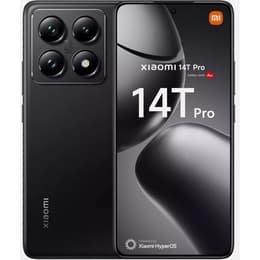
Xiaomi 14T Pro
Xiaomi 14T Pro
Starting at

Refurbished price:395.00

Versus €1,500.00 new

See options

Ratings

The Google Pixel 9, released in August 2024, and the Xiaomi 14T Pro, launched in September 2024, are contemporary Android smartphones offering distinct approaches to mobile technology. While both devices operate on the Android platform, the Pixel 9 features Google's stock Android experience with its Tensor G4 processor, emphasizing AI integration. The Xiaomi 14T Pro, on the other hand, runs Xiaomi HyperOS on a MediaTek Dimensity 9300+ chipset, focusing on high-performance hardware and rapid charging capabilities. These differences lead to varied user experiences across key areas like software longevity, display vibrancy, and camera performance.

Scores

Durability

The longevity of a smartphone is influenced by its release timeline, software support, and physical durability. Both devices offer robust build quality, but their software commitment differs.

  • Software Support: The Google Pixel 9 is designed for extended use, offering an impressive seven years of OS and security updates, ensuring support until at least August 2031. This commitment provides a longer period of access to the latest Android features and security protections. In contrast, the Xiaomi 14T Pro provides four years of Android updates and five years of security patches, extending its support until at least 2029.
  • Physical Durability: Both the Pixel 9 and Xiaomi 14T Pro feature an IP68 rating for water and dust resistance, indicating a high level of protection against environmental elements. The Pixel 9 incorporates Gorilla Glass Victus 2 on its front and back for enhanced screen and rear panel resilience. The Xiaomi 14T Pro uses Corning Gorilla Glass 5 for display protection.
  • Expected Lifespan: Users prioritizing the longest possible software support and up-to-date features will find the Pixel 9's extended update policy beneficial for a prolonged practical lifespan. The Xiaomi 14T Pro still offers substantial software longevity, aligning with many users' upgrade cycles.

Year of Release

2024

2024

Compatible with latest Update

Yes

Yes

OS

Android

Android

Foldable

No

No

Performance

Performance in daily use is shaped by the underlying processing power and how efficiently the device manages tasks and power consumption. Both phones are equipped with powerful processors designed for demanding applications.

  • Processing Capabilities: The Google Pixel 9 is powered by its custom-designed Tensor G4 processor, which is optimized for Google's AI features and provides smooth performance for everyday tasks, multitasking, and gaming. The Xiaomi 14T Pro features the MediaTek Dimensity 9300+ chipset, known for its high clock speeds and efficiency, delivering a responsive experience across applications and intensive gaming.
  • Multitasking and Responsiveness: Both devices offer ample RAM configurations, contributing to fluid app switching and overall system responsiveness. The Pixel 9's integration of its processor with the Android operating system ensures a cohesive and optimized user experience. The Xiaomi 14T Pro's processor, combined with its HyperOS, aims for ultra-fast loading times and reliable performance, particularly noted by users for handling demanding games with ease.
  • Battery Behavior: The Pixel 9 includes a 4700 mAh battery, with real-world tests indicating it can last over 13 hours in mixed usage, and around 7 hours of screen-on time on Wi-Fi, extending to 10-12 hours on 5G. The Xiaomi 14T Pro houses a larger 5000mAh battery, with reports suggesting up to 51 hours of total usage or approximately two full days under regular conditions, and over 20 hours of web browsing. The Xiaomi 14T Pro also features 120W wired HyperCharge, capable of a full charge in about 23-25 minutes, and 50W wireless charging. The Pixel 9 supports 45W wired and wireless charging.

Memory (GB)

12 GB

12 GB

Screen quality

The display is a primary interface for smartphone interaction, and both models offer high-quality viewing experiences with distinct characteristics.

  • Display Technology and Clarity: The Google Pixel 9 features a 6.3-inch OLED display with a 2424x1080 pixel resolution, providing clear visuals. It utilizes Samsung's M14 OLED panel technology, which contributes to enhanced brightness and longevity. The Xiaomi 14T Pro comes with a larger 6.67-inch CrystalRes AMOLED display, offering a resolution of 2712 x 1220 pixels, resulting in sharp details and vibrant colors.
  • Brightness and Refresh Rate: The Pixel 9's display offers up to 1800 nits of HDR brightness and a peak brightness of 2700 nits, along with a 120Hz refresh rate for smooth scrolling. The Xiaomi 14T Pro boasts an impressive peak brightness of 4000 nits, ensuring excellent visibility even in direct sunlight, and an adaptive refresh rate of up to 144Hz for seamless interactions.
  • Viewing Experience: Both displays support HDR content, enhancing the visual impact of movies, photos, and games with expanded color and contrast. The Pixel 9's adaptive brightness technology adjusts to ambient lighting, improving comfort and conserving battery. The Xiaomi 14T Pro's larger screen size and higher refresh rate may offer a more immersive experience for media consumption and gaming.

Resolution

1080 x 2424

1220 x 2712

Screen type

OLED

AMOLED

Audiovisual

Both smartphones offer advanced camera systems, each with unique strengths in photography and videography, catering to different user preferences.

  • Rear Camera Systems: The Google Pixel 9 features a dual-camera setup with a 50MP main sensor (f/1.68, OIS) and a 48MP ultrawide lens (f/1.7) with macro autofocus. It excels in computational photography with features like Night Sight, Astrophotography, and Face Unblur. The Xiaomi 14T Pro sports a Leica-powered triple-camera system, including a 50MP main sensor (f/1.6, OIS), a 50MP telephoto lens (f/2.0) with 2.6x optical zoom, and a 12MP ultrawide camera (f/2.2). The telephoto lens is a notable addition for zoomed-in shots and portraits.
  • Photography Performance: The Pixel 9 is recognized for its consistent image quality, particularly in challenging lighting conditions, and its AI-driven features for enhancing photos. The Xiaomi 14T Pro, with its Leica partnership, offers distinct photographic styles (Authentic and Vibrant) and is praised for its telephoto capabilities and dynamic range, even in low light.
  • Video Recording and Front Camera: The Pixel 9 supports 4K video recording at 60fps and includes features like Cinematic blur and various stabilization modes. Its front camera is 10.5MP with autofocus. The Xiaomi 14T Pro can record 8K video at 30fps and offers advanced video features like Director mode and LOG capture. It has a 32MP front camera, providing sharp detail for selfies and video calls.

Main camera

50 megapixels

50 megapixels

Front camera

10.5 megapixels

32 megapixels

Miscellaneous

Beyond core performance and display, several practical elements contribute to the overall user experience and device utility.

  • Connectivity and Ports: Both the Pixel 9 and Xiaomi 14T Pro support 5G connectivity, ensuring fast mobile data speeds. They both feature a USB-C port for charging and data transfer. The Xiaomi 14T Pro also includes an infrared (IR) blaster, allowing it to function as a universal remote control, and NFC for contactless payments.
  • Biometric Security: Both devices offer modern biometric authentication methods. The Pixel 9 includes an ultrasonic fingerprint reader and face recognition. The Xiaomi 14T Pro also features fingerprint and face recognition for secure unlocking.
  • Design and Handling: The Pixel 9 has dimensions of 152.8 x 72.0 x 8.5mm and weighs 198g, featuring a flat back and a metal frame made from 100% recycled aluminum. The Xiaomi 14T Pro is slightly larger and heavier at 160.4 x 75.1 x 8.4mm and 209g, with a glass and aluminum construction and a 3D curved back for ergonomic handling.

Weight

198 g

209 g

Screen size (in)

6.3

6.67

Network

5G

5G

SIM card

Physical SIM + eSIM

Dual Physical SIM

Carrier compatibility

Unlocked

Unlocked

The Google Pixel 9 and Xiaomi 14T Pro each present compelling options for smartphone users, with their strengths aligning with different priorities. User feedback for the Pixel 9 often highlights its exceptional camera capabilities, particularly its computational photography features and consistent image processing. Users also appreciate the clean Android experience and Google's industry-leading commitment to software updates, ensuring long-term relevance and security. Some users note that while battery life is improved over previous Pixel generations, it may not always match the endurance of some competitors under heavy 5G usage.

The Xiaomi 14T Pro receives praise for its vibrant and bright display, offering a smooth visual experience with its high refresh rate. Its rapid 120W wired charging is a significant advantage for users needing quick power-ups, and the Leica-tuned camera system, especially the telephoto lens, is a frequent highlight. However, some users have expressed concerns about battery drain, despite the large capacity, suggesting that software optimization plays a crucial role in real-world endurance.

Users prioritizing a long-lasting software experience, a pure Android interface, and advanced computational photography will find the Google Pixel 9 well-suited to their needs. Its extended update policy makes it a strong choice for those who keep their devices for many years. Conversely, users who value a larger, exceptionally bright display, very fast charging speeds, and a versatile camera system with optical zoom capabilities may lean towards the Xiaomi 14T Pro. Both devices represent quality-assured options, and considering a refurbished model can be an eco-friendly alternative for either choice.


See all articles

Our recent comparisons