

Compare models

Google Pixel 9 Vs iPhone 17e

  • 1-year minimum warranty
  • Free delivery on all orders
  • Free 30-day returns
Google Pixel 9
Starting at

Refurbished price:€407.00

Versus €1,066.71 new

See options
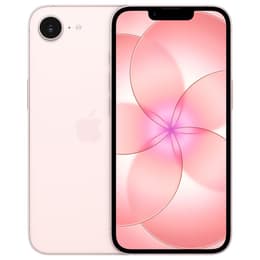
iPhone 17e
Starting at

Refurbished price:€599.00

Versus €879.00 new

See options

Differences at a glance

The Google Pixel 9 (2024) and the iPhone 17e (2026) represent two distinct approaches to modern smartphone design, each tailored to different software ecosystems and user preferences. While the Pixel 9 delivers a refined Android experience centered around integrated artificial intelligence tools, the iPhone 17e offers Apple's streamlined operating system paired with updated internals. These two devices diverge primarily in their software platforms, camera layouts, and design philosophies, making them suitable for distinct user profiles.

Available Models

Colour

Storage

Scores

Durability

When evaluating hardware longevity and software support, both devices offer robust structural integrity and extended update schedules, though their launch timelines differ by nearly two years.

  • Software longevity and update windows: The Google Pixel 9 benefits from an extended multi-year update commitment covering operating systems and security patches. The iPhone 17e utilizes Apple's long-standing software support cycle, ensuring regular system updates that keep the interface secure and functional over many years.
  • Build resilience and repairability: Both smartphones feature sturdy aluminum frames and reinforced glass fronts designed to withstand daily wear. Standardized component layouts in both models support efficient professional repairs when components eventually require replacement.
  • Expected practical lifespan: Thanks to capable processing hardware and ample system memory, both devices are built to maintain reliable daily performance throughout a multi-year ownership cycle, whether acquired new or chosen as a quality-assured refurbished option.

Year of Release

2024

2026

Performance

System responsiveness and day-to-day operation differ across these devices based on their underlying hardware architecture and memory configurations.

  • Multitasking and app execution: Both handsets handle demanding applications, web browsing, and multi-app workflows smoothly, allowing users to switch between tasks without noticeable stutter or lag.
  • Battery behavior and endurance: Battery capacities and power efficiency provide sufficient energy for a standard day of mixed use, including messaging, media streaming, and navigation, though heavy gaming or continuous location tracking will require a mid-day charge for both models.
  • Storage and memory allocation: Generous base storage configurations and high-speed memory modules ensure plenty of space for applications, high-resolution photos, and offline media files without system slowdowns over time.

Screen quality

Display characteristics across both devices prioritize visual clarity, vibrant color reproduction, and comfortable viewing conditions under various lighting environments.

  • Panel technology and sharpness: Both smartphones utilize advanced OLED display panels that deliver deep black levels, high contrast ratios, and sharp text rendering for comfortable reading and media consumption.
  • Outdoor legibility and brightness: High peak brightness capabilities allow both screens to remain clearly visible when used outdoors in direct sunlight, automatically adjusting luminance to match ambient lighting conditions.
  • Motion smoothness: High refresh rate support ensures fluid scrolling through web pages, social media feeds, and system menus, enhancing the overall tactile feel of navigation.

Audiovisual

Media capture and audio output capabilities cater to everyday photography, video recording, and multimedia playback needs through distinct hardware configurations.

  • Photography and sensor performance: The Google Pixel 9 features a dual rear camera system emphasizing computational photography for detailed low-light shots and wide-angle scenes. The iPhone 17e employs a high-resolution primary sensor with digital zoom capabilities and advanced portrait processing.
  • Video recording and stabilization: Both devices support high-definition video capture with steady optical image stabilization, making them well-suited for recording stable home videos or crisp clips while on the move.
  • Audio reproduction: Integrated stereo speakers deliver clear dialogue and balanced sound output for hands-free calls, casual music listening, and video playback without requiring external speakers.

Miscellaneous

Practical daily utility is shaped by connectivity standards, physical dimensions, and ergonomic considerations unique to each phone's construction.

  • Connectivity and wireless standards: Both models support fast 5G cellular networks, modern Wi-Fi protocols, and reliable Bluetooth connectivity for seamless accessory pairing and data transfer.
  • Physical dimensions and handling: Each device features a comfortable form factor that fits securely in one hand or pocket, though minor variations in weight and edge curvature influence overall ergonomics.
  • Security and authentication: Fast biometric authentication methods, including secure facial recognition and integrated fingerprint sensors, allow quick, secure unlocking and authorization for apps and mobile payments.

Screen size (in)

6.3

6.1

Network

5G

5G

SIM card

Physical SIM + eSIM

eSIM

Carrier compatibility

Unlocked

Unlocked

Connector

USB-C

USB-C (USB 2)

What the community thinks

User discussions and community feedback indicate that the Google Pixel 9 receives widespread praise for its intelligent software features, comfortable ergonomics, and reliable camera output, though some users note that its charging speeds can feel modest compared to competitors. Conversely, the iPhone 17e is frequently commended for its smooth operating system integration, robust build quality, and dependable battery efficiency, while occasional remarks point to its conventional exterior design.

Users prioritizing deep artificial intelligence integration, customizable software workflows, and versatile photography tools will find the Google Pixel 9 well-suited to their daily routines. Meanwhile, users who prefer a streamlined operating system, long-term software continuity, and seamless integration with other computing accessories may lean toward the iPhone 17e. For consumers exploring sustainable purchasing habits, choosing a quality-assured refurbished option provides an eco-friendly alternative that reduces electronic waste while delivering reliable, tested performance. Ultimately, the right choice depends on personal software ecosystem preferences and individual daily usage patterns rather than performance superiority.