
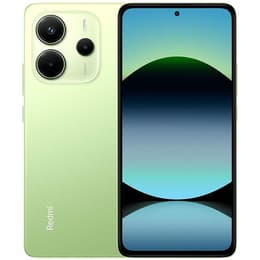


Google Pixel 8 Vs Xiaomi Redmi Note 14 4G

Google Pixel 8
Google Pixel 8
Starting at

Refurbished price:241.00

Versus €808.26 new

See options
Xiaomi Redmi Note 14 4G
Starting at

Refurbished price:162.00

Versus €229.99 new

See options

Ratings

The Google Pixel 8, released in October 2023, and the Xiaomi Redmi Note 14 4G, launched in December 2024, represent distinct approaches to the modern smartphone experience. While both operate on the Android platform, the Pixel 8 emphasizes advanced computational photography and a streamlined software experience, whereas the Redmi Note 14 4G focuses on a large display, extended battery life, and a robust main camera sensor.

Scores

Durability

When considering the long-term usability of these devices, their release timelines and software support policies are key differentiators.

  • Software Longevity: The Google Pixel 8 offers an extensive commitment of seven years of OS and security updates, ensuring support well into 2030. This provides a prolonged period of access to the latest Android features and security enhancements. In contrast, the Xiaomi Redmi Note 14 4G is slated to receive four major Android updates and six years of security updates, with its support cycle expected to conclude around 2031. [6, 9, 10, 11, 12, 13, 14, 16, 17, 20, 21, 23, 35]
  • Physical Durability: The Pixel 8 features Corning Gorilla Glass Victus on both its front and back, coupled with an aluminum frame and an IP68 rating for dust and water resistance, indicating a high level of protection against environmental elements. [4, 13] The Redmi Note 14 4G utilizes Corning Gorilla Glass 5 for its display and carries an IP54 rating, offering protection against dust and splashes. [19, 26, 31]
  • Repairability: The Google Pixel 8 has received repairability scores around 7 out of 10 from some assessments, with Google providing service manuals and OEM replacement parts, suggesting a moderate ease of repair for certain components. [2, 3, 7, 15] While specific repairability scores for the Redmi Note 14 4G are not widely published, the availability of screen replacement guides indicates that some DIY repairs are feasible. [36, 38]

Year of Release

2023

2025

OS

Android

Android

Foldable

No

No

Performance

The performance of these smartphones is influenced by their internal components, impacting how smoothly they handle daily tasks and demanding applications.

  • System Responsiveness: The Google Pixel 8 is equipped with a processor designed to optimize specific tasks and power advanced AI capabilities, resulting in smooth performance for everyday use and efficient handling of demanding applications and multitasking. [13, 29] The Redmi Note 14 4G's processor is capable of delivering smooth performance for general multitasking and casual gaming. [26, 31, 32]
  • Storage and Multitasking: The Pixel 8 comes with 8GB of RAM and storage options of 128GB or 256GB, without expandable storage. [4, 5, 13] The Redmi Note 14 4G offers configurations with 6GB or 8GB of RAM and 128GB or 256GB of internal storage, with the added flexibility of expandable storage via a hybrid microSDXC slot. [8, 19, 25, 31]
  • Battery Behavior: The Pixel 8 houses a 4575 mAh battery, supporting 27W wired and 18W wireless charging. User experiences suggest that while battery life has improved over previous generations, heavy usage might still necessitate a power bank for a full day away from a charger. [4, 24, 33, 35] The Redmi Note 14 4G is equipped with a larger 5500 mAh battery and supports 33W wired fast charging, often noted for its long-lasting performance and ability to maintain capacity over many charge cycles. [23, 25, 26, 30, 31, 32]

Memory (GB)

8 GB

6 GB

Screen quality

The visual experience on both devices is shaped by their display technologies and specifications, affecting clarity, brightness, and smoothness.

  • Display Technology and Clarity: Both smartphones feature OLED displays, known for deep blacks and vibrant colors. The Pixel 8 has a 6.2-inch OLED screen with a 1080x2400 FHD+ resolution, resulting in a sharp visual experience. [1, 4, 13] The Redmi Note 14 4G offers a larger 6.67-inch AMOLED display with a similar 1080x2400 resolution, providing ample screen real estate for media consumption. [8, 19, 26, 31, 32]
  • Brightness and Refresh Rate: The Pixel 8's display can reach a peak brightness of 2000 nits and supports a 120Hz refresh rate, contributing to smooth scrolling and good visibility in bright conditions. [1, 4, 13, 18] The Redmi Note 14 4G also features a 120Hz refresh rate and boasts a peak brightness of 1800 nits, ensuring fluid visuals and clear outdoor viewing. [8, 19, 26, 31, 32]
  • Screen Protection: The Pixel 8 is protected by Corning Gorilla Glass Victus, offering enhanced durability against drops and scratches. [4] The Redmi Note 14 4G uses Corning Gorilla Glass 5 for screen protection. [8, 19, 26, 31]

Resolution

1080 x 2400

1080x2400

Audiovisual

The camera systems on these phones offer different capabilities for capturing photos and videos, catering to various user preferences.

  • Rear Camera Setup: The Google Pixel 8 features a dual-camera system with a 50 MP wide main sensor and a 12 MP ultrawide lens, known for its impressive photo quality, especially in low-light conditions, and advanced software processing. [4, 13, 24, 28, 29] The Xiaomi Redmi Note 14 4G primarily relies on a 108 MP main sensor, which delivers solid results in good lighting. Some configurations of the Redmi Note 14 4G may include less functional secondary lenses, with the ultrawide camera often being absent or having limited utility. [19, 25, 26, 30, 31, 32]
  • Photography Features: The Pixel 8 leverages its computational photography for features like Magic Eraser and Best Take, enhancing image editing and composition. [13, 29] The Redmi Note 14 4G's main camera offers a 3x in-sensor zoom and AI-driven features for background manipulation. [26]
  • Video and Audio: The Pixel 8 supports 4K video recording at up to 60 frames per second, with good stabilization. [4, 28] The Redmi Note 14 4G records video at 1080p, lacking 4K capability. [30] Both devices offer stereo speakers, with the Redmi Note 14 4G also retaining a 3.5mm headphone jack. [4, 19, 26, 31]

Miscellaneous

Beyond core features, several practical elements contribute to the overall user experience and device utility.

  • Connectivity and Ports: The Google Pixel 8 supports 5G connectivity, Wi-Fi 7, Bluetooth 5.3, and features a USB Type-C 3.2 port. [4] The Xiaomi Redmi Note 14 4G offers 4G LTE connectivity, Wi-Fi 5, Bluetooth 5.3, a USB Type-C port, and notably includes a 3.5mm headphone jack and an infrared (IR) blaster. [19, 25, 26, 31]
  • Biometric Security: Both phones incorporate modern biometric security. The Pixel 8 uses an under-display optical fingerprint sensor. [4] The Redmi Note 14 4G also features an in-screen fingerprint sensor and AI Face Unlock. [26, 31]
  • Design and Handling: The Pixel 8 has dimensions of 150.5 x 70.8 x 8.9 mm and weighs 187g, offering a more compact and manageable form factor. [4] The Redmi Note 14 4G measures 163.25 x 76.55 x 8.16 mm and weighs 196.5g, providing a larger device with a flat-edge design. [26, 31]

Weight

187 g

196 g

Screen size (in)

6.2

6.67

Network

5G

4G

SIM card

Physical SIM + eSIM

Physical SIM + eSIM

Carrier compatibility

Unlocked

Unlocked

User feedback for the Google Pixel 8 frequently highlights its impressive camera system, particularly its low-light performance and advanced AI-driven photo editing features. Users also appreciate its clean Android experience and compact design. A common concern noted by users is that the battery life, while improved, may still require frequent charging for heavy users. [24, 28, 29, 33, 35]

For the Xiaomi Redmi Note 14 4G, users often praise its vibrant AMOLED display, strong battery life, and the performance of its main camera sensor. Criticisms sometimes point to the limited utility of its secondary camera lenses and the absence of an effective ultrawide camera. Some users also express concerns about its long-term performance given its processor. [23, 26, 30, 32]

Users prioritizing a compact device with a leading-edge camera system, extensive software support, and a streamlined Android experience may find the Google Pixel 8 well-suited to their needs. Conversely, individuals who value a larger display, a long-lasting battery, and the inclusion of features like a headphone jack and expandable storage might lean towards the Xiaomi Redmi Note 14 4G. Both devices offer compelling features for different user profiles, and considering a quality-assured refurbished option for either model can be an eco-friendly alternative for those seeking value and sustainability.
See all articles

Our recent comparisons