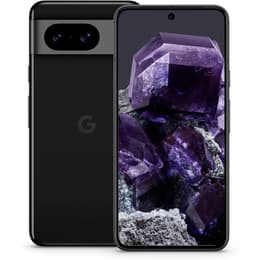
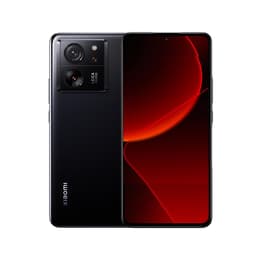


Google Pixel 8 Vs Xiaomi 13T Pro

Google Pixel 8
Google Pixel 8
Starting at

Refurbished price:309.00

Versus €999.00 new

See options
Xiaomi 13T Pro
Xiaomi 13T Pro
Starting at

Refurbished price:272.00

Versus €900.00 new

See options

Ratings

The Google Pixel 8 and the Xiaomi 13T Pro are both advanced smartphones released in late 2023, offering distinct approaches to the Android experience. While the Pixel 8 focuses on a refined software experience and computational photography, the Xiaomi 13T Pro emphasizes raw performance and rapid charging capabilities. Both devices run on the Android operating system, with each manufacturer providing their own software interpretations.

Scores

Durability

When considering the long-term usability of these devices, their respective software support policies and physical resilience are key factors.

  • Release Timeline: The Xiaomi 13T Pro was officially announced and released in September 2023, while the Google Pixel 8 followed in October 2023.
  • Software Longevity: The Google Pixel 8 offers an extensive commitment of seven years of OS, security, and Feature Drop updates, ensuring prolonged software support. In contrast, the Xiaomi 13T Pro is set to receive four generations of Android OS upgrades and five years of security patches.
  • Physical Durability: Both smartphones feature an IP68 rating for dust and water resistance, indicating a high level of protection against environmental elements. The Pixel 8 incorporates Gorilla Glass Victus for screen protection, while the Xiaomi 13T Pro uses Corning Gorilla Glass 5.

Performance

The performance of a smartphone is crucial for daily tasks, from app usage to demanding applications and multitasking.

  • Storage and RAM: The Google Pixel 8 is available with 128GB or 256GB of internal storage and 8GB of RAM. The Xiaomi 13T Pro offers more varied configurations, including 256GB, 512GB, or 1TB of storage, and options for 8GB, 12GB, or 16GB of RAM.
  • Processing Power: The Pixel 8 is equipped with a processor designed to optimize specific tasks and power AI capabilities, delivering solid performance for everyday use and gaming. The Xiaomi 13T Pro features a powerful current-generation processor, providing flagship-grade performance and stability for demanding applications and multitasking.
  • Battery Behavior: The Pixel 8 has a 4575 mAh battery, which generally lasts through a full day of use for many users, though heavy usage, especially with 5G, can lead to more frequent charging. The Xiaomi 13T Pro comes with a larger 5000 mAh battery, often providing very good battery life that can extend through a full day of mixed use.

Memory (GB)

8 GB

12 GB

Screen quality

The display is a primary interface for smartphone interaction, influencing everything from media consumption to daily navigation.

  • Display Technology and Size: Both devices feature OLED displays, known for deep blacks and vibrant colors. The Pixel 8 has a 6.2-inch Actua OLED display, while the Xiaomi 13T Pro offers a slightly larger 6.67-inch AMOLED display.
  • Resolution and Clarity: The Pixel 8 provides a 1080x2400 pixel (FHD+) resolution. The Xiaomi 13T Pro features a 1220x2712 pixel resolution, offering a slightly higher pixel density.
  • Brightness and Refresh Rate: The Pixel 8's display can reach up to 2000 nits peak brightness and has a 120Hz refresh rate. The Xiaomi 13T Pro boasts a higher peak brightness of 2600 nits and a 144Hz refresh rate, contributing to smoother visuals.

Audiovisual

Camera capabilities are a significant consideration for many users, impacting the quality of photos and videos captured.

  • Rear Camera System: The Pixel 8 features a dual-camera setup with a 50 MP main sensor and a 12 MP ultrawide camera. The Xiaomi 13T Pro offers a triple-camera system, including a 50 MP wide sensor, a 50 MP telephoto lens with 2x optical zoom, and a 12 MP ultrawide lens, co-engineered with Leica.
  • Photography Performance: The Pixel 8 is praised for its impressive camera system, capturing stunning photos, particularly in low-light conditions, and leveraging software for enhanced image processing. The Xiaomi 13T Pro also delivers strong photo and video quality from its rear cameras, with its telephoto lens providing detailed images in good lighting.
  • Video Recording: Both phones support 4K video recording, with the Pixel 8 capable of 4K at up to 60fps. The Xiaomi 13T Pro can record up to 8K at 24fps, and offers various 4K options, including HDR recording.

Miscellaneous

Beyond core features, several practical elements contribute to the overall user experience and device utility.

  • Connectivity: Both smartphones support 5G connectivity, along with modern Wi-Fi standards (Wi-Fi 7 for Xiaomi 13T Pro, Wi-Fi 7 for Pixel 8) and Bluetooth 5.3 or 5.4.
  • Ports and Sensors: Both devices utilize a USB Type-C port for charging and data transfer and lack a 3.5mm headphone jack. They both include in-display optical fingerprint sensors for biometric authentication.
  • Design and Handling: The Pixel 8 has dimensions of 150.5 x 70.8 x 8.9 mm and weighs 187g, offering a compact and comfortable form factor. The Xiaomi 13T Pro is slightly larger and heavier, measuring 162.2 mm × 75.7 mm × 8.5 mm and weighing around 200g or 206g depending on the variant.

Screen size (in)

6,2

6.67

Network

5G

5G

SIM card

Physical SIM + eSIM

Dual Physical SIM

Carrier compatibility

Unlocked

Unlocked

User feedback indicates that the Google Pixel 8 is often praised for its exceptional camera system, delivering high-quality photos, especially in challenging lighting. Users also appreciate its clean Android experience and the promise of extended software updates. A common point of discussion for the Pixel 8 is its battery life, which, while improved, can still be a concern for heavy users.

The Xiaomi 13T Pro receives positive remarks for its powerful performance, fast charging capabilities, and vibrant display. Its camera system, co-engineered with Leica, is also frequently highlighted for producing good quality images. Some users have noted that while the display is bright and smooth, it may not always represent a significant improvement over previous generations in certain aspects.

Users prioritizing a compact design, a streamlined software experience, and industry-leading long-term software support will find the Google Pixel 8 well-suited to their needs. Those who value raw processing power, a larger display with a higher refresh rate, and extremely fast charging may lean toward the Xiaomi 13T Pro. Both devices offer a quality-assured refurbished option, providing an eco-friendly alternative for consumers.