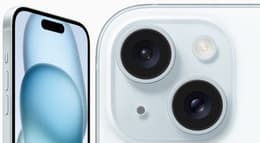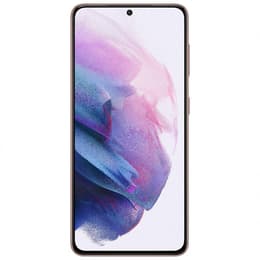
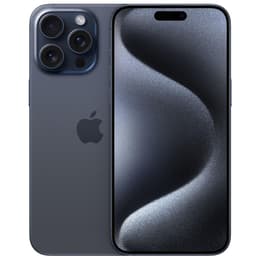


Galaxy S21 5G Vs iPhone 15 Pro Max

Galaxy S21 5G
Galaxy S21 5G
Starting at

Refurbished price:161.00

Versus €1,026.00 new

See options
iPhone 15 Pro Max
iPhone 15 Pro Max
Starting at

Refurbished price:601.25

Versus €1,489.00 new

See options

Ratings

The Samsung Galaxy S21 5G, released in January 2021, and the Apple iPhone 15 Pro Max, launched in September 2023, represent different generations of flagship smartphones from their respective manufacturers. While both devices offer premium mobile experiences, they cater to distinct ecosystems and user preferences. The primary differentiators lie in their operating systems, camera capabilities, and overall performance, reflecting the technological advancements over their release periods.

Scores

Durability

When considering the longevity of these devices, several factors come into play, including their release timelines, software support, and repairability.

  • Release Timeline and Age: The Galaxy S21 5G was released in January 2021, making it an older device compared to the iPhone 15 Pro Max, which launched in September 2023. This age difference inherently impacts their remaining software support and expected lifespan.
  • OS Support Duration: Samsung has committed to providing four generations of Android OS updates and five years of security updates for the Galaxy S21 series. This means the Galaxy S21 5G, which launched with Android 11, has received updates up to Android 14 (One UI 6) by January 2024 and is expected to receive Android 15 (One UI 7) by May 2025. Apple, for the iPhone 15 Pro Max, has stated a minimum of five years of software updates from its release date, extending to at least September 2028 for security updates, with typical iOS version support often lasting longer, sometimes up to six or seven years.
  • Repairability: The Galaxy S21 5G generally has a higher repairability score, with some sources giving it around 7.5 out of 10, noting its ease of disassembly and replaceable parts, though the battery can be challenging to remove due to strong adhesive. In contrast, the iPhone 15 Pro Max received an initial repairability score of 4 out of 10 from iFixit, which was later promoted to 7 out of 10 due to improved software support for part calibration, though some components like the battery remain difficult to access.

Year of Release

2021

2023

Compatible with latest Update

Yes

Yes

OS

Android

iOS

Foldable

No

No

Performance

The performance of a smartphone is crucial for daily operations, from launching applications to handling demanding tasks. These two devices offer different levels of responsiveness and capability.

  • Storage Options: The Galaxy S21 5G was available with 128 GB or 256 GB of internal storage, paired with 8 GB of RAM. The iPhone 15 Pro Max offers more generous storage configurations, starting at 256 GB and going up to 1 TB, all with 8 GB of RAM. Neither device supports expandable storage via a microSD card.
  • Battery Behavior: The Galaxy S21 5G is equipped with a 4000 mAh battery, which users generally report as lasting through a full day of moderate to intensive use. The iPhone 15 Pro Max features a larger 4441 mAh battery, and users frequently praise its extended battery life, often exceeding a full day even with heavy usage.
  • System Responsiveness: The iPhone 15 Pro Max, being a newer device, delivers exceptionally fluid performance, handling demanding applications, complex multitasking, and graphics-intensive gaming with ease. Its advanced processing unit ensures a highly responsive user experience with minimal lag or stutter. The Galaxy S21 5G, while still capable for everyday tasks and most applications, may exhibit occasional slowdowns or less consistent performance in very demanding scenarios, particularly compared to newer devices, as some users have noted potential throttling issues with its processing unit.

Memory (GB)

8 GB

8 GB

Screen quality

The visual experience is a key aspect of smartphone usage, and both devices offer high-quality displays with distinct characteristics.

  • Display Technology and Clarity: The Galaxy S21 5G features a 6.2-inch Dynamic AMOLED 2X display with a resolution of 1080 x 2400 pixels, providing vibrant colors and deep blacks. The iPhone 15 Pro Max boasts a larger 6.7-inch Super Retina XDR OLED display with a higher resolution of 2796 x 1290 pixels, resulting in sharper images and text.
  • Brightness Levels: The Galaxy S21 5G offers good brightness for outdoor visibility. The iPhone 15 Pro Max, however, features significantly higher peak brightness, reaching up to 2000 nits for outdoor use and HDR content, which enhances visibility in bright sunlight and improves HDR content consumption.
  • Refresh Rate: Both devices feature adaptive refresh rates. The Galaxy S21 5G offers a 120Hz adaptive refresh rate, providing smooth scrolling and animations. The iPhone 15 Pro Max also includes ProMotion technology with an adaptive refresh rate up to 120Hz, which dynamically adjusts based on content to optimize smoothness and power efficiency.

Resolution

1080 x 2400

1290 x 2796

Screen type

Dynamic AMOLED 2X

LTPO Super Retina XDR OLED

Audiovisual

Camera capabilities are a significant consideration for many users, and both smartphones offer versatile systems for capturing photos and videos.

  • Camera System Configuration: The Galaxy S21 5G features a triple-camera setup on the rear: a 12 MP main wide-angle lens, a 12 MP ultra-wide lens, and a 64 MP telephoto lens with 3x hybrid optical zoom. The iPhone 15 Pro Max also has a triple-camera system, including a 48 MP main wide-angle camera, a 12 MP ultra-wide camera, and a 12 MP telephoto camera with 5x optical zoom.
  • Photography Performance: The Galaxy S21 5G delivers strong everyday photography with good color reproduction and detail, and its ultra-wide camera is noted for its quality. The iPhone 15 Pro Max offers exceptional image quality, particularly with its 48 MP main sensor, producing detailed and vibrant photos. Its low-light performance is also significantly improved across all lenses. The 5x optical zoom on the iPhone 15 Pro Max provides greater reach for distant subjects compared to the S21 5G's 3x hybrid zoom.
  • Video Recording: Both devices are capable of high-quality video recording. The Galaxy S21 5G supports up to 8K video recording and offers a 'Director's View' mode for multi-camera recording, though this is limited to standard HD. The iPhone 15 Pro Max excels in video, offering advanced features like ProRes video, Cinematic mode, and 3D (spatial) video recording, making it a strong tool for content creation.

Main camera

12 megapixels

48 megapixels

Front camera

10 megapixels

12 megapixels

Miscellaneous

Beyond core performance and display, various practical features contribute to the overall user experience of these smartphones.

  • Connectivity Options: Both devices support 5G connectivity, Wi-Fi, and Bluetooth. The iPhone 15 Pro Max features newer Wi-Fi 6E and Bluetooth 5.3 standards, offering potentially faster and more stable wireless connections compared to the Galaxy S21 5G's Wi-Fi 6 and Bluetooth 5.0.
  • Port Types: The Galaxy S21 5G uses a USB-C port for charging and data transfer. The iPhone 15 Pro Max has transitioned from Apple's proprietary Lightning port to a USB-C port, which supports faster data transfer speeds (USB 3) compared to the S21 5G. Neither device includes a traditional 3.5mm headphone jack.
  • Sensors and Biometrics: The Galaxy S21 5G features an in-display ultrasonic fingerprint scanner for secure unlocking. The iPhone 15 Pro Max relies on Face ID for biometric authentication and introduces a customizable Action Button, which can be programmed for various functions like launching the camera or voice recorder.
  • Build Materials and Handling: The Galaxy S21 5G has a plastic back and an aluminum frame, contributing to a lighter feel. It weighs 169 grams and has dimensions of 151.7 x 71.2 x 7.9 mm. The iPhone 15 Pro Max features a titanium frame and a glass back, offering a premium and durable build while remaining relatively light for its size at 221 grams, with dimensions of 159.9 x 76.7 x 8.3 mm. Both devices carry an IP68 rating for dust and water resistance.

Weight

171 g

221 g

Screen size (in)

6.2

6.7

Network

5G

5G

SIM card

Physical SIM + eSIM

Physical SIM + eSIM

Carrier compatibility

Unlocked

Unlocked

Connector

USB-C

USB-C (USB 3)

The Samsung Galaxy S21 5G and the iPhone 15 Pro Max offer distinct experiences shaped by their respective ecosystems and release timelines. User sentiment for the Galaxy S21 5G often highlights its vibrant display, capable camera, and overall solid performance for its generation. Some common criticisms included its plastic back (on the base model) and the removal of microSD card support. Users generally found it to be a reliable daily driver, especially for those who appreciate the Android ecosystem and Samsung's feature set.

For the iPhone 15 Pro Max, users frequently praise its exceptional battery life, powerful performance for demanding tasks, and the versatility of its advanced camera system, particularly the 5x optical zoom. The transition to USB-C has also been a welcome change for many. Initial concerns about overheating were reported by some users, though Apple released software updates to address these issues, and many users report a positive experience without significant problems.

Users prioritizing a device with the latest mobile technology, extended software support, and a highly capable camera system, especially for telephoto photography and advanced video features, will find the iPhone 15 Pro Max well-suited to their needs. Its robust performance makes it ideal for power users and those heavily invested in the Apple ecosystem. Conversely, users seeking a reliable Android experience with a still-capable camera and display, who may not require the absolute latest processing power or extreme zoom capabilities, could find the Galaxy S21 5G to be a practical choice. Opting for a quality-assured refurbished option for either device can be an eco-friendly alternative, providing access to premium features while supporting sustainable consumption.


See all articles

Our recent comparisons