

Google Pixel 8 Vs OnePlus 11

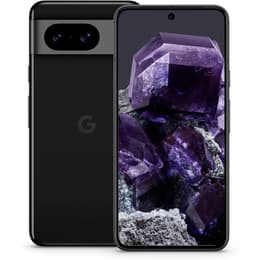
Google Pixel 8
Google Pixel 8
Starting at

Refurbished price:250.00

Versus €819.97 new

See options
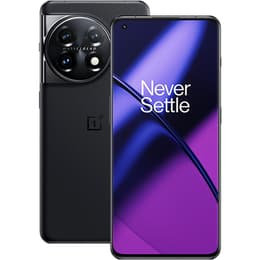
OnePlus 11
OnePlus 11
Starting at

Refurbished price:288.00

Versus €949.00 new

See options

Ratings

The Google Pixel 8, released in October 2023, and the OnePlus 11, launched globally in February 2023, are both Android smartphones offering distinct user experiences. While the Pixel 8 emphasizes advanced computational photography and long-term software support, the OnePlus 11 focuses on raw performance and rapid charging capabilities. Both devices run on the Android operating system, providing access to a wide ecosystem of applications and services.

Scores

Durability

When considering the long-term usability of these devices, their release timelines and software support policies are key differentiators.

  • Release Timeline: The Google Pixel 8 was released in October 2023, making it slightly newer than the OnePlus 11, which had its global launch in February 2023. This difference in release date can influence the duration of future software support.
  • Software Longevity: Google has committed to providing seven years of OS upgrades, security updates, and feature drops for the Pixel 8, extending support well into 2030. In contrast, the OnePlus 11 is promised four major Android updates and five years of security updates. This means the Pixel 8 offers a significantly longer period of official software support.
  • Build and Durability: Both phones feature Gorilla Glass Victus for screen protection, with the Pixel 8 also using Gorilla Glass Victus on its back and an aluminum frame. The Pixel 8 also carries an IP68 rating for dust and water resistance, indicating a high level of protection against environmental elements.

Year of Release

2023

2023

OS

Android

Android

Foldable

No

No

Performance

Both smartphones deliver robust performance for daily tasks, but they approach power management and responsiveness with different priorities.

  • Processing Power: The OnePlus 11 is equipped with a powerful current-generation processor, which contributes to its rapid performance and efficient power usage, even during demanding tasks like gaming. The Pixel 8 also features a current-generation processor designed to handle demanding applications and multitasking smoothly, with a strong focus on AI-driven features.
  • Memory and Storage: The Pixel 8 comes with 8GB of RAM and offers storage options of 128GB or 256GB, utilizing UFS 3.1 storage. The OnePlus 11 provides more flexibility with 8GB or 16GB of RAM and storage options of 128GB (UFS 3.1) or 256GB (UFS 4.0), with the UFS 4.0 offering faster data transfer speeds.
  • Battery Behavior: The OnePlus 11 houses a larger 5000 mAh battery, generally providing solid one-day performance for most users and showing strong endurance in video playback tests. The Pixel 8 has a 4575 mAh battery, which offers adequate battery life for typical daily use, often lasting a full day with mixed usage, though heavy users might need a mid-day charge.

Memory (GB)

8 GB

16 GB

Screen quality

The visual experience on both devices is vibrant and clear, though they differ in resolution and specific display technologies.

  • Display Technology and Resolution: The Google Pixel 8 features a 6.2-inch OLED display with a 1080x2400 (FHD+) resolution, offering deep blacks and vibrant colors. The OnePlus 11 boasts a larger 6.7-inch LTPO3 AMOLED display with a higher 1440x3216 (QHD+) resolution, resulting in a sharper image with a higher pixel density.
  • Brightness and Refresh Rate: The Pixel 8's display can reach up to 1400 nits in high brightness mode and a peak of 2000 nits, with a variable refresh rate between 60Hz and 120Hz for smooth scrolling. The OnePlus 11 offers a peak brightness of 1300 nits and features an LTPO display that dynamically adjusts its refresh rate from 1Hz to 120Hz, optimizing for both smoothness and power efficiency.
  • Viewing Experience: The OnePlus 11's larger, higher-resolution screen provides an expansive and detailed viewing experience, particularly beneficial for media consumption and gaming. The Pixel 8's display, while smaller and lower resolution, still delivers a respectable viewing experience with good clarity and color accuracy.

Resolution

1080 x 2400

1440 x 3216

Audiovisual

Both smartphones offer capable camera systems, but they excel in different aspects of photography and videography.

  • Rear Camera System: The Google Pixel 8 features a dual-camera setup with a 50MP main sensor with optical image stabilization (OIS) and a 12MP ultrawide camera with autofocus. The OnePlus 11 comes with a triple-camera system co-developed with Hasselblad, including a 50MP main sensor (OIS), a 48MP ultrawide with autofocus, and a 32MP telephoto lens offering 2x optical zoom.
  • Photography Features: The Pixel 8 leverages its computational photography for features like Night Sight and Video Boost, enhancing low-light performance and overall video quality through cloud processing. The OnePlus 11's Hasselblad color calibration aims for accurate color reproduction in photos.
  • Video Recording: The Pixel 8 supports 4K video recording at 24, 30, or 60 frames per second, with features like Cinematic Video. The OnePlus 11 can record up to 8K video at 24fps and 4K at 30/60fps, with stabilization features.

Miscellaneous

Beyond core features, several practical elements contribute to the overall user experience of these devices.

  • Connectivity and Ports: Both phones support 5G connectivity, Wi-Fi 7, and Bluetooth 5.3. The Pixel 8 features a USB-C 3.2 port, while the OnePlus 11 uses a USB-C 2.0 port.
  • Biometric Security: Both devices include in-display fingerprint sensors for secure unlocking. The Pixel 8 also offers secure face unlock.
  • Design and Handling: The Pixel 8 has dimensions of 150.5 x 70.8 x 8.9 mm and weighs 187g, making it a more compact and lighter device. The OnePlus 11 is larger and heavier at 163.1 x 74.1 x 8.5 mm and 205g. The OnePlus 11 also includes a physical alert slider, a signature feature for quick sound profile changes.

Weight

187 g

205 g

Screen size (in)

6.2

6.7

Network

5G

5G

SIM card

Physical SIM + eSIM

Physical SIM

Carrier compatibility

Unlocked

Unlocked

User feedback for the Google Pixel 8 often praises its advanced camera capabilities, particularly its computational photography features and the promise of extensive software support, which ensures the device remains current for a long period. Some users have noted that while battery life is adequate for most, it might not be a standout feature for heavy usage, especially with mobile data.

The OnePlus 11 is frequently lauded for its strong overall performance, vibrant display, and exceptionally fast wired charging speeds. Its battery life is generally considered solid for a full day of use. Criticisms sometimes point to the front camera performance in challenging lighting and the absence of wireless charging.

Users prioritizing long-term software updates, advanced AI-driven camera features, and a more compact form factor may find the Google Pixel 8 well-suited to their needs. Conversely, those who value a larger, higher-resolution display, top-tier processing power, and very rapid wired charging might lean towards the OnePlus 11. Both devices offer compelling experiences, and for those seeking an eco-friendly alternative, quality-assured refurbished options for both models are available, providing a sustainable choice for consumers.

See all articles

Our recent comparisons