


Compare models

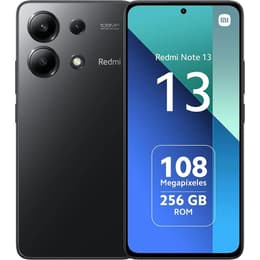
Google Pixel 8 Pro Vs Xiaomi Redmi Note 13 4G

  • 1-year minimum warranty
  • Free delivery on all orders
  • Free 30-day returns
Google Pixel 8 Pro
Starting at

Refurbished price:356.00

Versus €1,099.00 new

See options
Xiaomi Redmi Note 13 4G
Starting at

Refurbished price:207.00

Versus €340.00 new

See options

Differences at a glance

The Google Pixel 8 Pro (2023) and the Xiaomi Redmi Note 13 4G (2024) are modern smartphones serving distinct segments of the mobile market, with the former operating as a flagship-tier device and the latter offering an accessible everyday feature set. While both run on the Android operating system, they approach performance, camera versatility, and long-term software support from completely different angles.

Understanding their core hardware and software distinctions helps clarify which device fits specific daily routines and practical requirements.

Available Models

Colour

Storage (GB)

Scores

Durability

When examining hardware longevity and maintenance support, the Google Pixel 8 Pro and Xiaomi Redmi Note 13 4G offer contrasting lifespans and update schedules.

  • Software Support Duration: The Google Pixel 8 Pro provides an extended multi-year commitment of operating system upgrades and security patches, whereas the Xiaomi Redmi Note 13 4G follows a standard mid-range support cycle.
  • Build and Durability: The Google Pixel 8 Pro utilizes high-end strengthened glass and robust water resistance ratings, while the Xiaomi Redmi Note 13 4G features basic splash resistance and standard display protection suitable for careful everyday handling.
  • Expected Lifespan: The Pixel device retains system responsiveness and software relevance over a longer period, making quality-assured refurbished options a sustainable choice for users seeking extended device longevity.

Year of Release

2023

2024

Compatible with latest Update

Yes

Yes

Foldable

No

No

Performance

Under everyday workloads, processing capabilities and memory management differ significantly between these two models.

  • Multitasking and Responsiveness: The Google Pixel 8 Pro handles demanding applications, heavy multitasking, and intensive graphics smoothly, whereas the Xiaomi Redmi Note 13 4G is well-suited for standard daily tasks like web browsing, messaging, and media streaming.
  • Storage and Memory Configurations: Both devices offer generous internal storage options, though the Pixel pairs its storage with higher memory bandwidth to keep background tasks active without stuttering.
  • Battery Behavior: Both models manage power efficiently through daily use, though high-performance tasks on the Pixel consume power faster due to its advanced internal hardware capabilities.

Screen quality

Both smartphones feature bright, vibrant displays designed for comfortable media consumption and clear outdoor readability.

  • Display Technology: The Google Pixel 8 Pro uses an advanced OLED panel that dynamically adjusts its refresh rate down to very low frequencies for efficiency, while the Xiaomi Redmi Note 13 4G features a fixed-tier high refresh rate AMOLED screen for smooth scrolling.
  • Resolution and Clarity: The Pixel offers a higher pixel resolution and sharper text rendering, whereas the Redmi Note 13 4G provides full high-definition clarity that satisfies everyday viewing needs.
  • Outdoor Brightness: Both screens reach high peak brightness levels, ensuring visibility under direct sunlight during outdoor commutes or travel.

Resolution

1344 x 2992

1080 x 2400

Screen type

LTPO OLED

AMOLED

Audiovisual

Media creation and audio playback capabilities reflect the tier differences between these two smartphones.

  • Camera System Versatility: The Google Pixel 8 Pro incorporates a flexible triple-lens array including specialized telephoto zooming and advanced computational photography tools, while the Xiaomi Redmi Note 13 4G relies on a high-resolution main sensor for standard everyday photos.
  • Video and Low-Light Performance: The Pixel excels in dark environments and produces stable, detailed video recordings, whereas the Redmi handles well-lit daylight scenes adequately for casual sharing.
  • Media Consumption: Both devices feature clear audio output through built-in speakers, though the Pixel provides a richer sound profile for music and video playback.

Main camera

50 megapixels

108 megapixels

Front camera

10.5 megapixels

16 megapixels

Miscellaneous

Practical physical design elements and connectivity features influence how each phone handles in daily scenarios.

  • Connectivity Standards: The Google Pixel 8 Pro supports modern fifth-generation cellular networks and advanced Wi-Fi protocols, whereas the Xiaomi Redmi Note 13 4G limits cellular connectivity strictly to fourth-generation networks depending on the specific regional variant.
  • Physical Dimensions: The Pixel carries a slightly heavier, solid build, while the Redmi Note 13 4G offers a lighter profile that sits comfortably in one hand.
  • Security Sensors: Both devices integrate responsive biometric authentication tools, including optical under-display fingerprint sensors for quick unlocking.

Weight

213 g

175 g

Screen size (in)

6.7

6.67

Network

5G

4G

SIM card

Physical SIM + eSIM

Dual Physical SIM

Carrier compatibility

Unlocked

Unlocked

What the community thinks

User feedback and community discussions highlight distinct preferences for each device based on everyday requirements. Owners of the Google Pixel 8 Pro frequently praise its advanced photography capabilities, long-term software update commitment, and smooth system fluidity. Conversely, users of the Xiaomi Redmi Note 13 4G appreciate its reliable everyday display quality, lightweight handling, and straightforward functionality for basic messaging and media tasks. Common concerns for the Pixel involve its heavier physical footprint, while Redmi users occasionally note limitations in demanding gaming scenarios.

Users prioritizing advanced photography, extended software longevity, and high-performance computing will find the Google Pixel 8 Pro well-suited to their needs. Meanwhile, users prioritizing a lightweight build, reliable everyday media viewing, and straightforward core functions may lean toward the Xiaomi Redmi Note 13 4G. For buyers exploring sustainable technology, opting for a quality-assured refurbished model provides an eco-friendly alternative that aligns with green purchasing goals. Ultimately, the choice depends on matching device capabilities with individual daily usage priorities.