

Google Pixel 8 Pro Vs iPhone 12

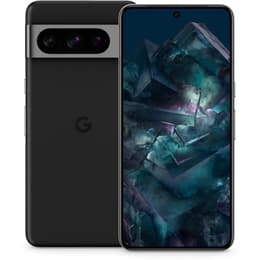
Google Pixel 8 Pro
Google Pixel 8 Pro
Starting at

Refurbished price:330.00

Versus €1,099.00 new

See options
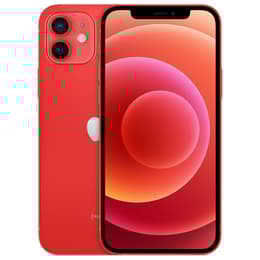
iPhone 12
iPhone 12
Starting at

Refurbished price:166.00

Versus €829.00 new

See options

Ratings

The Google Pixel 8 Pro, released in October 2023, and the Apple iPhone 12, launched in October 2020, represent distinct approaches to the smartphone experience, operating on Android and iOS respectively. While both devices offer robust performance and capable camera systems, the Pixel 8 Pro introduces more recent advancements in display technology, computational photography, and long-term software support, reflecting its newer generation. The iPhone 12, despite its age, continues to provide a reliable and integrated experience within the Apple ecosystem.

Scores

Durability

The practical lifespan of a smartphone is significantly influenced by its release timeline and the duration of software support it receives.

  • Release Timeline: The Google Pixel 8 Pro was released in October 2023, making it a more recent device compared to the iPhone 12, which launched in October 2020. This three-year difference in release directly impacts their remaining software support and expected longevity.
  • Software Support: Google has committed to providing seven years of operating system and security updates for the Pixel 8 Pro, extending its support until 2030. The iPhone 12, having been released earlier, has received several major iOS updates since its launch, including iOS 14, 15, 16, 17, and 18, and is compatible with iOS 26. While Apple typically provides extensive software support, the Pixel 8 Pro's stated seven-year commitment offers a longer guaranteed update period from its release date.
  • Repairability: The iPhone 12 received a repairability score of 6 out of 10 from iFixit, indicating that many of its parts are replaceable, though some repairs may require specialized tools or software. Information regarding a specific iFixit repairability score for the Pixel 8 Pro is not readily available, but modern smartphones generally present similar challenges and opportunities for repair.

Year of Release

2023

2020

Compatible with latest Update

Yes

Yes

Foldable

No

No

Performance

Performance differences between these two devices are notable, primarily due to the generational gap in their internal components and software optimization.

  • Storage Options: The iPhone 12 is available with internal storage options of 64GB, 128GB, and 256GB. The Pixel 8 Pro offers more expansive choices, including 128GB, 256GB, 512GB, and a 1TB variant, with the 1TB option being region-specific. This provides the Pixel 8 Pro with greater flexibility for users who require substantial local storage for applications, media, and files.
  • System Responsiveness: The Pixel 8 Pro, with its newer-generation processor and 12GB of RAM, delivers a highly responsive experience, handling demanding applications, intensive multitasking, and graphic-rich games with fluidity. The iPhone 12, equipped with 4GB of RAM, still offers smooth performance for everyday tasks and most applications within the iOS ecosystem, but may show its age with the most resource-intensive operations compared to the Pixel 8 Pro.
  • Battery Behavior: While specific battery life varies with usage patterns, the Pixel 8 Pro generally offers extended usage times due to its larger battery capacity and the efficiency of its newer components and adaptive display technology. The iPhone 12 provides reliable all-day battery life for typical users, though heavy usage may necessitate more frequent charging.

Memory (GB)

12 GB

4 GB

Screen quality

The visual experience on both devices is delivered through high-quality displays, but the Pixel 8 Pro incorporates more advanced display technology.

  • Display Technology and Clarity: Both smartphones feature OLED displays, providing deep blacks and vibrant colors. The Pixel 8 Pro boasts a 6.7-inch LTPO OLED display with a resolution of 1344 x 2992 pixels, offering a sharp and expansive viewing area. The iPhone 12 features a 6.1-inch Super Retina XDR OLED display with a resolution of 2532 x 1170 pixels, which also delivers excellent clarity and color accuracy.
  • Brightness and Refresh Rate: The Pixel 8 Pro's display can reach a peak brightness of up to 2000 nits, making it highly visible even in bright outdoor conditions, and features an adaptive refresh rate that ranges from 1Hz to 120Hz for smooth scrolling and efficient power consumption. The iPhone 12 offers a typical maximum brightness of 625 nits and a peak HDR brightness of 1200 nits, with a standard 60Hz refresh rate.
  • Viewing Experience: The larger screen size, higher resolution, and adaptive refresh rate of the Pixel 8 Pro contribute to a more immersive and fluid visual experience, particularly for media consumption and gaming. The iPhone 12's display remains excellent for its size and refresh rate, providing a clear and responsive interface for daily use.

Resolution

1344 x 2992

1170 x 2532

Screen type

LTPO OLED

Super Retina XDR OLED

Audiovisual

Both devices offer capable camera systems, but the Pixel 8 Pro features a more advanced and versatile setup, particularly in computational photography.

  • Camera System Capabilities: The Pixel 8 Pro features a triple rear camera system, including a 50MP wide lens, a 48MP ultrawide lens with autofocus, and a 48MP telephoto lens with 5x optical zoom, complemented by a 10.5MP front-facing camera. The iPhone 12 comes with a dual 12MP camera system on the rear, consisting of a wide and an ultrawide lens, and a 12MP TrueDepth front camera.
  • Photography Performance: The Pixel 8 Pro excels in low-light conditions and offers advanced computational photography features, including enhanced detail and color accuracy across its lenses. The iPhone 12 also performs well in various lighting scenarios, with its Night Mode significantly improving low-light shots, and Smart HDR 3 for balanced exposures. However, the Pixel 8 Pro's newer sensors and software provide greater versatility and detail.
  • Video Recording Quality: Both phones support 4K video recording at various frame rates. The Pixel 8 Pro introduces significant advancements in video capabilities, including AI-assisted enhancements and improved stabilization. The iPhone 12 offers 4K Dolby Vision HDR video recording, providing excellent dynamic range and color for its time.

Main camera

50 megapixels

12 megapixels

Front camera

10.5 megapixels

12 megapixels

Miscellaneous

Beyond core features, several practical elements differentiate the user experience between these two smartphones.

  • Connectivity Options: The Pixel 8 Pro supports newer wireless standards, including Wi-Fi 7 and Bluetooth 5.3, offering potentially faster and more stable connections. The iPhone 12 supports 5G connectivity, Wi-Fi 6, and Bluetooth 5.0, providing robust and fast wireless capabilities for most current needs.
  • Port Types and Biometrics: The Pixel 8 Pro utilizes a USB-C port for charging and data transfer, aligning with a more universal standard. It features both an under-display fingerprint sensor and Face Unlock for security. The iPhone 12 uses Apple's proprietary Lightning port and relies solely on Face ID for biometric authentication.
  • Physical Characteristics: The Pixel 8 Pro is a larger and heavier device, measuring 162.6 x 76.5 x 8.8 mm and weighing 213 grams. The iPhone 12 is more compact and lighter at 146.7 x 71.5 x 7.4 mm and 164 grams. Both devices feature durable build materials, with the iPhone 12 incorporating a Ceramic Shield front cover for enhanced drop performance, and the Pixel 8 Pro using Corning Gorilla Glass Victus 2.

Weight

213 g

164 g

Screen size (in)

6.7

6.1

Network

5G

5G

SIM card

Physical SIM + eSIM

Physical SIM + eSIM

Carrier compatibility

Unlocked

Unlocked

Users frequently praise the Google Pixel 8 Pro for its exceptional camera capabilities, particularly its advanced computational photography features and long-term software support commitment. Its vibrant, high-refresh-rate display and robust performance for demanding tasks are also commonly highlighted. Some users, however, note its larger size and weight. The iPhone 12 is often lauded for its consistent performance, the intuitive iOS ecosystem, and its still-capable camera system, even several years after its release. Common considerations for the iPhone 12 include its standard 60Hz display and the Lightning port, which is less universal than USB-C.

For users prioritizing cutting-edge camera technology, a highly fluid display, and the longest guaranteed software support, the Pixel 8 Pro will be well-suited. Its larger form factor and Android ecosystem cater to those who prefer a more expansive device and Google's software experience. Conversely, users who value a more compact design, the established Apple ecosystem, and a device that still delivers strong everyday performance will find the iPhone 12 a compelling option. Choosing a quality-assured refurbished option for either device can be an eco-friendly alternative, allowing users to enjoy these features while making a sustainable choice.