

Galaxy S24+ Vs Xiaomi Redmi Note 13

Galaxy S24+
Galaxy S24+
Starting at

Refurbished price:399.00

Versus €1,167.06 new

See options
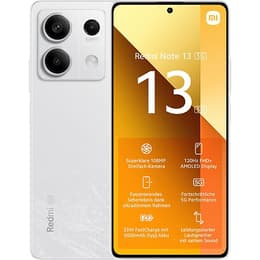
Xiaomi Redmi Note 13
Starting at

Refurbished price:137.00

Versus €340.00 new

See options

Ratings

The Samsung Galaxy S24 Plus, released in early 2024, stands as a premium smartphone offering advanced features and high-end performance. In contrast, the Xiaomi Redmi Note 13, globally launched in early 2024, positions itself as a capable device designed for everyday use. Both devices operate on the Android platform, but they cater to different user expectations regarding power, camera capabilities, and overall user experience.

Scores

Durability

When considering the long-term usability of these devices, several factors come into play, including their release timelines, software support, and physical resilience.

  • Software Longevity: The Galaxy S24 Plus benefits from an extended software support commitment, with Samsung promising approximately seven years of operating system updates and security patches. This provides a longer period of access to new features and security enhancements. The Redmi Note 13 typically receives fewer major Android updates and security patches, generally around two major OS updates and three years of security support, which is common for devices in its category.
  • Physical Durability: The Galaxy S24 Plus features a robust build with Gorilla Glass Victus 2 or Armor protection on its display and an IP68 rating for dust and water resistance, indicating it can withstand immersion in water. The Redmi Note 13 is equipped with Corning Gorilla Glass 3 for screen protection and carries an IP54 rating, offering protection against dust and splashes.
  • Expected Lifespan: Users prioritizing the longest possible software support and a higher degree of physical resilience for accidental exposure to water and dust will find the Galaxy S24 Plus better suited to their needs. The Redmi Note 13 offers adequate protection for typical daily use, but its software support window is shorter.

Year of Release

2024

2024

Compatible with latest Update

Yes

Yes

OS

Android

Android

Foldable

No

No

Performance

The performance of a smartphone is crucial for daily tasks, multitasking, and demanding applications. These two devices offer distinct levels of processing power and memory configurations.

  • Processing Power: The Galaxy S24 Plus is equipped with a current-generation flagship processor, enabling it to handle intensive applications, complex multitasking, and graphically demanding games with smooth and responsive performance. The Redmi Note 13 features a processor designed for efficient everyday operation, capably managing common apps, web browsing, and light gaming.
  • Multitasking and Storage: The Galaxy S24 Plus typically comes with 12GB of RAM, providing ample capacity for seamless switching between numerous applications and maintaining background processes without slowdowns. It also utilizes UFS 4.0 storage, offering fast data read and write speeds. The Redmi Note 13 is available with 6GB or 8GB of RAM, which is sufficient for general multitasking, and uses UFS 2.2 storage, which provides reliable performance for typical smartphone usage. The Redmi Note 13 also supports expandable storage up to 1TB.
  • System Responsiveness: Users who frequently engage in high-performance activities such as advanced mobile gaming, video editing on the go, or running multiple heavy applications simultaneously will experience a more fluid and immediate response from the Galaxy S24 Plus. The Redmi Note 13 delivers a consistent and smooth experience for standard smartphone functions.

Memory (GB)

12 GB

8 GB

Screen quality

The visual experience is a key aspect of smartphone usage, and both devices offer vibrant displays with different characteristics.

  • Display Technology and Resolution: The Galaxy S24 Plus features a 6.7-inch Dynamic AMOLED 2X display with a QHD+ resolution (3120 x 1440 pixels), resulting in a high pixel density of 513 PPI. This provides exceptionally sharp and detailed visuals. The Redmi Note 13 also has a 6.67-inch AMOLED display, offering an FHD+ resolution (2400 x 1080 pixels) with a pixel density of 395 PPI, which delivers clear and vibrant images for everyday viewing.
  • Brightness and Smoothness: The Galaxy S24 Plus boasts a peak brightness of 2600 nits, ensuring excellent visibility even in bright outdoor conditions. Its display also features an adaptive refresh rate that can scale from 1Hz to 120Hz, optimizing power consumption while providing smooth scrolling. The Redmi Note 13 offers a peak brightness of 1800 nits, which is suitable for most outdoor environments, and a consistent 120Hz refresh rate for fluid interactions.
  • Viewing Experience: For users who prioritize the highest level of detail, color accuracy, and brightness for media consumption or detailed work, the Galaxy S24 Plus offers a more refined visual experience. The Redmi Note 13 provides a bright and smooth display that enhances general browsing and video playback.

Resolution

1440 x 3120

1080 x 2400

Screen type

Dynamic LTPO AMOLED 2X

AMOLED

Audiovisual

Camera capabilities are a significant consideration for many users, and these devices approach photography and videography with different hardware and software strengths.

  • Rear Camera System: The Galaxy S24 Plus features a versatile triple-camera setup, including a 50MP main sensor, a 12MP ultra-wide lens, and a 10MP telephoto lens with 3x optical zoom. This configuration allows for detailed shots across various focal lengths. The Redmi Note 13 also has a triple-camera system, highlighted by a 108MP main sensor, an 8MP ultra-wide lens, and a 2MP macro lens.
  • Photography Performance: The Galaxy S24 Plus excels in diverse lighting conditions, producing high-quality images with advanced computational photography and AI features that enhance detail and color. Its telephoto lens provides clear zoomed-in shots. The Redmi Note 13 captures detailed photos in well-lit environments, particularly with its high-resolution main sensor, and offers various shooting modes like Night mode and Portrait mode.
  • Video Recording and Audio: The Galaxy S24 Plus supports video recording up to 8K resolution and includes advanced features like Dual Recording, which allows simultaneous recording with front and rear cameras, and Instant Slow-mo. The Redmi Note 13 records video at up to 1080p at 30fps and also offers a dual video recording feature. Both devices provide a good audio experience, with the Redmi Note 13 featuring dual stereo speakers and Dolby Atmos support for media consumption.

Main camera

50 megapixels

108 megapixels

Front camera

12 megapixels

16 megapixels

Miscellaneous

Beyond core features, several practical elements contribute to the overall user experience and daily convenience.

  • Connectivity and Ports: The Galaxy S24 Plus supports the latest connectivity standards, including 5G, Wi-Fi 6E or Wi-Fi 7, and Bluetooth 5.3, ensuring fast and reliable wireless connections. It features a USB-C 3.2 port for quicker data transfer speeds. The Redmi Note 13 offers 4G or 5G connectivity depending on the variant, Wi-Fi 5, and Bluetooth 5.1 or 5.3. It includes a USB-C 2.0 port and retains a 3.5mm headphone jack, which can be a convenience for some users.
  • Biometric Security and Design: For security, the Galaxy S24 Plus incorporates an ultrasonic in-display fingerprint sensor and face recognition. Its design features an Armor Aluminum frame and a glass back, contributing to a premium feel. The Redmi Note 13 also includes an in-screen fingerprint sensor and AI Face Unlock for security. It has a plastic frame with a glass back, and some variants include an IR blaster for controlling home appliances.
  • Physical Attributes: The Galaxy S24 Plus measures 158.5 x 75.9 x 7.7 mm and weighs 195g. The Redmi Note 13 is slightly larger and thicker at 162.24 x 75.55 x 7.97 mm and weighs 188.5g. These differences can influence how each device feels in hand and its portability.

Weight

197 g

175 g

Screen size (in)

6.7

6.67

Network

5G

5G

SIM card

Dual Physical SIM + eSIM

Dual Physical SIM

Carrier compatibility

Unlocked

Unlocked

Connector

USB-C

USB-C

The Samsung Galaxy S24 Plus and the Xiaomi Redmi Note 13 cater to different segments of the smartphone market, each with its own set of strengths. Users often praise the Galaxy S24 Plus for its exceptional display clarity, powerful performance that handles any task, and its advanced camera system, particularly its telephoto capabilities and comprehensive software support. Some users, however, might note its higher cost as a point of consideration. The Redmi Note 13 is frequently lauded for its vibrant AMOLED display, reliable battery life, and solid performance for everyday applications, often being highlighted as a strong contender in its category. Criticisms sometimes point to its less robust low-light camera performance compared to premium devices and its shorter software update commitment.

Users prioritizing a top-tier mobile experience with cutting-edge performance, a highly detailed display, and extensive software longevity will find the Galaxy S24 Plus well-suited to their needs. This device is ideal for professionals, avid photographers, and power users who demand the best in mobile technology. Conversely, users seeking a dependable smartphone for daily communication, social media, media consumption, and light gaming, who value a bright display and good battery life without needing the absolute highest performance, may prefer the Redmi Note 13. Both devices are available as quality-assured refurbished options, providing an eco-friendly alternative for consumers looking to make informed and sustainable choices.


See all articles

Our recent comparisons