

Galaxy A16 Vs OnePlus 11

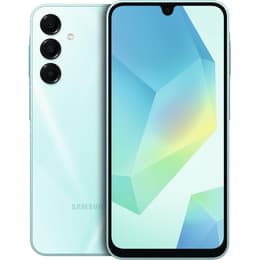
Galaxy A16
Galaxy A16
Starting at

Refurbished price:134.00

Versus €250.00 new

See options
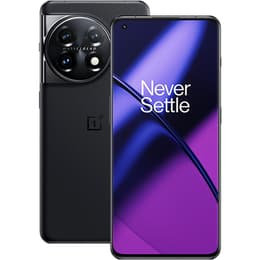
OnePlus 11
OnePlus 11
Starting at

Refurbished price:325.00

Versus €949.00 new

See options

Ratings

The Samsung Galaxy A16, released in late 2024, and the OnePlus 11, launched in early 2023, represent distinct offerings in the Android smartphone market. While the Galaxy A16 focuses on extended software support and essential features, the OnePlus 11 delivers a more performance-oriented experience. Both devices operate on the Android platform, but they cater to different user priorities through their hardware and software philosophies.

Scores

Durability

When considering the longevity of these devices, their respective release timelines and software support policies are key factors.

  • Software Support: The Samsung Galaxy A16 stands out with an impressive commitment of six years of Android operating system upgrades and six years of security updates, with support expected to continue until October 2030. This extended support duration is notable for its segment. In contrast, the OnePlus 11, released earlier, is slated to receive four major Android updates and five years of security updates, extending its functional lifespan well into the future.
  • Practical Lifespan: The Galaxy A16's longer software commitment suggests a device designed for extended practical use, appealing to users who prioritize long-term software relevance. The OnePlus 11, while offering substantial support, will conclude its major OS updates sooner than the A16. Both devices benefit from regular security patches, contributing to their overall durability and user data protection.
  • Build Durability: The OnePlus 11 features Gorilla Glass Victus for display protection, contributing to its resistance against scratches and drops. The Galaxy A16 primarily utilizes plastic materials in its construction.

Year of Release

2024

2023

OS

Android

Android

Foldable

No

No

Performance

The performance capabilities of the Galaxy A16 and OnePlus 11 reflect their different market positions, impacting how they handle daily tasks and demanding applications.

  • Processing Power: The OnePlus 11 is equipped with a high-end processor from its release year, enabling it to handle demanding applications, intensive multitasking, and graphic-rich games with notable smoothness and responsiveness. The Galaxy A16, featuring a mid-range processor, is designed for everyday tasks such as browsing, social media, and light gaming.
  • Multitasking and Storage: The OnePlus 11 offers configurations with up to 16GB of RAM and faster UFS 4.0 storage, contributing to seamless app switching and quicker data access. The Galaxy A16 comes with up to 8GB of RAM and UFS 3.1 storage, which is sufficient for typical smartphone usage, though some users have reported occasional stuttering, particularly with lower RAM variants.
  • Battery Behavior: Both devices house a 5000 mAh battery, providing ample power for a full day of use. The OnePlus 11 is noted for its efficient power management, often extending usage beyond a single day for many users. The Galaxy A16 also offers strong battery endurance, with many users experiencing two days of use with moderate activity.

Memory (GB)

4 GB

16 GB

Screen quality

The visual experience on both smartphones is delivered through vibrant displays, though with some distinctions in their underlying technology and capabilities.

  • Display Technology and Resolution: Both the Galaxy A16 and OnePlus 11 feature AMOLED display technology, known for deep blacks and vivid colors. The OnePlus 11 offers a higher resolution display at 1440 x 3216 pixels (QHD+), resulting in a sharper image with greater detail. The Galaxy A16 provides a Full HD+ resolution of 1080x2340 pixels, which is clear for general viewing.
  • Refresh Rate and Brightness: The OnePlus 11 boasts a 120Hz refresh rate, offering smoother scrolling and more fluid animations, and can dynamically adjust down to 1Hz for power efficiency. The Galaxy A16 features a 90Hz refresh rate, providing a smoother experience than standard 60Hz panels. In terms of brightness, the OnePlus 11 generally offers higher peak brightness, which can improve outdoor visibility, though some users have noted it could be brighter in direct sunlight. The Galaxy A16 has a peak brightness of 800 nits.
  • Screen Size and Protection: Both devices feature a 6.7-inch display, offering an expansive viewing area for media consumption and productivity. The OnePlus 11's display is protected by Corning Gorilla Glass Victus, providing enhanced durability.

Resolution

1080x2340

1440 x 3216

Audiovisual

The camera systems on the Galaxy A16 and OnePlus 11 are designed to capture different levels of detail and offer varying photographic experiences.

  • Rear Camera Systems: The OnePlus 11 features a versatile triple camera setup co-developed with Hasselblad, including a 50MP main sensor with optical image stabilization (OIS), a 48MP ultra-wide lens, and a 32MP telephoto lens with 2x optical zoom. This configuration allows for detailed shots across various focal lengths and performs well in low-light conditions. The Galaxy A16 also has a triple rear camera system, comprising a 50MP main sensor, a 5MP ultra-wide, and a 2MP macro lens. Its main camera captures decent images in good lighting, but the ultra-wide and macro lenses offer less detail.
  • Low-Light and Video Capabilities: The OnePlus 11 excels in low-light photography, producing images with good detail and controlled noise. Its video recording capabilities include 8K at 24fps and 4K at 30/60fps with electronic image stabilization (EIS) and OIS. The Galaxy A16's low-light performance is more modest, with images sometimes appearing muddy or blurry. It records video at 1080p at 30fps, utilizing gyro-EIS for stabilization but lacking OIS.
  • Front Camera: For selfies and video calls, the OnePlus 11 includes a 16MP front camera. The Galaxy A16 features a 13MP front camera. Both are suitable for everyday use, with the OnePlus 11's front camera performing better in well-lit conditions.

Miscellaneous

Beyond core performance and display, several other features contribute to the overall user experience of these smartphones.

  • Connectivity and Ports: Both devices support 5G connectivity, Wi-Fi, Bluetooth 5.3, NFC, and GPS, ensuring modern wireless communication standards. The OnePlus 11 features a USB-C port for charging and data transfer. The Galaxy A16 also uses a USB-C port. Neither device includes a traditional 3.5mm headphone jack.
  • Biometrics and Design: The OnePlus 11 incorporates an in-display fingerprint sensor for secure unlocking. The Galaxy A16 typically features a side-mounted fingerprint sensor. The OnePlus 11 is known for its distinctive design, including an alert slider for quick sound profile changes. The Galaxy A16 has a more conventional design, with dimensions of 164.4 x 77.9 x 7.9 mm and a weight of 200g. The OnePlus 11 measures 163.1 x 74.1 x 8.5 mm and weighs 205g.
  • Additional Features: The OnePlus 11 includes stereo speakers, providing a more immersive audio experience for media consumption. The Galaxy A16 generally lacks stereo speakers. Neither phone supports wireless charging.

Weight

200 g

205 g

Screen size (in)

6.7

6.7

Network

4G

5G

SIM card

Physical SIM

Physical SIM

Carrier compatibility

Unlocked

Unlocked

User feedback for the OnePlus 11 frequently highlights its strong performance, vibrant display, and impressive battery life as key strengths. Many appreciate its rapid charging capabilities and the overall smooth Android experience. Common criticisms sometimes point to the camera, while generally good, not always matching the absolute top-tier flagships, and the absence of wireless charging is occasionally noted.

For the Samsung Galaxy A16, users consistently praise its exceptional battery life and the commitment to six years of software updates, which is a significant advantage for long-term usability. However, some users express concerns regarding its performance, noting occasional lag or stuttering, especially with lower RAM configurations, and the camera system is often described as adequate for basic use but not outstanding.

Users prioritizing a device with robust performance for demanding applications, a high-resolution display, and very fast wired charging may find the OnePlus 11 well-suited to their needs. Conversely, individuals who value extended software longevity, reliable all-day battery life, and a more budget-conscious approach to smartphone ownership will likely lean towards the Samsung Galaxy A16. Both devices offer compelling features for their respective audiences, and considering a quality-assured refurbished option for either model can provide an eco-friendly alternative for consumers.


See all articles

Our recent comparisons