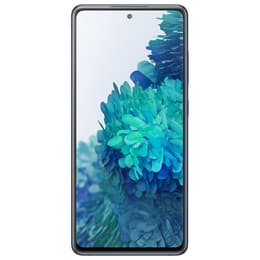
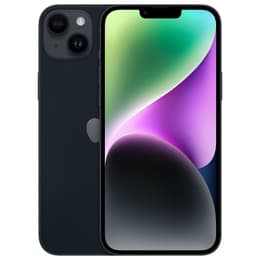


Galaxy S20 FE Vs iPhone 14 Plus

Galaxy S20 FE
Galaxy S20 FE
Starting at

Refurbished price:151.00

Versus €779.00 new

See options
iPhone 14 Plus
iPhone 14 Plus
Starting at

Refurbished price:317.00

Versus €879.00 new

See options

Ratings

The Samsung Galaxy S20 FE, released in October 2020, is an Android-based smartphone that offers a blend of flagship features from its era. The iPhone 14 Plus, launched in October 2022, is an iOS device known for its large display and extended battery life. These two devices cater to different ecosystems and user preferences, with the iPhone 14 Plus introducing enhanced safety features and a more recent operating system.

Scores

Durability

The practical lifespan of a smartphone is influenced by its release timeline, ongoing software support, and physical durability.

  • Release Timeline: The Galaxy S20 FE was released in October 2020, while the iPhone 14 Plus followed in October 2022. This two-year difference means the iPhone 14 Plus benefits from a longer period of anticipated software updates and security patches.
  • Software Longevity: The Galaxy S20 FE launched with Android 10 and is upgradable to Android 13, with Samsung typically providing several years of major OS updates and security patches. The iPhone 14 Plus launched with iOS 16 and is expected to receive iOS updates for a longer duration, generally around 5-6 years from its release, extending its software support further into the future.
  • Physical Durability: Both devices offer IP68 water and dust resistance, meaning they can withstand submersion in water up to 6 meters for 30 minutes for the iPhone 14 Plus, and up to 1.5 meters for 30 minutes for the Galaxy S20 FE. The iPhone 14 Plus features a Ceramic Shield front cover for enhanced drop performance, while the Galaxy S20 FE uses Gorilla Glass 3. The Galaxy S20 FE is considered moderately repairable, scoring 7.5/10, with components like the battery and screen requiring some effort to replace.

Year of Release

2020

2022

Compatible with latest Update

No

Yes

OS

Android

iOS

Foldable

No

No

Performance

Performance in smartphones is determined by the internal processing unit, affecting app responsiveness, multitasking capabilities, and gaming experiences.

  • Processing Power: The Galaxy S20 FE is equipped with a processor that handles everyday tasks smoothly, including switching between multiple applications and running graphics-intensive games. The iPhone 14 Plus features a more advanced processing unit, providing faster CPU and GPU speeds, which translates to smoother operation for demanding applications, complex multitasking, and high-fidelity gaming.
  • System Responsiveness: Users of the Galaxy S20 FE generally report a responsive experience, though some noted occasional minor lag when exiting to the home screen. The iPhone 14 Plus offers a highly fluid and responsive user experience across the operating system and applications, benefiting from its optimized hardware and software integration.
  • Storage and Multitasking: The Galaxy S20 FE offers 6GB or 8GB of RAM and storage options of 128GB or 256GB, with the added flexibility of expandable storage up to 1TB via a microSD card. The iPhone 14 Plus comes with 6GB of RAM and storage options of 128GB, 256GB, or 512GB, but does not support expandable storage.

Memory (GB)

6 GB

6 GB

Screen quality

The display is a primary interface for smartphone interaction, with differences in technology, resolution, and refresh rate impacting the visual experience.

  • Display Technology and Clarity: The Galaxy S20 FE features a 6.5-inch Super AMOLED display with a resolution of 1080 x 2400 pixels, resulting in a pixel density of approximately 407 PPI. The iPhone 14 Plus has a larger 6.7-inch Super Retina XDR OLED display with a resolution of 2778 x 1284 pixels, offering a higher pixel density of 458 PPI. Both displays provide vibrant colors and deep blacks.
  • Brightness and Refresh Rate: The Galaxy S20 FE boasts a 120Hz refresh rate, contributing to smoother scrolling and more fluid animations. The iPhone 14 Plus features a standard 60Hz refresh rate. For brightness, the iPhone 14 Plus offers a typical maximum brightness of 800 nits and a peak HDR brightness of 1200 nits, which can be beneficial for outdoor visibility.
  • Viewing Experience: The larger screen size of the iPhone 14 Plus provides more screen real estate for media consumption and productivity. The Galaxy S20 FE's 120Hz refresh rate enhances the perceived smoothness of content, particularly during gaming or scrolling.

Resolution

1080 x 2400

1284 x 2778

Screen type

Super AMOLED

Super Retina XDR OLED

Audiovisual

Camera systems are a key differentiator, influencing the quality of photos and videos captured in various conditions.

  • Rear Camera System: The Galaxy S20 FE features a versatile triple-camera setup, including a 12MP wide-angle lens with optical image stabilization (OIS), an 8MP telephoto lens offering 3x optical zoom and up to 30x digital 'Space Zoom' with OIS, and a 12MP ultrawide lens. The iPhone 14 Plus comes with a dual-camera system, comprising a 12MP main wide-angle lens with sensor-shift OIS and a 12MP ultrawide lens.
  • Photography Performance: The Galaxy S20 FE is noted for its capable photography, especially its telephoto zoom capabilities and features like Night mode and Single Take AI. The iPhone 14 Plus offers improved low-light performance and features like Photonic Engine, Deep Fusion, and Smart HDR 4, contributing to detailed and color-accurate images.
  • Video Recording and Audio: Both devices support 4K video recording. The Galaxy S20 FE records at 4K@30fps. The iPhone 14 Plus supports 4K Dolby Vision HDR video recording at up to 60fps, along with advanced features like Cinematic mode for shallow depth-of-field effects and Action mode for enhanced video stabilization.

Main camera

12 megapixels

12 megapixels

Front camera

32 megapixels

12 megapixels

Miscellaneous

Beyond core specifications, practical elements like connectivity, physical design, and unique features contribute to the overall user experience.

  • Connectivity and Ports: Both smartphones support 5G cellular connectivity and Wi-Fi 6. The Galaxy S20 FE uses a USB-C port for charging and data transfer, while the iPhone 14 Plus utilizes Apple's Lightning port. The iPhone 14 Plus (US models) exclusively uses eSIM, whereas the Galaxy S20 FE supports physical Nano-SIM and eSIM.
  • Sensors and Security: The Galaxy S20 FE features an in-display fingerprint sensor for biometric authentication. The iPhone 14 Plus relies on Face ID for secure facial recognition. The iPhone 14 Plus also includes advanced safety features like Crash Detection and Emergency SOS via Satellite.
  • Dimensions and Build: The Galaxy S20 FE measures 159.8 x 74.5 x 8.4 mm and weighs 190g, featuring a plastic back and Gorilla Glass 3 front. The iPhone 14 Plus is slightly larger and heavier at 160.8 x 78.1 x 7.8 mm and 203g, with a Ceramic Shield front, glass back, and aluminum frame.

Weight

190 g

150 g

Screen size (in)

6.5

6.7

Network

4G

5G

SIM card

Dual Physical SIM

eSIM

Carrier compatibility

Unlocked

Unlocked

User feedback for the Samsung Galaxy S20 FE often highlights its strong performance for its class, the versatility of its camera system, particularly the telephoto lens, and the benefit of expandable storage. Some users appreciate its 120Hz display for smooth interactions. Common criticisms sometimes point to its plastic back, which some perceive as less premium, and the battery life, which can be impacted by the 120Hz refresh rate. The in-display fingerprint sensor has also received mixed reviews regarding its speed and accuracy.

The iPhone 14 Plus is frequently praised for its exceptional battery life, often lasting two days or more for many users, and its large, vibrant OLED display. Its improved camera system, especially for low-light photography and advanced video features like Cinematic and Action modes, is also a strong point. However, some users express disappointment with the standard 60Hz refresh rate, especially when compared to many Android devices in its category, and the absence of a dedicated telephoto lens. The iterative nature of some upgrades from previous iPhone models is also a recurring comment.

Users prioritizing a long-lasting battery and a large, high-quality display for media consumption and general use, coupled with Apple's ecosystem and advanced safety features, may find the iPhone 14 Plus well-suited to their needs. Those who value a versatile camera system with optical zoom, a high refresh rate display, expandable storage, and the Android ecosystem's flexibility might lean towards the Galaxy S20 FE. Both devices offer a quality-assured refurbished option, providing an eco-friendly alternative for consumers seeking reliable technology.
See all articles

Our recent comparisons






