

Google Pixel 7A Vs Google Pixel 8

Google Pixel 7A
Google Pixel 7A
Starting at

Refurbished price:177.00

Versus €649.99 new

See options
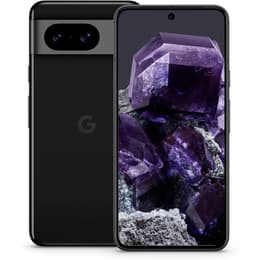
Google Pixel 8
Google Pixel 8
Starting at

Refurbished price:235.00

Versus €999.00 new

See options

Ratings

The Google Pixel 7A (released May 2023) and the Google Pixel 8 (released October 2023) are both Android smartphones from Google, offering distinct experiences within a similar ecosystem. While the Pixel 7A serves as a more accessible option, the Pixel 8 introduces a newer processor, enhanced camera capabilities, and a significantly longer software support commitment.

Scores

Durability

When considering the longevity of these devices, their release timelines and software support policies are key differentiators.

  • Release Timeline: The Pixel 7A was released in May 2023, making it slightly older than the Pixel 8, which launched in October 2023. This difference in release date impacts their respective support windows.
  • OS and Security Updates: The Pixel 7A is expected to receive five years of OS and security updates, with OS updates until May 2026 and security updates until May 2028. In contrast, the Pixel 8 boasts an extended commitment of seven years of OS and security updates, lasting until October 2030. This makes the Pixel 8 a more future-proof option for users prioritizing long-term software support.
  • Durability and Repairability: The Pixel 7A features Corning Gorilla Glass 3 for display protection and an IP67 rating for dust and water resistance. The Pixel 8 upgrades to the more robust Corning Gorilla Glass Victus and an IP68 rating, offering enhanced protection against dust and water immersion.

Year of Release

2023

2023

Compatible with latest Update

Yes

Yes

OS

Android

Android

Foldable

No

No

Performance

Both devices are powered by Google's custom-designed processors, influencing their speed and efficiency in daily use.

  • Processor Capabilities: The Pixel 7A is equipped with the Google Tensor G2 processor, which handles demanding applications and multitasking smoothly. The Pixel 8 features the newer Google Tensor G3 processor, offering improved efficiency, performance, and enhanced AI capabilities for a more responsive user experience.
  • Storage and RAM: Both models come with 8 GB of RAM, ensuring capable multitasking. The Pixel 7A offers 128 GB of internal storage, while the Pixel 8 provides options for 128 GB or 256 GB, neither of which are expandable.
  • Battery Performance: The Pixel 7A has a 4385 mAh battery, supporting 18W wired and 7.5W wireless charging. User reports for the Pixel 7A sometimes mention concerns about battery drain and slower charging speeds. The Pixel 8 includes a slightly larger 4575 mAh battery with faster 27W wired and 18W wireless charging capabilities.

Memory (GB)

8 GB

8 GB

Screen quality

The display is a primary interface for smartphones, and both Pixels offer vibrant viewing experiences with some key distinctions.

  • Display Technology and Size: The Pixel 7A features a 6.1-inch OLED display, providing deep blacks and vibrant colors. The Pixel 8 has a slightly larger 6.2-inch OLED display, which Google refers to as an 'Actua display,' designed for better color accuracy and higher brightness.
  • Resolution and Refresh Rate: Both phones offer a 1080p (2400 x 1080 pixels) resolution, resulting in sharp visuals. The Pixel 7A has a 90 Hz refresh rate for smoother scrolling and animations. The Pixel 8 enhances this with a variable refresh rate that can go from 60 Hz up to 120 Hz, offering a more fluid experience, especially in supported content and games.
  • Brightness: The Pixel 8's display can reach a peak brightness of up to 2000 nits, making it highly visible even in bright outdoor conditions, a notable improvement over the Pixel 7A's brightness levels.

Resolution

1080 x 2400

1080 x 2400

Screen type

OLED

OLED

Audiovisual

Google Pixel phones are renowned for their camera capabilities, and both the 7A and 8 continue this tradition with advanced computational photography.

  • Rear Camera System: The Pixel 7A features a dual-camera setup with a 64 MP wide-angle lens (f/1.9 with OIS) and a 13 MP ultrawide lens (f/2.2, 120˚ field of view). The Pixel 8 also has a dual-camera system, but with an upgraded 50 MP wide-angle lens (f/1.68 with OIS) that lets in more light, and a 12 MP ultrawide lens (f/2.2, 125.8˚) that includes autofocus for macro shots.
  • Photography Performance: Both devices excel in producing detailed photos with accurate colors, especially in good lighting. The Pixel 7A's main camera uses pixel-binning to deliver detailed 16MP photos and performs well in low light. The Pixel 8's improved main sensor and advanced AI features contribute to better low-light performance and new photographic tools like 'Best Take' for group photos.
  • Video Recording and Front Camera: Both phones support 4K video recording at 30 or 60 frames per second. The Pixel 7A has a 13 MP ultrawide front camera. The Pixel 8 features a 10.5 MP ultrawide front camera, which has fixed focus.

Main camera

64 megapixels

50 megapixels

Front camera

13 megapixels

10.5 megapixels

Miscellaneous

Beyond core specifications, several practical elements contribute to the overall user experience of these smartphones.

  • Connectivity and Ports: The Pixel 7A supports Wi-Fi 6E and Bluetooth 5.3, along with 5G connectivity. The Pixel 8 steps up to Wi-Fi 7, offering potentially faster wireless speeds, while also retaining Bluetooth 5.3 and 5G. Both devices utilize a USB-C 3.2 port for charging and data transfer.
  • Biometric Security: Both phones feature an under-display optical fingerprint scanner. The Pixel 7A also offers face unlock, though it is noted as less secure than the fingerprint option. The Pixel 8 includes face unlock as well.
  • Design and Handling: The Pixel 7A measures 152 mm x 72.9 mm x 9 mm and weighs 193.5 g. It features a polycarbonate back panel. The Pixel 8 is slightly more compact and lighter at 150.5 mm x 70.8 mm x 8.9 mm and 187 g, with a refined design.

Weight

193 g

187 g

Screen size (in)

6.1

6,2

Network

5G

5G

SIM card

Physical SIM + eSIM

Physical SIM + eSIM

Carrier compatibility

Unlocked

Unlocked

Connector

USB-C

USB-C

The Google Pixel 7A and Pixel 8 both offer compelling Android experiences, each suited to different user priorities. User feedback for the Pixel 7A often praises its exceptional camera quality for its segment and its overall performance for everyday tasks. However, some common criticisms include potential overheating, battery drain concerns, and an inconsistent fingerprint scanner.

The Pixel 8, being the newer model, generally receives positive reviews for its hardware and software enhancements, particularly its advanced AI features and improved camera system. Its significantly longer software support commitment is a frequently highlighted advantage.

Users prioritizing extended software longevity, a brighter and smoother display, and enhanced camera capabilities with advanced AI features will find the Google Pixel 8 well-suited to their needs. Its improved durability rating also offers an advantage. Conversely, users who value a slightly more compact form factor and a capable camera system without needing the absolute latest features or the longest software support might lean towards the Google Pixel 7A. Both devices represent solid choices within the Android ecosystem, and opting for a quality-assured refurbished option can be a sustainable choice for either model.


See all articles

Our recent comparisons