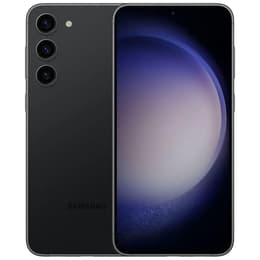


Galaxy S23+ Vs Xiaomi Redmi Note 14 4G

Galaxy S23+
Galaxy S23+
Starting at

Refurbished price:295.00

Versus €1,019.00 new

See options
Xiaomi Redmi Note 14 4G
Starting at

Refurbished price:162.00

Versus €229.99 new

See options

Ratings

The Samsung Galaxy S23 Plus, released in February 2023, and the Xiaomi Redmi Note 14 4G, launched in late 2024 or early 2025, represent different segments of the smartphone market. While both devices operate on the Android platform, they cater to distinct user priorities through their hardware and software offerings. The Galaxy S23 Plus focuses on premium performance and advanced camera capabilities, whereas the Redmi Note 14 4G emphasizes a large display and extended battery life for everyday use.

Scores

Durability

When considering the long-term usability of a smartphone, factors like software support, physical durability, and repairability are key. These aspects contribute significantly to a device's practical lifespan.

  • Software Longevity: The Samsung Galaxy S23 Plus launched with Android 13 and is expected to receive four major OS updates and five years of security updates, extending its software support well into 2028. This provides a longer period of access to new features and security patches. The Xiaomi Redmi Note 14 4G, launching with Android 14 and HyperOS, is likely to receive fewer major OS updates compared to the Galaxy S23 Plus, potentially offering a shorter window for the latest Android versions.
  • Physical Durability: The Galaxy S23 Plus features Gorilla Glass Victus 2 on both its front and back, coupled with an Armor Aluminum frame, and boasts an IP68 rating for significant dust and water resistance. The Redmi Note 14 4G utilizes Corning Gorilla Glass 5 for screen protection and carries an IP54 or IP64 rating, indicating a degree of dust and splash resistance, though less comprehensive than the S23 Plus.
  • Practical Lifespan: Users can expect the Galaxy S23 Plus to remain a capable device for a longer duration due to its extended software support and more robust build materials. The Redmi Note 14 4G, while durable for its class, may see its practical lifespan limited by fewer software updates and a lower water resistance rating.

Year of Release

2023

2025

OS

Android

Android

Foldable

No

No

Performance

The performance of a smartphone is crucial for daily tasks, from navigating apps to demanding gaming sessions. Both devices offer different levels of processing power and memory configurations.

  • Processing Power: The Samsung Galaxy S23 Plus is equipped with a high-end processor designed for demanding applications and efficient multitasking, ensuring smooth operation even with intensive use. The Xiaomi Redmi Note 14 4G features a MediaTek Helio G99 Ultra chipset, which provides reliable performance for everyday tasks and moderate gaming, though it may not match the raw power of the S23 Plus for very heavy workloads.
  • Memory and Storage: The Galaxy S23 Plus comes with 8GB of RAM and offers internal storage options of 256GB or 512GB, providing ample space and smooth multitasking capabilities. The Redmi Note 14 4G is available with 6GB or 8GB of RAM and 128GB or 256GB of internal storage, with the added flexibility of expandable storage via a microSDXC card, which can be beneficial for users who require more space for media and files.
  • Battery Behavior: The Galaxy S23 Plus houses a 4700 mAh battery, which, combined with its efficient processor, generally provides excellent battery life, often lasting a full day or more for many users. The Redmi Note 14 4G features a larger 5500 mAh battery, designed to offer extended usage times, potentially stretching to two days for average users.

Memory (GB)

8 GB

6 GB

Screen quality

The display is a primary interface for any smartphone, and its quality significantly impacts the user experience, from viewing content to outdoor visibility.

  • Display Technology and Clarity: The Samsung Galaxy S23 Plus features a 6.6-inch Dynamic AMOLED 2X display with a resolution of 1080 x 2340 pixels, offering vibrant colors, deep blacks, and excellent contrast. The Xiaomi Redmi Note 14 4G comes with a slightly larger 6.67-inch AMOLED display, also with a 1080 x 2400 pixel resolution, providing a clear and immersive viewing experience.
  • Brightness and Refresh Rate: Both devices offer a 120Hz refresh rate for smooth scrolling and responsive interactions. The Galaxy S23 Plus can reach a peak brightness of up to 1750 nits, ensuring good visibility even in bright outdoor conditions. The Redmi Note 14 4G also offers high peak brightness, typically around 1800 nits, making it well-suited for outdoor use.
  • Viewing Experience: The Galaxy S23 Plus's adaptive refresh rate can adjust to conserve battery life, while its Dynamic AMOLED 2X panel provides a premium visual experience. The Redmi Note 14 4G's larger screen size might appeal to users who prioritize more screen real estate for media consumption or productivity.

Resolution

1080 x 2340

1080x2400

Audiovisual

Camera capabilities are a significant consideration for many smartphone users, influencing how they capture and share moments. Both phones offer different camera setups.

  • Rear Camera System: The Samsung Galaxy S23 Plus features a versatile triple-camera system, including a 50 MP main sensor with optical image stabilization (OIS), a 12 MP ultrawide lens, and a 10 MP telephoto lens with 3x optical zoom. This setup allows for a wide range of photographic styles, from expansive landscapes to detailed zoomed-in shots. The Xiaomi Redmi Note 14 4G primarily relies on a high-resolution 108 MP main sensor, which can capture detailed images, often utilizing pixel-binning technology for improved light capture. It also includes 2 MP macro and depth sensors, though some user reviews suggest the absence of a dedicated ultrawide lens can be a limitation.
  • Photography Performance: The Galaxy S23 Plus excels in various lighting conditions, producing sharp images with natural colors and strong low-light performance, particularly with its main and telephoto lenses. Its video recording capabilities extend to 8K resolution at 30fps and 4K at 60fps, offering high-quality video capture. The Redmi Note 14 4G's 108 MP main camera performs well in good lighting, delivering detailed photos, but its low-light performance may not match that of the S23 Plus. Video recording is typically limited to 1080p at 30fps.
  • Front Camera and Audio: For selfies, the Galaxy S23 Plus has a 12 MP front camera. The Redmi Note 14 4G features a 20 MP front camera. Both devices offer stereo speakers for media consumption, with the Redmi Note 14 4G also featuring Dolby Atmos support.

Miscellaneous

Beyond core specifications, several practical features and design elements contribute to the overall user experience and device utility.

  • Connectivity and Ports: The Samsung Galaxy S23 Plus supports 5G connectivity, Wi-Fi 6E, and Bluetooth 5.3, along with a USB Type-C 3.2 port, offering fast data transfer and modern wireless standards. It also includes Ultra-Wideband (UWB) for enhanced spatial awareness features. The Xiaomi Redmi Note 14 4G provides 4G connectivity, Wi-Fi 5 (dual-band), and Bluetooth 5.3. It features a USB Type-C port and retains a 3.5mm headphone jack, which can be a convenience for users with wired audio accessories. It also includes an IR blaster for controlling home appliances.
  • Biometrics and Design: The Galaxy S23 Plus incorporates an under-display ultrasonic fingerprint sensor and face recognition for secure unlocking. Its design is characterized by an Armor Aluminum frame and Gorilla Glass Victus 2, contributing to a premium feel and durability. The Redmi Note 14 4G also features an in-display fingerprint reader and face unlock. Its design includes Corning Gorilla Glass 5 for screen protection and a matte finish on the back.
  • Dimensions and Handling: The Galaxy S23 Plus measures 157.8 x 76.2 x 7.6 mm and weighs 195g, offering a balanced feel in hand. The Redmi Note 14 4G is slightly larger and heavier at 163.25 x 76.55 x 8.16 mm and 196.5g, which might appeal to users who prefer a more substantial device.

Weight

168 g

196 g

Screen size (in)

6.6

6.67

Network

5G

4G

SIM card

Dual Physical SIM + eSIM

Physical SIM + eSIM

Carrier compatibility

Unlocked

Unlocked

User feedback for the Samsung Galaxy S23 Plus often highlights its strong performance, excellent camera system, and vibrant display as key strengths. Some users appreciate its refined design and robust build quality. Criticisms, though less frequent, sometimes point to its battery life not always matching the larger Ultra model, or its iterative upgrades over its predecessor.

For the Xiaomi Redmi Note 14 4G, common praise centers on its large, bright AMOLED display, impressive battery life, and the inclusion of features like a 3.5mm headphone jack and expandable storage. Users often find its performance sufficient for daily tasks. However, some reviews note the absence of an ultrawide camera and potentially weaker low-light photography compared to higher-end devices.

Users prioritizing a premium build, advanced camera capabilities, and long-term software support will find the Samsung Galaxy S23 Plus well-suited to their needs. Its powerful processor and comprehensive feature set make it a strong choice for demanding users. Conversely, individuals who value an expansive display, exceptional battery endurance, and practical features like a headphone jack and expandable storage may lean towards the Xiaomi Redmi Note 14 4G. This device is a compelling option for those seeking a reliable daily driver with a focus on media consumption and extended usage.

Both devices offer distinct advantages, and choosing between them depends on individual priorities. For those seeking an eco-friendly and quality-assured alternative, considering refurbished options for either model can provide a sustainable choice without compromising on functionality.

See all articles

Our recent comparisons