
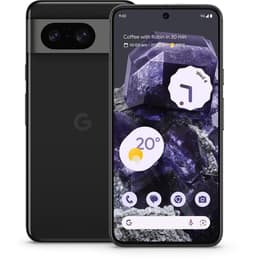


Google Pixel 7 Vs Google Pixel 8a

Google Pixel 7
Google Pixel 7
Starting at

Refurbished price:184.00

Versus €756.00 new

See options
Google Pixel 8a
Google Pixel 8a
Starting at

Refurbished price:236.00

Versus €549.00 new

See options

Ratings

The Google Pixel 7, released in October 2022, and the Google Pixel 8a, launched in May 2024, represent different segments within Google's smartphone lineup. While both devices operate on the Android platform and offer a clean software experience, the Pixel 8a introduces a newer processor and an extended software support policy, alongside updates to its display and camera specifications. The Pixel 7, as an earlier flagship, features a more premium build and higher water resistance.

Scores

Durability

When considering the long-term usability of these devices, their release timelines and software support policies are key factors.

  • Release and Support: The Google Pixel 7, released in October 2022, is guaranteed five years of OS and security updates, extending its support until at least October 2027 for security updates and potentially Android 17 or 18 for OS updates. The Google Pixel 8a, launched in May 2024, offers a more extensive seven years of OS and security updates, ensuring support until at least May 2031.
  • Practical Lifespan: Users can expect both phones to remain functional and secure for several years, with the Pixel 8a having a longer official support window. The Pixel 7 features Gorilla Glass Victus on its front for enhanced scratch and drop resistance, while the Pixel 8a uses Gorilla Glass 3.
  • Repairability: The Pixel 7 has been noted to be relatively repairable, with screen replacements being manageable, though battery removal can be complex due to strong adhesive and the charging port is soldered to the main board. The Pixel 8a also uses strong adhesive for its back cover and battery, and its charging port is soldered, making certain repairs challenging.

Year of Release

2022

2024

Compatible with latest Update

Yes

Yes

OS

Android

Android

Foldable

No

No

Performance

Both the Pixel 7 and Pixel 8a are designed to deliver a smooth Android experience, but they differ in their underlying processing power and how that translates to daily use.

  • Processing Capabilities: The Pixel 7 is powered by a processor that handles everyday applications and multitasking efficiently, providing a responsive user experience. The Pixel 8a features a newer generation processor, which offers improved performance for demanding applications, faster AI-driven features, and potentially better long-term efficiency.
  • System Responsiveness: For general usage, both devices offer a fluid interface and quick app loading times. The newer processor in the Pixel 8a provides additional headroom, which can be beneficial for future software updates and more intensive tasks like advanced mobile gaming or complex photo and video editing.
  • Battery Behavior: The Pixel 7 includes a 4355 mAh battery, generally providing solid battery life that can last through a full day of moderate to heavy use. The Pixel 8a has a slightly larger 4492 mAh battery. While some users report it lasting a full day, others note that heavy usage might require more frequent charging.

Memory (GB)

8 GB

8 GB

Screen quality

The visual experience on both Pixel phones is vibrant, though there are distinctions in display technology and features that impact clarity and smoothness.

  • Display Technology and Size: The Pixel 7 features a 6.3-inch OLED display, offering deep blacks and rich colors. The Pixel 8a comes with a slightly smaller 6.1-inch OLED display. Both displays have a 1080x2400 Full HD+ resolution, ensuring sharp visuals for text and images.
  • Refresh Rate and Brightness: The Pixel 7 has a 90Hz refresh rate, providing a smooth scrolling experience. The Pixel 8a upgrades this to a 120Hz refresh rate, resulting in even smoother animations and responsiveness. The Pixel 8a also boasts a higher peak brightness of 2000 nits, compared to the Pixel 7's 1400 nits, which can improve visibility in bright outdoor conditions.
  • Durability: The Pixel 7's display is protected by Gorilla Glass Victus, offering a higher level of resistance against scratches and drops. The Pixel 8a uses Gorilla Glass 3 for its display protection.

Resolution

1080 x 2400

1080 x 2400

Screen type

AMOLED

OLED

Audiovisual

Both Pixel devices are known for their camera capabilities, leveraging Google's computational photography to produce high-quality images, though with some hardware differences.

  • Rear Camera System: The Pixel 7 features a dual-camera setup with a 50MP main sensor and a 12MP ultrawide sensor. The Pixel 8a also has a dual-camera system, with a 64MP main sensor and a 13MP ultrawide sensor. Despite the Pixel 8a's higher megapixel count, the Pixel 7's main sensor is noted for being physically larger, which can lead to better light sensitivity and image quality in various conditions.
  • Photography Performance: Both phones excel in everyday photography, producing images with accurate colors and good detail. They offer strong low-light performance with Google's Night Sight. The Pixel 7's main camera is praised for its ability to capture detail and handle challenging lighting. The Pixel 8a's camera is considered adequate for most users, delivering true colors and high quality, especially for general photos.
  • Video and Front Camera: Both devices are capable of recording video at up to 4K resolution at 60 frames per second with their main cameras. The Pixel 7 has a 10.8MP front camera, while the Pixel 8a features a 13MP front camera.

Main camera

50 megapixels

64 megapixels

Front camera

10.8 megapixels

13 megapixels

Miscellaneous

Beyond core performance, several practical elements differentiate the Pixel 7 and Pixel 8a, influencing daily convenience and overall user experience.

  • Connectivity and Ports: Both smartphones support 5G connectivity, ensuring access to faster mobile networks. They also feature modern Wi-Fi standards and Bluetooth for wireless connections. Both devices utilize a USB-C port for charging and data transfer.
  • Physical Design and Durability: The Pixel 7 has a glass back and an IP68 rating for dust and water resistance, meaning it can withstand submersion in up to 1.5 meters of water for 30 minutes. The Pixel 8a features a soft-touch plastic back and an IP67 rating, offering protection against dust and submersion in up to 1 meter of water for 30 minutes. The Pixel 7 is slightly larger and heavier at 155.6 x 73.2 x 8.7 mm and 197g, compared to the Pixel 8a's 152.1 x 72.7 x 8.9 mm and 188g.
  • Security and Sensors: Both models include an under-display optical fingerprint scanner for secure unlocking. They also offer face recognition capabilities.

Weight

197 g

188 g

Screen size (in)

6.3

6.1

Network

5G

5G

SIM card

Physical SIM + eSIM

Physical SIM + eSIM

Carrier compatibility

Unlocked

Unlocked

The Google Pixel 7 and Pixel 8a each present a compelling package, catering to slightly different user priorities. The Pixel 7, an earlier flagship, is often praised for its robust build quality, including a glass back and higher IP68 water resistance, along with a slightly larger display. Users frequently highlight its camera system as a strong point, delivering excellent photos with Google's computational photography. Some users have noted that while its battery life is generally solid, it might not be class-leading for extremely heavy usage.

The Pixel 8a, as a newer release, benefits from an extended software support policy, promising seven years of updates, which is a significant advantage for long-term use. It also features a more modern processor, contributing to smoother performance and enhanced AI capabilities. Its display offers a higher refresh rate and increased brightness, improving the visual experience. However, some users have pointed out that its build materials are less premium than the Pixel 7, and its water resistance rating is slightly lower.

Users prioritizing a more durable build and a slightly larger screen with a proven camera system may find the Pixel 7 well-suited to their needs. Conversely, those who value the longest possible software support, a smoother display, and the latest processing advancements might lean towards the Pixel 8a. Both devices offer a clean Android experience and strong camera performance, making them suitable for a wide range of users. For those seeking an eco-friendly alternative, both models are available as quality-assured refurbished options, extending their lifecycle and reducing electronic waste.