
Compare models
Galaxy Z Flip7 Vs Google Pixel Fold
- 1-year minimum warranty
- Free delivery on all orders
- Free 30-day returns
Differences at a glance
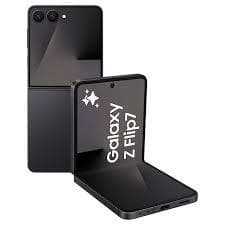
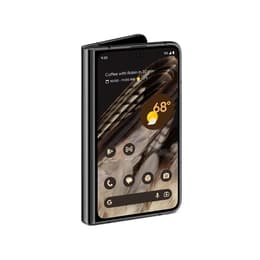
The Samsung Galaxy Z Flip7 (2025) and the Google Pixel Fold (2023) represent two entirely different approaches to folding mobile technology. While Samsung prioritizes a compact clamshell layout that fits easily into small pockets, Google opts for a passport-style book format that opens into a tablet-sized screen. These devices run on the Android operating system, though they deliver distinct software experiences tailored to their respective hardware designs.
Available Models
Colour
Storage
Scores
Durability
When evaluating the long-term viability of these two folding devices, differences in their release timelines and support windows play a major role in their expected practical lifespans.
- Release timeline: The Galaxy Z Flip7 launched in 2025, benefiting from newer hardware standards, whereas the Google Pixel Fold debuted in 2023 as an earlier generation of book-style foldables.
- Software support: Samsung provides multi-year operating system upgrades and security patches extending well into the 2030s, while the Pixel Fold relies on Google's multi-year update commitment starting from its earlier release year.
- Repairability: Both clamshell and book-style folding structures require specialized care regarding their flexible inner screens, meaning users should handle hinge mechanisms and inner panels with mindfulness over years of daily use.
Year of Release
2025
2023
Performance
Under everyday workloads, both smartphones deliver smooth handling for multitasking, streaming, and running demanding applications, though their internal component generations differ.
- System responsiveness: Applications launch instantly, and multitasking across split screens runs smoothly on both models, driven by ample memory configurations.
- Battery behavior: The Galaxy Z Flip7 manages power efficiently for a clamshell frame during standard daily usage, while the Pixel Fold utilizes a larger battery capacity to support its expansive inner display during extended viewing sessions.
- Storage capacity: Both models offer spacious internal storage tiers starting at 256GB, accommodating extensive offline media libraries, application data, and high-resolution photo collections without frequent cleanups.
Screen quality
Display configurations define the core identity of both devices, offering vibrant viewing experiences that adapt to different form factors.
- Display technology: Both models utilize advanced OLED panels across their external and internal screens, delivering deep black levels, high contrast ratios, and sharp text clarity.
- Refresh rate: Both outer and inner displays feature smooth high refresh rates, ensuring fluid scrolling through web pages and responsive touch tracking during navigation.
- Outdoor visibility: High peak brightness levels on the exterior and interior screens allow both devices to remain legible under direct sunlight, though form factor shapes how content is displayed.
Audiovisual
Photography and media consumption capabilities vary significantly based on the physical layout and lens arrangements of each device.
- Camera systems: The Galaxy Z Flip7 features a versatile dual-lens rear setup paired with unique folding angles for hands-free framing, while the Pixel Fold incorporates a triple-lens rear array including dedicated optical zoom capabilities.
- Low-light performance: Both devices capture detailed images in challenging lighting conditions, relying on advanced software processing to reduce visual noise and preserve natural colors.
- Audio output: Stereo speakers on both models deliver clear sound reproduction for casual video viewing, hands-free calls, and media playback.
Miscellaneous
Practical daily usability is shaped by physical dimensions, weight distribution, and connectivity standards embedded within each chassis.
- Dimensions and weight: The Galaxy Z Flip7 folds into a compact, pocket-friendly square weighing 188 grams, whereas the Google Pixel Fold adopts a wider book-style profile weighing 283 grams for dual-screen productivity.
- Connectivity: Both smartphones support modern 5G cellular networks, high-speed Wi-Fi standards, and Bluetooth accessories for reliable wireless pairing on the go.
- Biometrics and security: Fast biometric authentication via fingerprint sensors and facial recognition ensures quick, secure device unlocking tailored to each model's physical button placement.
Screen size (in)
6.9
7.6
Network
5G
5G
SIM card
Physical SIM + eSIM
Physical SIM + eSIM
Carrier compatibility
Unlocked
Unlocked
Connector
USB-C
USB-C
What the community thinks
User feedback from online communities highlights distinct preferences for these two folding form factors. Owners of the Galaxy Z Flip7 frequently praise its lightweight clamshell pocketability and updated cover screen utility, though some users note that intensive gaming can lead to noticeable warmth near the hinge. Conversely, Pixel Fold users consistently highlight the expansive inner screen for productivity and media viewing as a major advantage, while pointing out that the heavier weight and wider folded profile require two-handed handling.
Users prioritizing a pocket-friendly device that minimizes bulk will find the Galaxy Z Flip7 well-suited to their daily routine, while users prioritizing a dual-screen tablet experience for multitasking may lean toward the broader format of the Pixel Fold. For those seeking a quality-assured refurbished option, exploring sustainable choices on Back Market allows buyers to acquire either device with verified functional testing while reducing electronic waste.